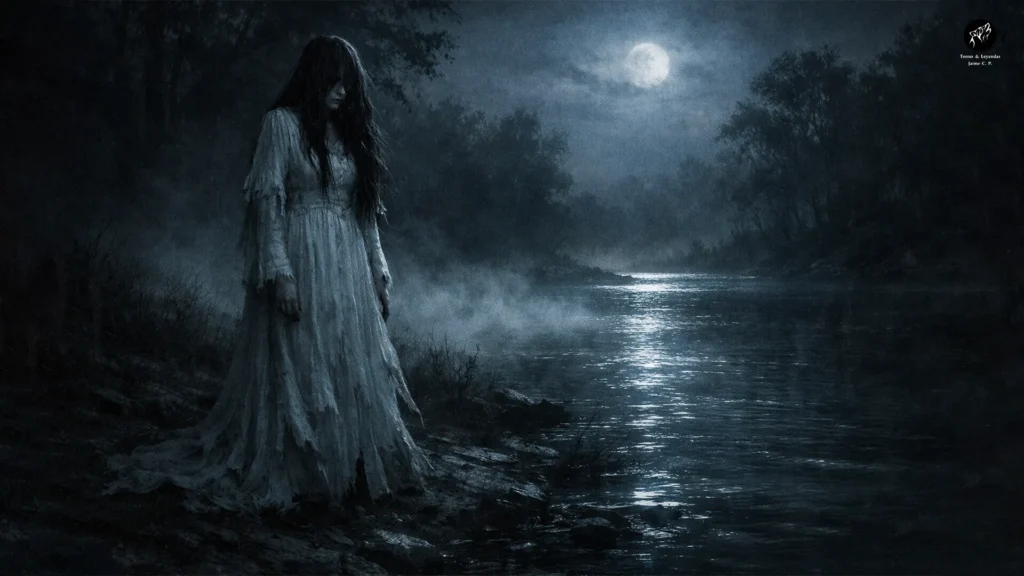

Few figures of Mexican folklore are as disturbing as La Llorona, that presence that seems to manifest itself when the night becomes too silent and the water reflects more shadow than light. Its history has endured for centuries because it does not belong to a single era or a single place: it is born from ancient myth, transformed into colonial tragedy and survives thanks to oral tradition.
Throughout Mexico there are different versions of this legend, but they all coincide in the same disturbing element: His lament does not belong to this world.
Who really was La Llorona?
La Llorona does not arise from a single story or from a single woman. Her figure was built over time, mixing Pre-Hispanic, colonial and modern roots, until it became one of the most deeply rooted myths of the Mexican imagination.
To understand its origin, it is necessary to go through these three fundamental stages.
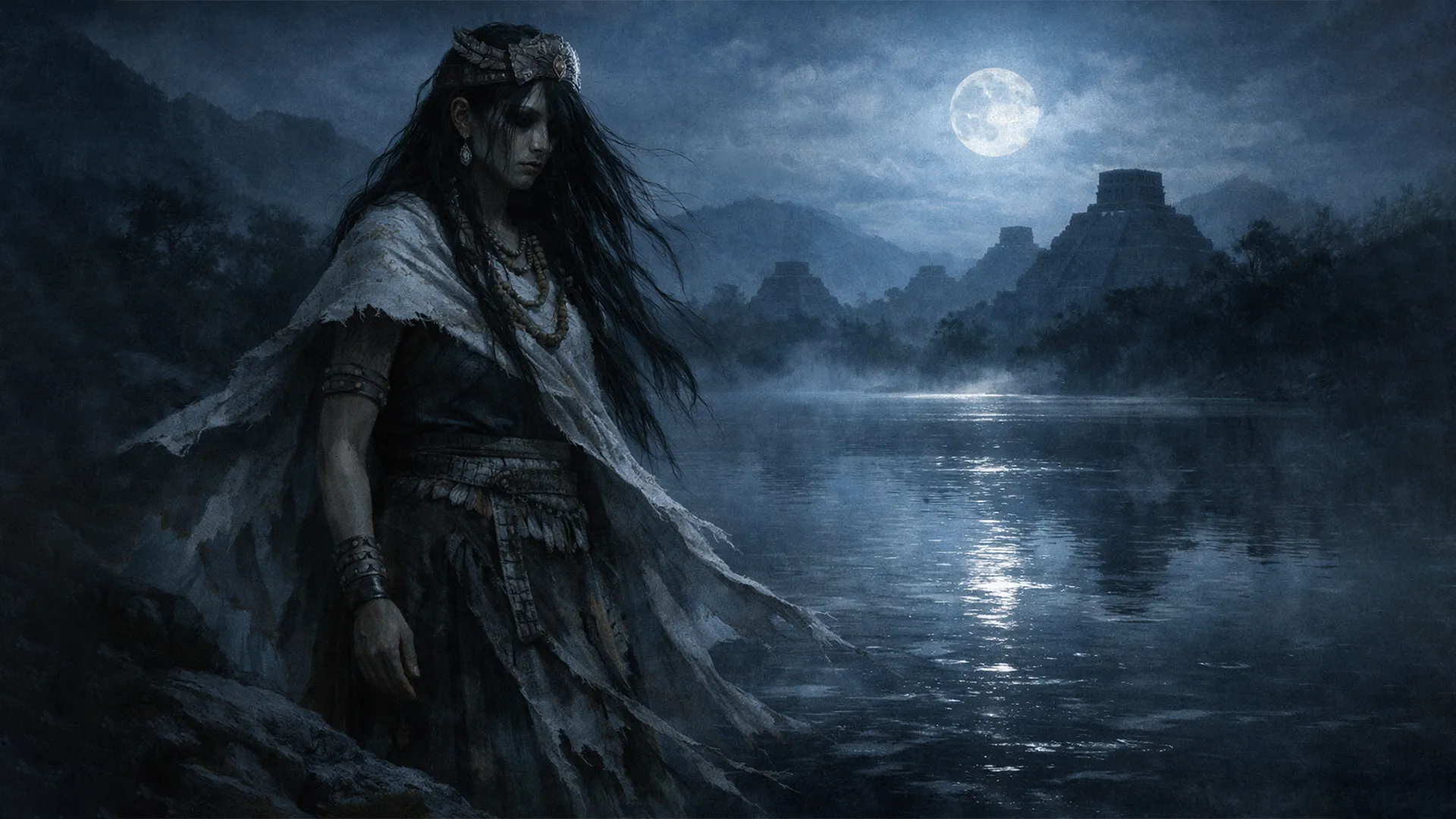
Pre-Hispanic origin of La Llorona
Before the arrival of the Spaniards, there were already stories about a female figure linked to crying, motherhood and death.
Chronicles of the sixteenth century, especially those compiled by Fray Bernardino de Sahagún, mention Cihuacoatl, an entity associated with childbirth and dire omens.
In these ancient stories, this figure:
- she wept for her lost children,
- It was manifesting near the water,
- and announced imminent tragedies.
These records are considered the oldest antecedent of what, centuries later, would be identified as La Llorona.
YOU MAY BE INTERESTED IN
Pre-Hispanic origin of La Llorona before the Conquest
Long before the legend of La Llorona took the form of a woman dressed in white who wanders the rivers during the night, there were already stories in Mesoamerica about a female figure linked to crying, motherhood and death.
La Llorona in colonial times
During New Spain, the legend took on a more human and tragic face.
Stories began to circulate of indigenous women who were seduced, abandoned and condemned to social rejection.
The colonial accounts speak of:
- forbidden loves,
- unrecognized mixed-race children,
- public shame,
- and family tragedies that ended in the rivers.
Documents from the seventeenth century already mention A woman dressed in white who cries for her children during the night, an image very close to the current version.
The modern version of the legend
With the passage of time, pre-Hispanic beliefs and colonial tragedies merged into oral tradition, giving rise to the most widespread version of La Llorona:
a beautiful woman, betrayed by the man she loved, who in an act of pain drowns her children and is condemned to mourn them for all eternity.
This is the version that has been passed down from generation to generation to the present day.
The traditional story of La Llorona
They say that many years ago, in a town near a river, there lived a woman whose beauty caught everyone’s attention. She had dark hair, bright eyes and a presence that bewitched effortlessly.
A wealthy gentleman fell in love with her and, with sweet words and promises of the future, managed to gain her trust.
Three children were born from that relationship.
For a while, the woman believed that happiness was real. However, the man never fulfilled his promise to formalize the relationship.
One day, she saw him crossing the village on his horse, dressed in full dress and accompanied by a rich lady.
She was his legitimate wife.
His heart broke in that instant.
That night, under a moonless sky, she took her children to the river. She hugged them desperately, wept silently and asked for forgiveness.
And in a moment of madness and pain, he let them fall into the dark waters.
The river carried them away, and when he understood what he had done, his cry resounded throughout the valley:
“Oh, my children!
At dawn, the inhabitants of the village found her lifeless…
but his soul never rested.
What does La Llorona do?
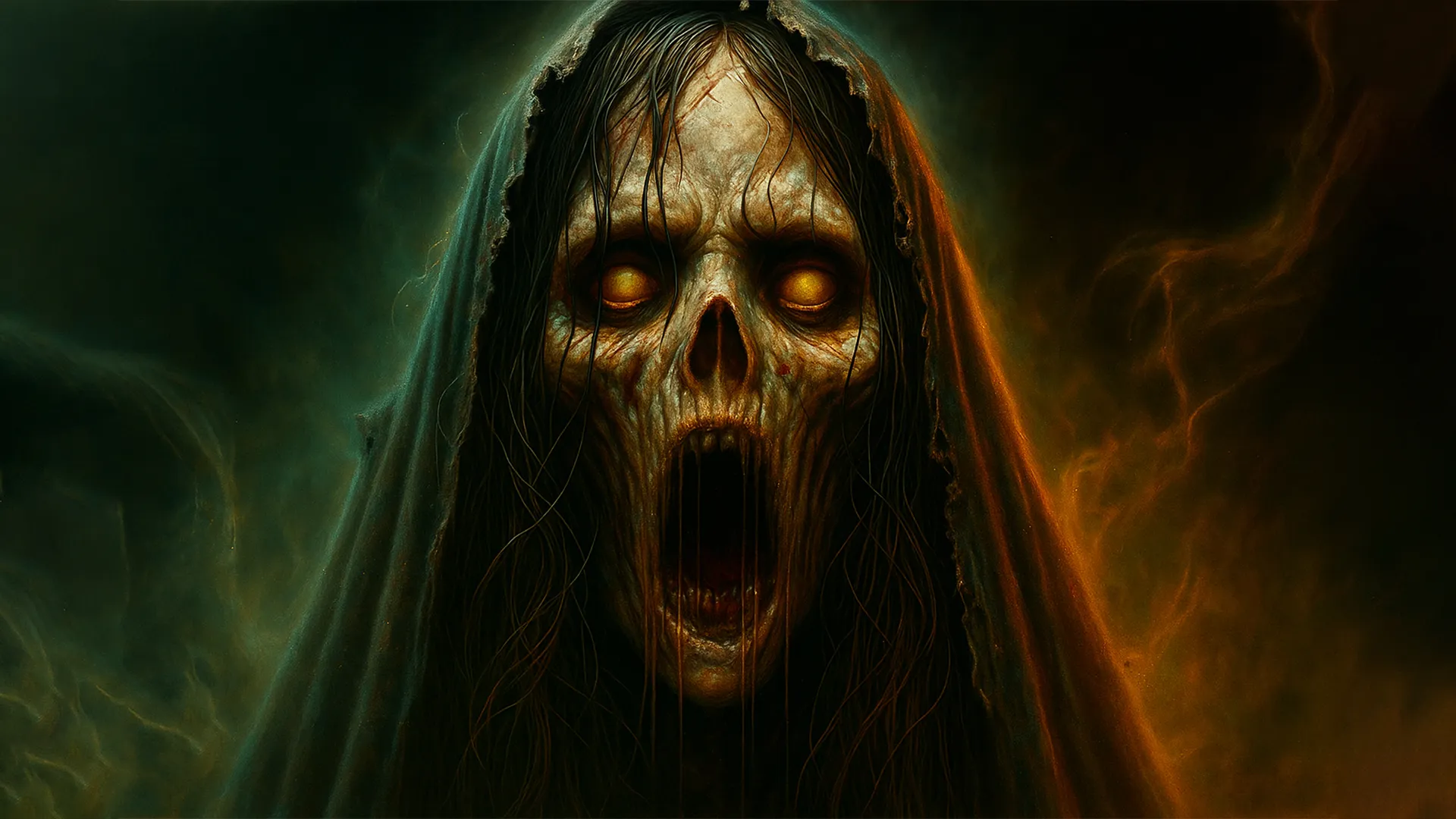
According to oral tradition, La Llorona He continues to wander between this world and the next, looking for the children he lost.
The accounts agree that:
- appears near rivers, lagoons and lonely roads,
- confuses living children with his own,
- announces misfortunes or deaths,
- causes a sudden cold in the environment,
- and her cry changes according to the distance:
if you hear it close, it’s far away; if you hear it far away, it’s very close.
Regional variants of La Llorona in Mexico
The legend of La Llorona is not told in the same way everywhere. Each region adapted it to its environment, always keeping crying as a central element.
In Xochimilco, is said to float through the fog of the canals at dawn.
In Guanajuato, walks through colonial streets and is associated with a legendary tomb.
In Oaxaca, crosses bridges at dawn leaving a trail of water.
In the north of the country, takes on a more spectral form, sometimes described as a fog figure.
In the Southeast, mixes with local beliefs and appears near cenotes and jungle paths.
The meaning of La Llorona
Beyond the terror, La Llorona symbolizes:
- the irreparable pain of a mother,
- eternal guilt,
- abandonment,
- historical inequalities,
- and the deep fears that have accompanied Mexican society since the Colony.
It’s not just a scary story:
it is an emotional reflection of centuries of history.
Is the legend of La Llorona real?
There is no historical evidence that identifies a single woman as the real Llorona.
However, there are chronicles, records and testimonies that confirm the antiquity and cultural strength of the myth.
In this sense, La Llorona is as real as the fears, guilt and pain that have accompanied humanity over time.
Conclusion
La Llorona is more than a legend: she is a voice that crosses the history of Mexico from ancient times to the present day.
His lament is still alive because it represents human emotions that never end up being extinguished.
And as long as there are rivers, lonely roads and nights that are too silent, there will always be those who claim to have seen it pass, murmuring in the darkness:
“Oh, my children!
YOU MAY BE INTERESTED IN: Legends of Mexico