
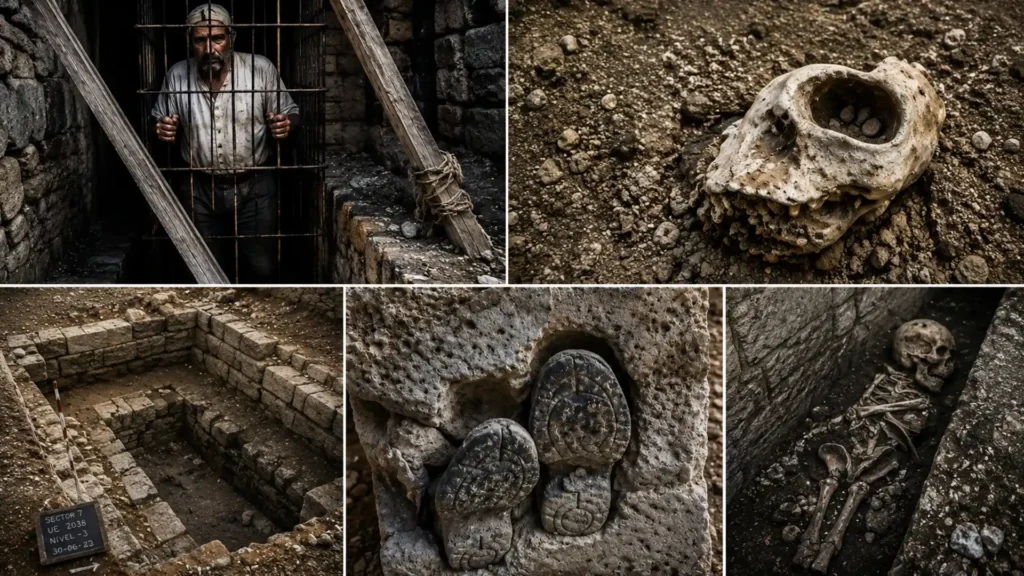

There are legends that refuse to disappear, no matter how much time passes.
One of the most disturbing claims can be found in stories told across Europe, Asia, and Latin America. According to these tales, some of the world’s most impressive buildings hide a dark secret beneath their foundations. Instead of stones, coins, or ceremonial objects, they are said to contain human lives.
The legend of workers buried in building foundations has fascinated generations. From medieval castles and ancient bridges to massive stadiums and religious monuments, rumors persist that human sacrifices were made to ensure a structure’s stability and protect it from collapse.
While many people dismiss these stories as folklore, similar versions appear in cultures separated by thousands of miles. This raises an intriguing question: why do so many societies share the same unsettling belief?
To answer that, we need to explore the origins of foundation sacrifice myths, the famous cases that helped spread them, and the evidence that separates historical fact from urban legend.
What Does the Legend of Workers Buried in Building Foundations Say?
The details vary from one country to another, but the core story remains remarkably similar.
According to the legend, certain construction projects faced repeated setbacks. Walls collapsed without explanation, bridges failed to hold their weight, and builders struggled to complete major structures despite years of work.
In a time when science could not explain every disaster, many people believed supernatural forces were responsible. To overcome these obstacles, a sacrifice was thought to be necessary.
The legend claims that a person was buried beneath the foundations of a building or symbolically incorporated into the structure itself. In some versions, the victim was a mason or construction worker. In others, it was a prisoner, a traveler, or someone chosen by fate.
The purpose of the sacrifice was believed to be:
- To strengthen the structure.
- To prevent future collapses.
- To protect the building from evil forces.
- To appease spirits or deities.
- To bring prosperity and good fortune.
Stories about workers buried in building foundations have survived for centuries because they combine fear, mystery, and the unknown. Although the details change from one culture to another, the idea that a human life could protect a structure remains one of the most enduring legends in world folklore.
The origin of this dark belief
Although it may seem like a modern story, its roots go back thousands of years.
Ancient civilizations attributed profound spiritual significance to important structures.
Temples, walls, fortresses, and palaces were not mere structures. They represented the power of rulers, the protection of a city, or a connection to the gods.
For this reason, many cultures performed rituals before beginning construction.
In some cases, they were buried:
- Coins.
- Sacred objects.
- Animals.
- Protective amulets.
- Ceremonial offerings.
Over time, these practices gave rise to increasingly exaggerated stories.
What began as a symbolic offering eventually turned into stories of human sacrifices and burials within the foundations.
Human sacrifices in construction: myth or reality?
This is the question that sparks the most curiosity.
The answer isn’t entirely straightforward.
Historians have documented human sacrifices in various ancient cultures. However, proving that stonemasons were buried alive in buildings is much more complicated.
Experts generally distinguish between three situations.
Documented ritual sacrifices
Some civilizations performed human sacrifices as part of religious ceremonies.
However, these acts were not necessarily related to the construction of buildings.
Foundation offerings
It was customary to place objects, food, or animal remains beneath the foundations.
The purpose was to protect the structure and attract good fortune.
Folk Legends
Most stories about buried masons come from oral traditions with no conclusive archaeological evidence.
For this reason, most researchers believe that this is a legend based on ancient cultural beliefs.

YOU MAY BE INTERESTED IN
The Theory of Three: Why Do People Say Deaths Come in Threes?
Have you ever heard that when one person dies, two more will soon follow?
It’s a popular belief that resurfaces time and again whenever a celebrity dies, a tragedy occurs, or someone well-known passes away. Many people claim that deaths come “in threes,” while others believe it’s merely a coincidence.
The so-called “Theory of Three” is one of the most talked-about mysteries in the world of superstitions. It has been passed down through generations and continues to spark curiosity, fear, and debate.
The Japanese Myth of the Hitobashira
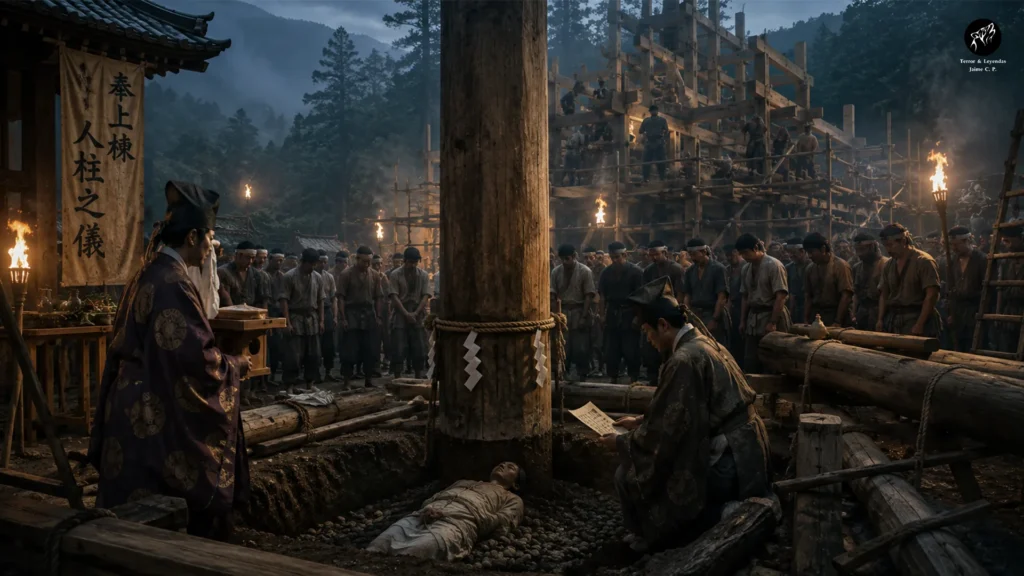
One of the most famous examples comes from Japan.
The legend of the Hitobashira, which literally means “human pillar,” holds that some people were buried alive near castles, bridges, or dams to protect the structures from natural disasters.
According to popular tradition, these sacrifices helped to spiritually strengthen the structure.
Although some accounts appear in ancient Japanese texts, historians continue to debate the extent to which these stories represent actual events or are simply folk tales.
Even so, the myth of the Hitobashira is one of the main factors behind the worldwide spread of this type of legend.
The Legend of the Arta Bridge
Greece also has a very similar story.
The famous legend of the Arta Bridge tells that builders tried to construct a bridge for years without success.
Every night, the structure would collapse.
In desperation, they received a supernatural revelation: the bridge would only remain standing if a person were sacrificed and buried in its foundations.
The victim turned out to be the master builder’s wife.
Today, this story is part of Greek cultural heritage and continues to be told as one of Europe’s most famous legends.
The Legend of the Buried Bricklayers at Azteca Stadium
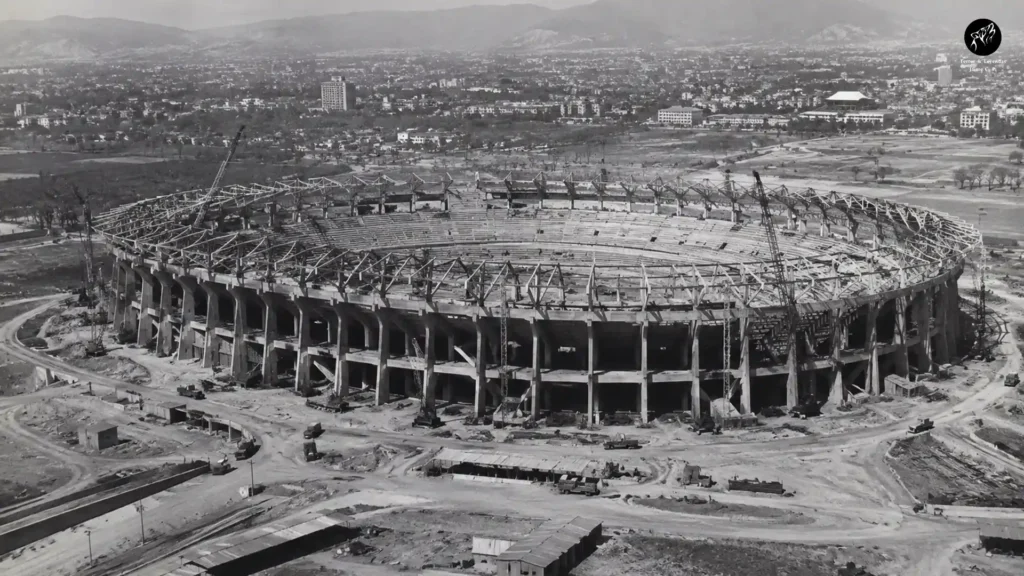
In Mexico, there is a story that often comes up when people talk about construction workers buried in buildings. According to urban legend, fatal accidents occurred during the construction of the Azteca Stadium in the 1960s, and some workers were reportedly buried in the foundations of the gigantic structure.
Over the years, the story has grown. Some versions claim that certain bodies were never recovered, while others assert that the spirits of the workers still linger at the stadium.
The story tends to resurface from time to time among soccer fans, construction workers, and enthusiasts of urban mysteries. However, there is no historical evidence or official documentation to support these claims.
Most likely, the legend arose because of the sheer scale of the project. The construction of Azteca Stadium was one of Mexico’s most ambitious engineering projects of the 20th century, a circumstance that fostered the spread of rumors and folk tales.
Even so, the case of the Azteca Stadium remains one of the best-known examples in Latin America when it comes to people allegedly buried beneath large structures. For this reason, it is often mentioned alongside other stories related to sacrificial rituals during construction, haunted buildings, and architectural mysteries.
Laborers Buried in Construction Sites in Latin America
Latin America is no exception to this phenomenon.
In many towns, there are stories associated with old churches, colonial estates, and historic buildings.
These stories often claim that:
- A worker disappeared during construction.
- Wails could be heard coming from beneath the foundations.
- The project could only be completed after a mysterious death.
- The mason’s spirit still protects the building.
Mexico, Peru, Colombia, and other countries have their own local versions of this belief.
In most cases, there is no historical evidence.
However, oral tradition has kept these stories alive for generations.
Why do legends about people buried in foundations arise?
Psychology can help us understand this phenomenon.
Urban legends often arise when people try to explain events that are difficult to understand.
In the past, cave-ins were common.
Buildings could take decades to complete.
Workplace accidents were also common.
Faced with such dramatic situations, many communities developed supernatural explanations.
This is how stories emerged about:
- Curses.
- Ghosts.
- Human sacrifices.
- Guardian spirits.
- Divine punishments.
These stories helped make sense of events that seemed impossible to explain.
Were there really masons who were buried alive?
To date, there is no solid evidence to show that this practice was common in the construction industry.
Researchers agree on several points.
They did exist:
- Human sacrifices in some cultures.
- Ritual offerings placed beneath the foundations.
- Beliefs related to the spiritual protection of buildings.
However, there is insufficient evidence to claim that masons were routinely buried alive to complete a construction project.
The most widely accepted theory is that the legend arose from ancient symbolic practices that evolved over the centuries.
Other urban legends related to construction
The myth of the buried bricklayers is not the only dark tale associated with buildings and monuments.
There are many similar stories.
Houses built on top of cemeteries
One of the most popular legends in the world.
Ghosts of deceased workers
Many historic buildings are the subject of stories about apparitions linked to workers who died during their construction.
Cursed Castles
Europe is full of castles associated with supposed ancient curses.
Haunted Churches
Many ancient religious buildings are steeped in stories of supernatural presences.
These tales continue to fascinate people because they combine history, mystery, and paranormal elements.
Frequently Asked Questions
Have human remains been found in the foundations of buildings?
Yes. In some places, human remains have been discovered near ancient structures. However, this does not prove that they were sacrifices related to the construction work.
What is a foundation sacrifice?
It is an offering made during the construction of a building to attract protection or good fortune.
Did the practice of burying masons really exist?
There is no conclusive evidence to suggest that it was a common practice.
Why does this legend appear in so many countries?
Because many cultures shared beliefs related to the spiritual protection of buildings.
What is the most famous example?
Probably the Japanese Hitobashira and the Greek legend of the Bridge of Arta.
The Secrets Hidden Beneath the Foundations
Whether these stories are based on real events or centuries of folklore, one thing is certain: the legend of workers buried in building foundations continues to captivate people around the world.
From Japan’s Hitobashira tales to the rumors surrounding the Estadio Azteca and medieval European castles, the idea that a human sacrifice could protect a structure has endured for generations. While historians have found little evidence to support most of these claims, the stories themselves have become part of the cultural heritage of many societies.
Perhaps that is why these legends refuse to disappear. They remind us that every ancient bridge, cathedral, castle, or monument may hold secrets that history can no longer fully explain.
Were workers really buried beneath some of the world’s greatest structures? The truth remains uncertain. What is undeniable is the fascination these stories continue to inspire.
Have you ever heard a similar legend in your city or country? Share it in the comments. Some of the most intriguing stories are the ones passed down from one generation to the next.