
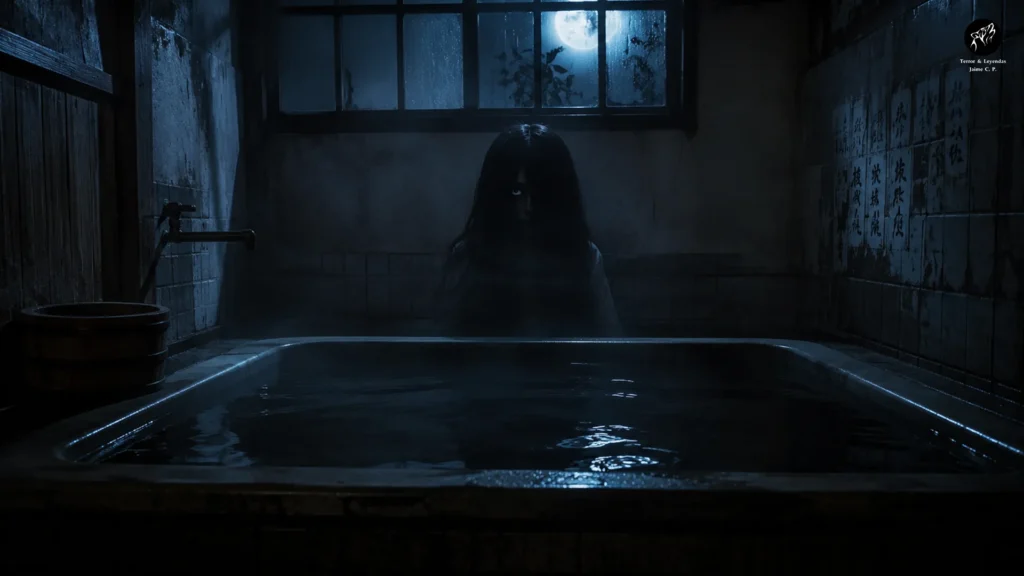

Imagine someone telling you that there’s an ancient Japanese ritual capable of summoning a spirit that will haunt you for an entire day. All you have to do is fill a bathtub with water, turn off the lights, and follow a series of seemingly simple instructions. Thousands of people claim to have read this story on Internet forums, watched videos on the subject, or heard accounts from people who say they know someone who tried it.
This is how the legend of The Daruma Game begins—also known as The Bath Game—one of the most popular Japanese horror stories on the Internet.
However, there is one detail that many publications overlook: the Daruma Game is not part of traditional Japanese folklore, nor is there any historical evidence that the supposed ritual was ever actually practiced. Most researchers consider it a contemporary urban legend, spread through websites, forums, and horror communities, especially since the early 21st century.
The confusion is compounded by the fact that its name comes from “だるまさんがころんだ” (Daruma-san ga Koronda), a well-known Japanese children’s game that has no connection to paranormal phenomena. Furthermore, many people mistakenly believe that the story is related to the famous Daruma doll, a symbol of perseverance and good fortune in Japan, when in reality the two concepts are completely different.
In this article, we will analyze the origin of the Daruma Game from a historical and cultural perspective. We will also explain which parts of the story belong to modern oral tradition, which elements come from the Internet, and what we really know about one of the world’s most famous supposed paranormal rituals.
What is the Daruma Game?
The Daruma Game (だるまさんがころんだ) is the name given to a popular contemporary Japanese urban legend that describes a supposed paranormal ritual capable of summoning the spirit of a young woman who died in a bathtub.
Outside of Japan, it is also known as “The Bath Game,” “The Bathtub Game, ” or simply “Daruma-san.” For over a decade, the story has been translated into numerous languages and spread through horror blogs, YouTube videos, specialized forums, and social media, becoming one of the best-known tales among the so-called “Japanese creepypastas.”
Unlike other Japanese legends inspired by ancient yōkai or traditional spirits, the Daruma Game exhibits characteristics typical of urban legends born on the Internet:
- There is no known author.
- Numerous versions with slight differences are circulating.
- The rules of the supposed ritual vary depending on the source consulted.
- There is no historical documentation to prove its antiquity.
- It has been enriched with new details as the story has spread to different countries.
It is precisely this ability to evolve that explains why there are so many variations of the story. Some versions describe the woman as having only one eye; others claim that she died after hitting her head against the edge of the bathtub; and there are even translations that alter the words that are supposedly to be spoken during the ritual.
Although these differences may seem significant, all versions share the same narrative structure: an invocation performed while bathing triggers the appearance of a spirit that will haunt the participant until they manage to complete the supposed game.
One of the most famous Japanese urban legends on the Internet
The enormous popularity of the Daruma Game is not due to ancient manuscripts or stories passed down over centuries. Its spread is closely linked to the Internet.
In the early 2000s, versions of the story began to appear on websites dedicated to horror and paranormal phenomena. Shortly thereafter, the story was translated into English under the name “The Bath Game,” which facilitated its international spread.
From then on, thousands of users began copying the story, adding new details, and sharing alleged personal experiences. Over time, the ritual became part of the canon of the best-known creepypastas, alongside other Japanese legends such as Kuchisake-onna, Teke Teke, Hanako-san, and Hitori Kakurenbo.
This method of dissemination explains why many websites present the story as if it were an ancient Japanese tradition, when in reality there is no documentary evidence to support that claim.
Why does it cause so much confusion?
One of the most curious aspects of the Daruma Game is that its very name has contributed to the spread of numerous misunderstandings.
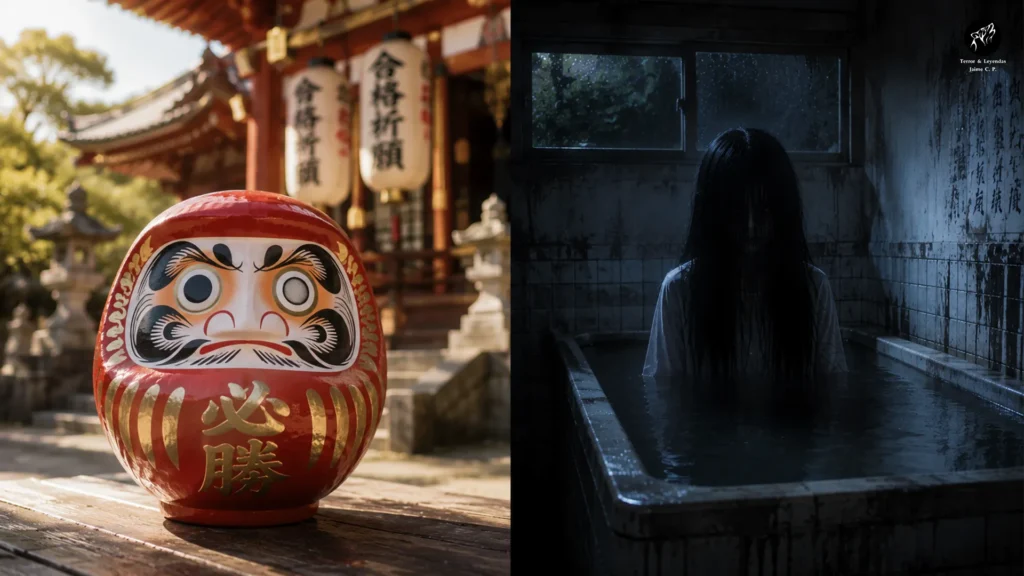
When someone searches for information about “Daruma,” they usually first come across references to the well-known red Japanese doll associated with perseverance, good fortune, and the achievement of goals. However, the Daruma Game has no connection to that traditional symbol.
The confusion is compounded because the legend uses the Japanese phrase “だるまさんがころんだ, ” which is widely known to every child in Japan thanks to a popular children’s game.
As we’ll see in the next section, that traditional game has nothing to do with spirits, curses, or paranormal rituals. The legend simply borrowed its name and transformed it into a horror story that eventually took on a life of its own on the Internet.
What We Know for Sure
Before delving deeper into the legend, it’s important to distinguish between documented facts and popular beliefs.
It is documented that:
- “Daruma-san ga Koronda” is a traditional Japanese children’s game.
- The Daruma doll represents Bodhidharma and symbolizes perseverance and good fortune.
- The story of the “Bathtub Game” began to spread widely on the Internet during the 21st century.
There is no documentation that:
- The supposed ritual has a verifiable historical origin.
- The woman described in the legend actually existed.
- There are ancient records of this paranormal game.
- Supernatural phenomena related to the ritual have occurred.
This distinction is fundamental to understanding the phenomenon. The appeal of the Daruma Game does not lie in proving that it is real, but in understanding how a story born in digital culture came to be one of the world’s best-known Japanese legends.
What does “Daruma-san ga Koronda”really mean ?
One of the biggest misconceptions circulating online is the claim that “だるまさんがころんだ” (Daruma-san ga Koronda) is the name of an ancient Japanese paranormal ritual. In reality, the expression has existed long before the legend of the “Bathtub Game” emerged and is part of a popular children’s game known to generations of Japanese children.
Understanding the meaning of this phrase is essential for distinguishing fact from fiction and understanding how one of the Internet’s most famous creepypastas came to be.
What does “だるまさんがころんだ”literally mean ?
The expression can be literally translated as:
“Daruma fell down.”
It consists of four elements:
- だるま (Daruma): Daruma.
- さん (san): an honorific suffix equivalent to “Mr.” or “Mr.,” used to show respect or closeness.
- が (ga): a particle that marks the subject.
- ころんだ (koronda): past tense of the verb korobu (転ぶ), meaning “to fall” or “to roll.”
Although this translation may seem curious, the literal meaning is of little importance within the game. It is simply a traditional phrase that the player in charge of leading the game utters before turning around to try to surprise the other participants.
Over time, the expression became a set phrase, just as is the case with many children’s songs or rhymes whose original meaning no longer influences how the game is played.
The Japanese children’s game
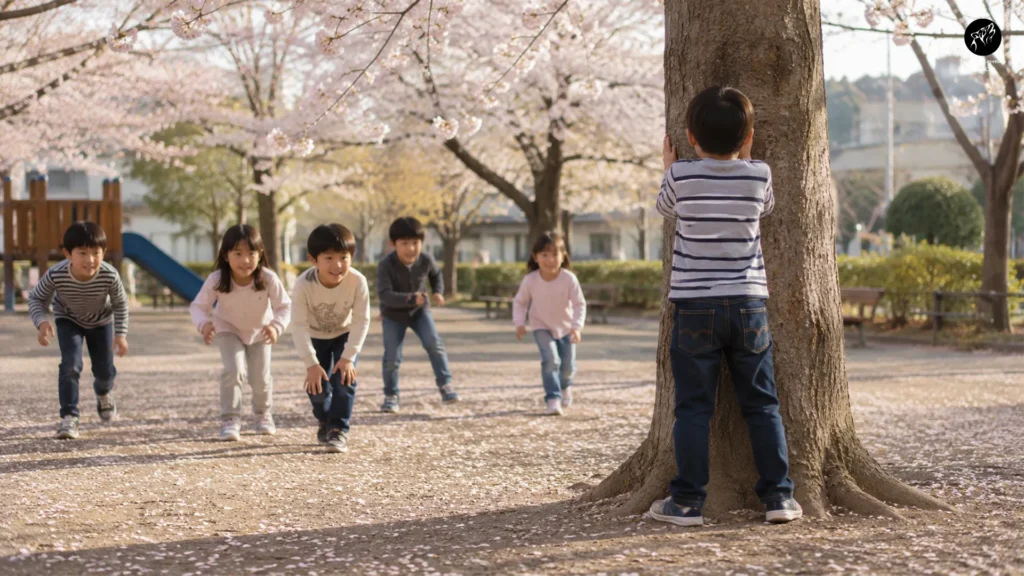
Far from being a ghost story, “Daruma-san ga koronda” is one of Japan’s best-known traditional games.
The way it’s played is similar to the popular Western game known as “Red Light, Green Light, ” “One, Two, Three, Hide and Seek,” or “Statues, ” depending on the country.
The rules are very simple.
One player stands with their back to the others, next to a wall, a tree, or any other point that marks the finish line.
As everyone else moves toward him, he quickly says:
“Daruma-san ga koronda”
As soon as he finishes the phrase, he turns around immediately.
All players must remain completely still.
If anyone moves, they are spotted and are either eliminated or must return to the starting point, depending on the agreed-upon rules.
The goal is to catch up to the player leading the game before they manage to surprise the others who are moving.
Although there are slight variations depending on the region of Japan, the basic mechanics have hardly changed over the decades.
How is this related to “Red Light, Green Light”?
The most common comparison is with “Red Light, Green Light, ” which is popular in many countries.
In both games, players can only move forward when the leader isn’t looking at them.
When the leader turns around, everyone must remain still.
The tension arises precisely from that moment when even the slightest movement can give the player away.
This mechanic explains why many people associate the name “Daruma-san ga Koronda” with the idea of being watched or chased—an element that was later incorporated into the urban legend of the Daruma Game.
However, aside from that coincidence, the children’s game and the alleged paranormal ritual share no known common origin.
Is it related to the Daruma doll?
No.
This is probably the most widespread misunderstanding.
When searching for information on “Daruma,” most users come across images of the traditional Japanese red doll with large white eyes.
This amulet represents Bodhidharma, the Buddhist monk traditionally credited with founding Zen Buddhism in China.
In Japan, the Daruma doll symbolizes:
- perseverance;
- effort;
- good fortune;
- achieving goals;
- overcoming adversity.
It is customary to give a Daruma as a gift when starting a new project. The tradition involves painting one of its eyes when setting a goal and completing the second eye when the goal is achieved.
None of this has anything to do with ghosts, rituals, or curses.
In fact, there is no Japanese tradition that links the Daruma doll to the so-called “Bathtub Game.”
Everything suggests that the legend simply reused the name of the children’s phrase “daruma-san ga koronda,” probably because the idea of staying completely still while someone turns around was particularly unsettling for a horror story.
The True Origin of the Daruma Game
Once you understand what “daruma-san ga koronda” really means, an inevitable question arises.
If this children’s game has no connection to any paranormal ritual, where did the legend come from?
The answer is less mysterious than many people think.
Is there a documented historical origin?
To date, there is no historical evidence to show that the Daruma Game was part of traditional Japanese folklore.
Unlike figures such as Kuchisake-onna, Yuki-onna, Teke Teke, or the numerous yōkai compiled over centuries in Japanese literature, the alleged bathtub ritual does not appear in:
- classic collections of Japanese legends;
- academic studies on Japanese folk religion;
- historical documents;
- museums specializing in folklore;
- traditional collections of yōkai.
This lack of documentation is one of the main reasons why researchers consider this to be a modern urban legend rather than an ancient tradition.
A story born on the Internet
Most experts agree that the Daruma Game began to spread widely during the early years of the 21st century.
The earliest known versions appeared on:
- websites dedicated to horror;
- blogs specializing in paranormal phenomena;
- online forums;
- communities focused on scary stories.
The story was later translated into English under the title *The Bath Game*, becoming hugely popular among creepypasta fans.
From that point on, dozens of translations and adaptations began to emerge.
Each new publication added small changes.
Some altered the words of the supposed ritual.
Others changed the spirit’s appearance.
Versions even appeared that incorporated entirely new rules, helping the story evolve over time.
This phenomenon is characteristic of urban legends spread via the Internet: there is no single text or definitive version, but rather a story that changes slightly every time someone retells it.
Folklore, urban legend, and creepypasta: they are not the same thing
One of the goals of this article is to clearly distinguish between concepts that are often conflated.
Japanese folklore
Folklore encompasses stories, beliefs, and traditions passed down through generations.
Many of these stories have been documented for centuries and are part of Japan’s cultural heritage.
Urban legend
Urban legends are contemporary stories that are often presented as real events, although they can rarely be verified.
They often begin with phrases such as:
“It happened to a friend of a friend…”
Their goal is not to preserve an ancient tradition, but to explain unsettling events that seem plausible within everyday life.
Creepypasta
Creepypastas are horror stories spread primarily online.
Many are deliberately written to seem real, blending everyday elements with supposed rituals, cursed video games, or supernatural entities.
The Daruma Game shares many characteristics with this type of story.
For this reason, many researchers consider it a digital urban legend that eventually became part of the universe of the most popular Japanese creepypastas.
Why do so many people believe it’s a real ritual?
There are several reasons.
First, many websites present the story as if it were an ancient Japanese tradition, without citing sources or explaining its true origin.
Furthermore, the use of Japanese words, very detailed instructions, and authentic cultural references makes the story seem more credible to those unfamiliar with Japanese culture.
Finally, the very structure of the ritual—explained step by step, with seemingly precise rules and consequences if it is not completed—is reminiscent of other paranormal games circulating on the Internet, which reinforces the sense of authenticity.
However, to date, there is no verifiable evidence proving that the Daruma Game is a traditional Japanese practice or that the alleged ritual has a documented historical origin.
The Legend of the Daruma Game
Now that we understand the true origin of the Daruma Game, it’s time to delve into the story that turned “The Bath Game” into one of the most famous Japanese urban legends on the Internet.
Before continuing, it’s important to keep one fundamental point in mind: what you’re about to read is part of the legend as it has been spread across forums, blogs, and horror websites. There is no proof that the events described actually took place, nor is there any evidence that the alleged ritual has paranormal effects.
As with many urban legends, the story has changed over time. There are numerous versions that alter certain details, though all retain the same basic structure.
The Woman in the Bathroom
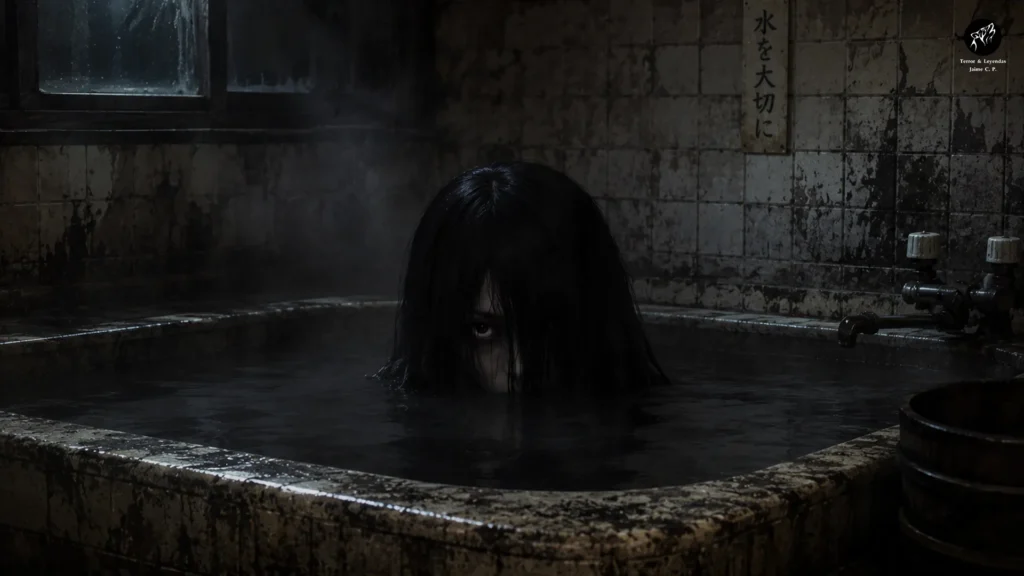
According to legend, many years ago a young woman died tragically while taking a bath.
The story never reveals her name or the exact location where the accident occurred. This lack of information has allowed the tale to evolve and give rise to different versions, each with slight variations.
The best-known version of the story says that the young woman slipped as she was getting out of the bathtub and struck her head violently against the edge of the tub or the metal faucet, dying instantly.
Other versions claim that the fall caused a serious injury to one of her eyes. For this reason, those who claim to have seen the spirit often describe it as having only one visible eye, with the other hidden or bloodied.
There are also accounts that add even more macabre details, claiming that the body remained in the bathtub for a long time before being found or that her death was shrouded in inexplicable circumstances.
None of these versions can be linked to a documented historical event.
There are no police records, old news reports, or academic studies that would allow us to identify the alleged young woman. She exists solely in the realm of urban legend.
According to the story, the agony of that death prevented her spirit from leaving the place, leaving it trapped between the world of the living and that of the dead.
Since then, anyone who correctly performs the ritual can catch her attention.
And once that happens, the real game begins.
The So-Called Ritual of the Daruma Game
One of the reasons this story became so popular is the enormous level of detail with which the ritual is usually described.
The instructions are written almost like a manual, which makes the story more convincing to many readers.
However, it is important to emphasize that these instructions are part of the legend’s fictional elements and should not be interpreted as a traditional Japanese practice.
Step 1. Prepare the bath
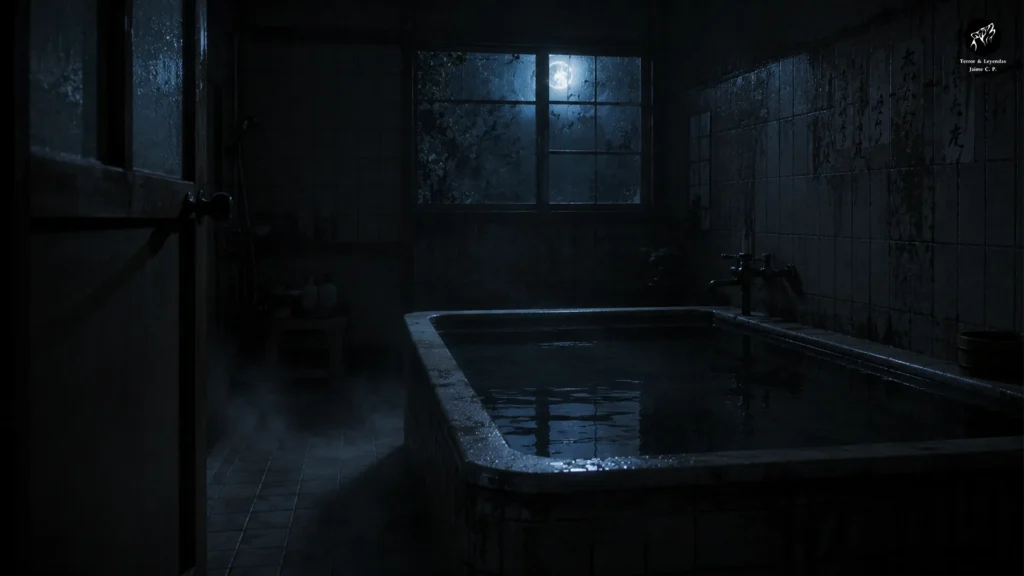
According to the story, the ritual should begin shortly before midnight.
The participant must be completely alone at home.
Then they must fill the bathtub with cold water and turn off all the lights in the bathroom, leaving only darkness.
The quiet atmosphere and the approach of midnight heighten the tension of the story and set the stage for what is supposed to happen next.
Step 2. The Invocation
Once inside the bathtub, the player must close their eyes and begin repeating an incantation addressed to the woman’s spirit.
Different versions use different phrases, so there is no single formula accepted by all accounts.
While reciting the incantation, the participant must imagine the moment when the young woman suffered the accident.
According to legend, after a few moments, they will hear a loud thud.
That sound is said to represent the exact moment when the woman fell and lost her life.
The story claims that this noise indicates that the spirit has answered the call.
Of course, there is no evidence to support this claim.
Step 3. Leave without looking back
After hearing the supposed bang, the participant must leave the bathtub with their eyes closed.
The legend insists that they must not look back under any circumstances.
Without opening their eyes, they must leave the bathroom, close the door, and go to bed immediately.
At that moment, the first part of the ritual ends.
But the game hasn’t started yet.
The Chase
According to legend, everything changes when he wakes up the next day.
From that moment on, the spirit will begin to follow the participant throughout the day.
The presence never appears fully visible.
Instead of appearing in front of the person, the story claims that it always remains behind them.
It can only be perceived out of the corner of one’s eye.
Every time the participant thinks they see a figure behind them and turns their head to check, there is no one there anymore.
However, as the day goes on, the presence seems to be getting closer little by little.
The feeling of being constantly pursued is at the heart of the entire legend and one of the elements that has contributed most to its success on the Internet.
It is not a ghost that appears suddenly.
It is a threat that is always nearby, invisible most of the time, and increasingly difficult to ignore.
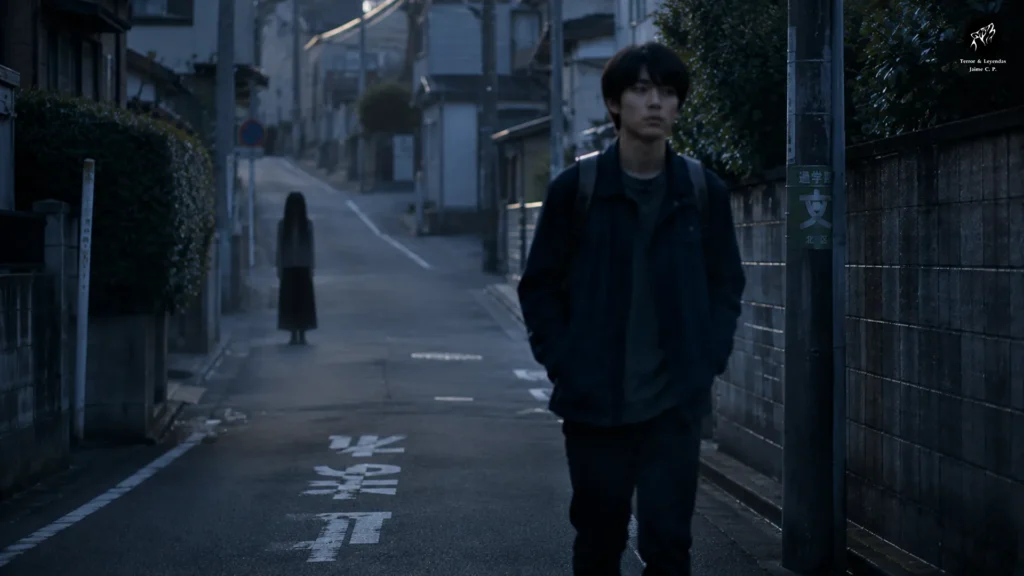
Many illustrations depict the woman walking slowly behind the player, her dark hair covering part of her face and a single eye staring intently at him.
Although this image has become popular on the Internet, it does not appear in all versions of the story.
What happens if the spirit gets too close?
Here again, there are differences between the various versions.
The most widely accepted version states that if the player feels the presence is too close, they should turn partially around and shout:
「止まれ!」 (Tomare!)
which means:
“Stop!”
According to legend, the spirit will remain motionless for a few seconds.
That brief moment would allow the participant to get away before the chase resumes.
However, other versions completely eliminate this rule and maintain that the player must simply ignore the presence until it is time to end the ritual.
This lack of consistency is one of the most obvious characteristics of urban legends spread online.
How does the Daruma Game end?
The story states that the chase cannot go on indefinitely.
Before midnight the following day, the player must face the spirit one last time.
When he feels the presence behind him again, he must turn around quickly, extend his arm as if making a slashing motion through the air, and utter one final word.
The phrase used is:
「来た!」 (Kita!)
Literally, it means:
“It’s here!”
or
“It’s here already!”
On many websites, this is translated as “It’s over” or “The game is over.”
However, from a linguistic standpoint, that is not an exact translation of the Japanese verb kuru (“to come” or “to arrive”).
The interpretation that this word brings the ritual to an end stems from the legend itself and not from its literal meaning.
According to the story, once it is spoken, the spirit will vanish and the Daruma Game will come to an end.
What happens if the player does not complete the ritual?
It is at this point that the story takes a much more unsettling turn.
Legend has it that quitting the game before finishing it would allow the entity to continue following the player for days, weeks, or even forever.
Some versions claim that the spirit will appear repeatedly in dreams.
Others maintain that it will continue to manifest in reflections, windows, or mirrors.
The most extreme accounts even claim that the entity will eventually catch up to the player, though they never explain what would happen next.
As with the rest of the story, there is no evidence to support these claims.
Their purpose is to heighten the narrative tension and reinforce the sense of danger that characterizes many creepypastas and paranormal rituals circulating on the Internet.
A story that changes with each teller
Unlike traditional stories passed down through generations, the Daruma Game has never had an official version.
Every page, video, or post adds small changes.
Some alter the Japanese phrases.
Others alter the spirit’s appearance.
There are even stories that introduce new rules, different ways to end the game, or completely different consequences.
This ability to transform is precisely one of the characteristics that best defines urban legends born on the Internet.
The core of the story remains intact: a dead woman in a bathtub, a nighttime ritual, and a presence that haunts the player.
Everything else changes depending on who retells the story.
Who is the woman in the bathtub, really?
The identity of the protagonist of the Daruma Game is one of the greatest mysteries of the legend. Unlike other figures in Japanese horror, such as Hanako-san, Kuchisake-onna, or Teke Teke, this spirit is never given a specific name nor can it be associated with a particular place.
This lack of information does not seem accidental. Since she is not tied to a city, a school, or a historical event, the story can easily be adapted to any context and continue to evolve with each new version.
A character without an identity
According to the most widely circulated version, the woman was a young girl who died accidentally while bathing.
However, the account never answers fundamental questions:
- Who was she?
- When did she live?
- Where did the accident happen?
- Did he really exist?
The answer is simple: we don’t know.
To date, there are no historical documents, police records, old news reports, or academic studies that allow us to link the story to a real person.
Everything suggests that the protagonist was created specifically for the legend.
Why is she usually depicted with only one eye?
One of the spirit’s most distinctive features is its appearance.
Many illustrations show her with long hair covering her face and only one eye visible.
The most common explanation appears within the story itself: during the fall, one of her eyes was severely injured when it struck the edge of the bathtub or a metal faucet.
However, not all versions agree.
Some simply describe a woman who was completely soaked.
Others omit any reference to the eye injury.
This demonstrates, once again, that there is no official version of the story.
Known Variations of the Legend
As with many creepypastas, the Daruma Game has changed as it spread across the Internet.
Each translation added small details, eventually giving rise to multiple variations.
The Japanese version
The earliest known versions present a relatively simple story.
- A woman dies in a bathtub.
- The participant performs a ritual.
- The spirit haunts him for a day.
- The game ends with a final confrontation.
It is a short story open to interpretation.
The English version (The Bath Game)
When the story began to be translated into English, numerous changes were made.
Some publications added:
- much more detailed descriptions of the spirit;
- additional rules;
- new phrases for the ritual;
- more dramatic consequences if a player quit the game.
It was precisely this version that became the most popular outside of Japan.
Online Adaptations
Over the years, hundreds of reinterpretations have emerged.
On YouTube, TikTok, and Reddit, you can find stories that include elements not found in the original versions, such as:
- cursed objects;
- haunted mirrors;
- photographs of the supposed ghost;
- fabricated testimonies;
- alternative endings.
These modifications are common in digital urban legends and explain why it is so difficult to determine what the original text was.
The Daruma Game and Authentic Japanese Folklore
One of the most important aspects of this research is to clearly distinguish fiction from tradition.
Although the Daruma Game is often presented as an ancient Japanese legend, there is no evidence that it is part of the country’s classical folklore.
The difference can be summarized as follows:
| Folclore japonés tradicional | Juego de Daruma |
| Tradición transmitida durante generaciones. | Leyenda urbana moderna. |
| Aparece en recopilaciones históricas. | Difusión principalmente por Internet. |
| Incluye yōkai y espíritus con antecedentes culturales. | Espíritu anónimo creado para la historia. |
| Existen investigaciones académicas sobre muchas de estas figuras. | No hay documentación histórica que confirme su antigüedad. |
This does not mean that the legend is uninteresting.
On the contrary.
It’s an excellent example of how the Internet has created new forms of contemporary folklore, where stories evolve collectively and cross borders in a matter of days.
The Daruma Game on the Internet and Popular Culture
Much of the Daruma Game’s popularity is due to the Internet.
Unlike other Japanese legends that began as oral traditions, this one gained notoriety through blogs, forums, and horror websites.
Later came:
- narrated videos on YouTube;
- Reddit threads;
- compilations of paranormal rituals;
- specialized podcasts;
- TikTok channels focused on mystery.
In many cases, the posts presented the story as if it were a genuine ritual, which helped boost its popularity.
Over time, the Daruma Game became part of the collective imagination of online horror, alongside other international creepypastas.
Has it appeared in video games, manga, or anime?
Although there is no major work dedicated exclusively to the Daruma Game, its influence can be seen in various pop culture products.
Some Japanese horror video games use very similar elements:
- women with long hair;
- constant chases;
- spirits tied to everyday places;
- bathrooms as the setting for horror;
- apparitions seen out of the corner of the eye.
There are also manga and anime that reference the children’s game “Daruma-san ga Koronda,” though they are usually unrelated to the paranormal legend.
Due to the story’s enormous popularity online, many independent creators have used concepts inspired by it to develop horror stories, video games, and short films.
Why is this story so scary?
One of the most interesting questions isn’t whether the Daruma Game is real, but why so many people say they feel unsettled after reading the story.
The answer may lie in psychology.
Suggestion
When a person expects to experience something unusual, their brain increases its level of alertness.
Any noise, shadow, or movement takes on special significance.
This phenomenon is called suggestion.
Peripheral vision
Legend insists that a spirit can only be seen out of the corner of one’s eye.
Interestingly, peripheral vision is much less accurate than central vision.
Our brain constantly fills in the missing information, making it easier to interpret shadows or ambiguous movements as if they were human figures.
Hypervigilance
After reading a horror story, many people remain more alert to their surroundings.
This state of alertness causes even minor stimuli to be perceived as potential threats.
The nocebo effect
The nocebo effect occurs when a negative expectation triggers real sensations.
If someone firmly believes they will be haunted by a spirit, they are more likely to experience anxiety, difficulty sleeping, or the feeling of being watched, even if there is no supernatural cause.
These psychological mechanisms help explain why stories like the Daruma Game are so effective.
Is the Daruma Game real?
From a historical and documentary standpoint, there is no evidence to show that the Daruma Game works as described in the legend.
Nor is there any evidence that:
- the woman in the bath actually existed;
- the ritual has traditional Japanese origins;
- any paranormal phenomena related to this story have been recorded.
What is widely documented, however, is the enormous popularity the legend has achieved on the Internet over the past two decades.
That is precisely where its true appeal lies.
More than just an ancient Japanese ritual, the Daruma Game is an excellent example of how urban legends continue to evolve in the digital age, blending real cultural elements with fiction to create stories capable of transcending borders.
Fun Facts About the Daruma Game
- The name comes from a Japanese children’s game, not from the supposed ritual.
- It has no connection to the traditional Daruma doll used as a good-luck charm.
- There is no official version of the story.
- Each translation introduces minor changes.
- Many websites reproduce exactly the same story without citing its source.
- Its enormous popularity began outside of Japan thanks to the English translation *The Bath Game*.
- It is one of the best-known Japanese creepypastas in Spanish.
Frequently Asked Questions
Is the Daruma Game a traditional Japanese legend?
No. Most researchers consider it a contemporary urban legend spread via the Internet.
Does the ritual actually exist?
There is no historical or scientific evidence to show that it produces paranormal phenomena.
What does “Daruma-san ga koronda”mean ?
It literally means “Daruma fell down” and is the name of a popular Japanese children’s game.
Is it related to the Daruma doll?
No. The two concepts are completely unrelated.
Who is the woman in the bathroom?
She is a fictional character whose identity is never revealed in the legend.
Why is it called “The Bath Game”?
Because the supposed ritual begins inside a bathtub.
Is there an official version of the story?
No. There are numerous variations with differences in the rules and the progression of the story.
Why is it still so popular?
Because it combines real Japanese cultural elements with a simple narrative that’s easy to share and capable of generating a strong sense of unease.
Conclusion
The Daruma Game (だるまさんがころんだ) proves that not all scary stories need to be centuries old to become part of the collective imagination. Although it is often presented as an ancient Japanese ritual, the available evidence suggests that it is a modern urban legend whose popularity grew thanks to the Internet and horror communities.
It is precisely this blend of authentic cultural references, detailed instructions, and an enemy that never fully reveals itself that explains why it continues to spark so much curiosity. The story plays on one of the most universal fears: the feeling that someone is watching us when we believe we are completely alone.
Understanding the origin of this legend does not diminish its appeal; on the contrary, it allows us to appreciate how contemporary myths are born and evolve in the digital age. The Daruma Game is an example of how a story created and transformed by thousands of people can become one of the world’s best-known Japanese creepypastas.
If you found this investigation interesting, we invite you to explore other Japanese legends such as Kuchisake-onna, Hanako-san, Teke Teke, or Hitori Kakurenbo. Share this article if you know someone who’s passionate about folklore, urban legends, and mystery, and tell us in the comments which of these stories you find the most unsettling.