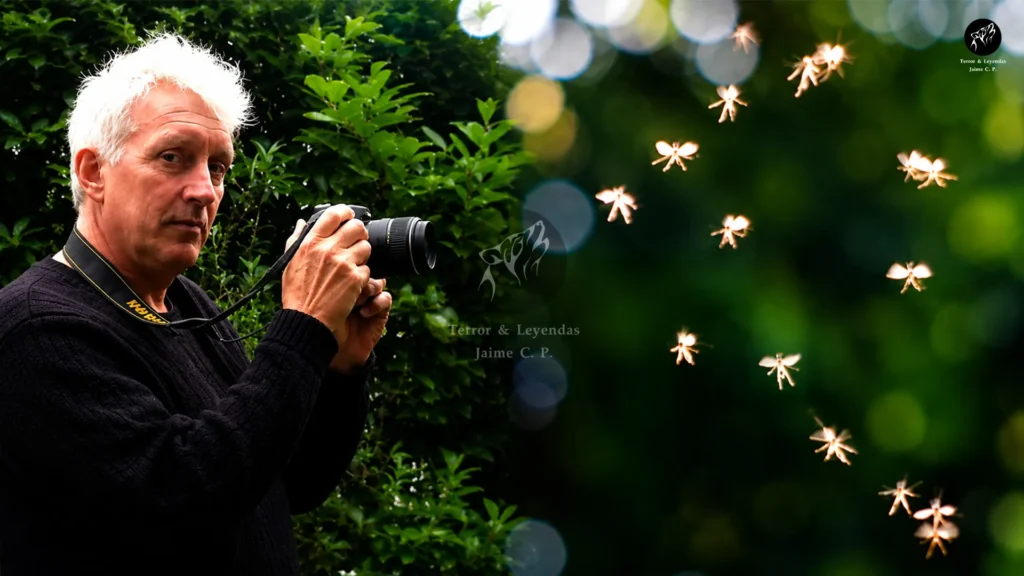

If you’ve ever wondered whether there are real photographs of fairies, you’ve probably heard of the Rossendale Fairies. In 2014, a series of images taken by British photographer John Hyatt sparked a heated debate among believers, skeptics, and photography experts. To some, the photographs showed tiny winged creatures; to others, they were simply out-of-focus insects captured at just the right moment.
Although more than ten years have passed since they were taken, the case continues to generate interest and keeps appearing in documentaries, specialized blogs, and compilations of unsolved mysteries.
In this article, you’ll learn what really happened in Rossendale, who took the photographs, what explanations exist, and why this case remains one of the most talked-about when it comes to alleged evidence of fairies.
The Rossendale Fairies at a Glance
| Fact | Information |
|---|---|
| Case Name | Rossendale Fairies |
| Location | Rossendale Valley, Lancashire, England |
| Year | 2014 |
| Photographer | John Hyatt |
| Profession | Photographer, artist, and university professor |
| Exhibition Venue | Whitaker Museum |
| Were the photographs digitally edited? | John Hyatt stated they were not. |
| Most widely accepted explanation | Out-of-focus insects and pareidolia |
| Is there scientific evidence that fairies exist? | No |
What Are the Rossendale Fairies?
The Rossendale Fairies is the name given to a series of photographs taken in 2014 by John Hyatt in the Rossendale Valley, located in the county of Lancashire in northwest England.
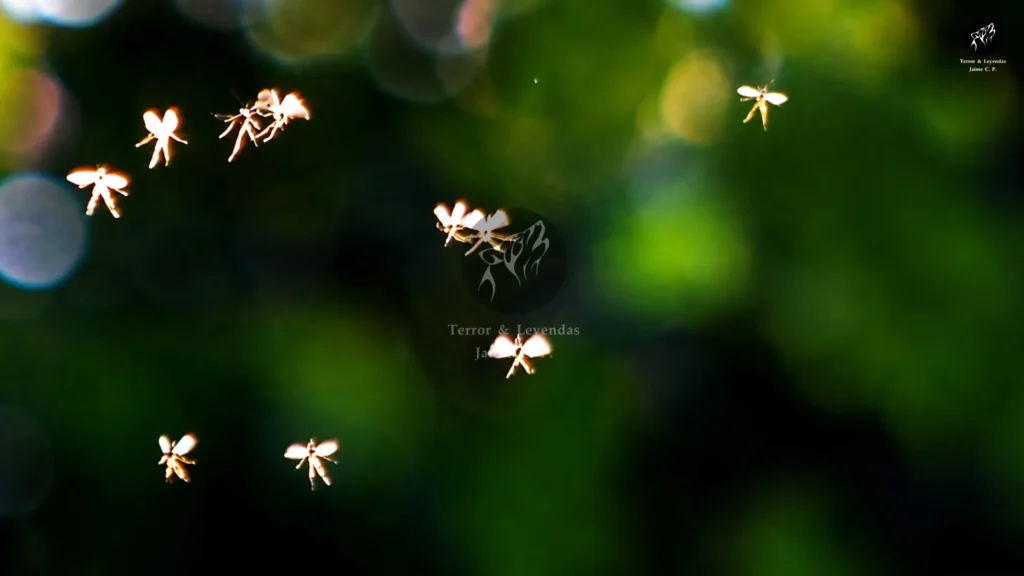
The images show small winged figures suspended among the vegetation. When zoomed in, many people believe they can make out tiny, human-like figures, while others believe they are simply insects captured very close to the camera lens.
What turned this case into an international phenomenon was not only the appearance of the figures, but also the fact that the photographer insisted the photographs had not been altered using editing software.
Since their publication, the images have been analyzed by photographers, entomologists, psychologists specializing in visual perception, and enthusiasts of paranormal phenomena.
However, to this day there is no absolute consensus on exactly what they depict.
Where is Rossendale?
Rossendale is a valley located in the county of Lancashire, in northern England, within a region characterized by its hills, forests, rivers, and vast natural areas.
Historically, this area was known for its textile industry, although today it is renowned for its rural landscapes, hiking trails, and natural areas frequented by photographers and nature lovers.
Its abundant vegetation supports a large insect population, especially during the warmer months of the year. This detail is significant because it is one of the arguments used by those who advocate a natural explanation for John Hyatt’s photographs.
Furthermore, the tranquil and sparsely developed landscape has helped Rossendale retain a certain air of mystery, making it the perfect setting for stories related to British folklore and supposed fairies to emerge.
Who is John Hyatt?
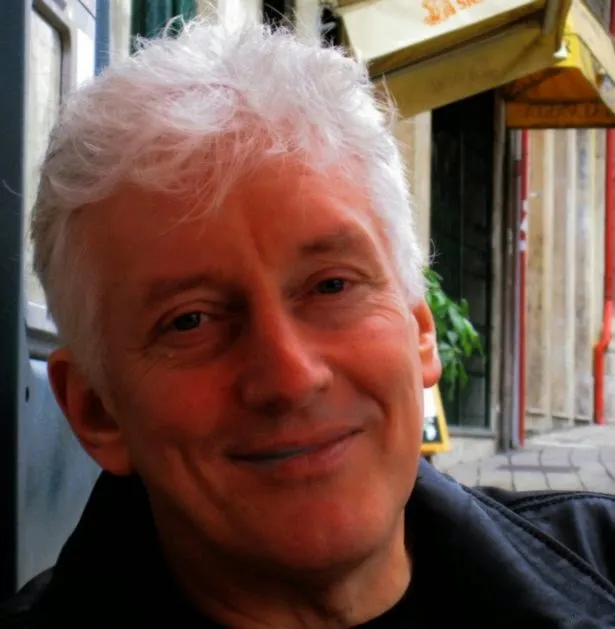
John Hyatt is a British photographer, artist, and professor known for his career in the visual arts. For several years, he held an academic position at Manchester Metropolitan University, where he developed projects related to photography and creativity.
Even before the Rossendale Fairies achieved international fame, Hyatt already had an established career in the art world.
It was precisely his professional experience that was one of the reasons the case attracted so much attention. Many people considered it unlikely that a photographer with such a distinguished track record would want to risk his reputation through deliberate fraud.
However, Hyatt himself always avoided making categorical statements about the nature of the figures captured by his camera.
In various interviews, he explained that he simply presented the images exactly as they were captured and let each person draw their own conclusions.
That open-minded stance further fueled the debate.
How did the photographs come about?
The origins of the case date back to the summer of 2014.
John Hyatt was walking through a wooded area in the Rossendale Valley, taking photographs of wild plants and flowers during the late afternoon.
While he was working, he didn’t notice anything out of the ordinary.
It was only when he reviewed the images on his computer that he discovered the presence of some small figures that appeared to be suspended among the vegetation.
As he later explained, he was surprised by their appearance, since he hadn’t seen any similar creatures during the session.
Instead of hiding the photographs or presenting them as definitive proof of the existence of fairies, he decided to include them in an art exhibition at the Whitaker Museum.
The exhibition attracted the attention of visitors and journalists. Shortly thereafter, the images began to circulate in British and international media, quickly becoming one of the most talked-about photographic mysteries of the decade.
From that moment on, the Rossendale Fairies ceased to be a local curiosity and became a global phenomenon that still raises questions today about human perception, photography, and the possibility—or lack thereof—of the existence of as-yet-unknown creatures.
The images that went around the world
The exhibition of the photographs at the Whitaker Museum marked the beginning of a phenomenon that few had anticipated. What began as an art exhibition soon piqued the interest of the media, researchers, and mystery enthusiasts around the world.
Within days, British newspapers were running headlines about alleged fairies photographed in a valley in Lancashire. The news spread rapidly online and was picked up by websites specializing in science, photography, folklore, and paranormal phenomena.
Thousands of people began analyzing the images on their own. Some claimed to see small winged beings with distinctly human features, while others argued that everything could be explained by optical illusions.
The case garnered enormous attention because it combined several elements that were highly appealing to the public:
- Photographs that appeared to be authentic.
- A photographer with professional credibility.
- A natural setting associated with British folklore.
- The absence of a definitive explanation.
- The eternal debate between science and mystery.
In a short time, the Rossendale Fairies became one of the most talked-about viral phenomena related to alleged supernatural creatures.
What exactly do the photographs show?
One of the reasons this case continues to generate interest is that the images are ambiguous. Depending on who is looking at them, they can be interpreted in completely different ways.
The photographs show small figures suspended among wild plants and flowers. When the images are enlarged, many people believe they can make out features similar to those of a miniature human body.
Among the details often mentioned are:
- A seemingly well-defined head.
- A slender torso.
- Very slender arms and legs.
- Transparent wings.
- Different flight positions.
- Silhouettes that seem to move among the vegetation.
Some figures appear to be floating, while others strike poses reminiscent of a jump, a spin, or a flying motion.
These forms strikingly resemble the classic image of fairies depicted in Victorian illustrations, which explains why many people immediately identified them as fairy creatures.
However, experts point out that digital enlargements can exaggerate shapes and contours. When an image contains few pixels, our brain tends to fill in the missing information and recognize familiar figures even when they do not actually exist.
This aspect of human perception will be key to understanding the explanations proposed by experts.
What did John Hyatt say next?
One of the most interesting aspects of the case is that John Hyatt never categorically claimed to have photographed fairies.
Following the enormous media attention, he gave several interviews to explain the origin of the images and clear up some misunderstandings that had arisen in the press.
Hyatt emphasized several points:
- The photographs had not been digitally altered.
- The images showed exactly what his camera captured.
- He did not see those figures while taking the photographs.
- He discovered the silhouettes only after reviewing the images later.
He also explained that he returned to the same location several times with the intention of repeating the experience.
He photographed insects and vegetation under similar conditions, but stated that he never managed to capture exactly the same images again.
Far from presenting his photographs as proof of the existence of fairies, Hyatt took a cautious stance.
In various statements, he noted that he did not know the nature of those figures and that he preferred that each person analyze the images without preconceived notions.
That attitude helped keep the debate alive, as it avoided both asserting a paranormal explanation and unconditionally accepting a conventional one.
Timeline of the Case
Understanding how this story unfolded helps explain why the Rossendale Fairies remain a subject of debate.
Summer of 2014
John Hyatt conducts a photo shoot in the Rossendale Valley while photographing wild plants and flowers.
A few days later
While reviewing the images, he discovers small winged figures that he hadn’t noticed during the shoot.
2014
The photographs are included in an exhibition held at the Whitaker Museum.
In the weeks that followed
The British media began to report the news, and the images quickly gained international attention.
Late 2014
Photographers, entomologists, and specialists in visual perception analyze the photographs and propose various natural explanations.
Subsequent years
The case continues to be featured in documentaries, television programs, and articles about modern mysteries, becoming one of the best-known examples of photographs whose interpretation remains open to interpretation.
Why did the case go viral?
Not all mysterious photographs manage to capture the attention of millions of people. In the Rossendale case, several factors coincided that contributed to its widespread circulation.
The photographer’s credibility
John Hyatt was not an unknown amateur. His career as a photographer and college professor led many people to take his statements more seriously.
The Power of Images
The photographs were ambiguous enough to allow for different interpretations. It was precisely that ambiguity that prompted thousands of people to share them and discuss them.
The Allure of Mystery
Stories about unknown creatures always spark curiosity. When accompanied by seemingly authentic images, interest tends to multiply.
The Influence of Social Media
In 2014, platforms such as Facebook, Twitter, and numerous specialized blogs facilitated the case’s rapid spread. The photographs began circulating with almost no context, which fueled sensational headlines and all kinds of speculation.
The Connection to British Folklore
The figures resembled the fairies depicted in traditional English folktales. That association led many people to immediately link the images to ancient legends, reinforcing the cultural aspect of the case.
What impact did the photographs have?
Beyond the debate over their origin, the images from Rossendale demonstrated the enormous power a photograph can have to spark conversation.
The case attracted the attention of:
- International media outlets.
- Professional photographers.
- Entomologists.
- Psychologists specializing in visual perception.
- Folklore researchers.
- Paranormal enthusiasts.
Each group analyzed the photographs from a different perspective, which explains why there is still no universally accepted interpretation today.
While some consider it one of the best examples of how human perception can transform an ambiguous image, others continue to see in the photographs a mystery that has not yet been fully solved.
Rational explanations: What do science and photography have to say?
Ever since the photographs of the Rossendale Fairies were made public, numerous experts have attempted to determine what they actually depict. Although the images captured the imagination of thousands of people, most analyses have focused on explanations based on natural phenomena.
To date, there is no peer-reviewed scientific research concluding that the photographs show fairies or an unknown species. Instead, the most widely accepted hypotheses point to optical effects, insects, and normal processes of visual perception.
The theory of out-of-focus insects
The most widely supported explanation holds that the figures are small insects that flew very close to the camera lens at the moment the photograph was taken.
When an insect flies just a few centimeters from the lens, various effects can occur that completely alter its appearance.
Among these are:
- Motion blur.
- Perspective distortion.
- Wings transformed into translucent trails.
- Almost invisible legs.
- Loss of body definition.
The result can be a silhouette very different from that of the actual insect.
This type of photograph is not uncommon. Many nature photographers have captured similar images when small insects cross their field of view while they are focusing on flowers, plants, or landscapes.
The Chironomid Hypothesis
One of the most frequently cited proposals was put forward by entomologist Erica McAlister of the Natural History Museum in London.
After analyzing the images, she noted that the figures could correspond to insects of the Chironomidae family, known as midge larvae.
These small dipterans exhibit characteristics that match many of the features observed in the photographs.
For example:
- They are extremely small.
- They have long, slender legs.
- They have transparent wings.
- They form swarms.
- They fly near wet areas and dense vegetation.
When one flies very close to the subject, the blur can distort its appearance to the point that it looks like a small humanoid figure.
Although this explanation does not identify the insect in each image with absolute certainty, it is one of the most widely accepted hypotheses among experts.
Pareidolia: When the Brain Fills in the Image
Another key concept for understanding this case is pareidolia.
It is a psychological phenomenon through which the brain identifies familiar shapes in ambiguous stimuli.
In other words, our mind tries to find recognizable patterns even when the visual information is incomplete.
That’s why many people think they see:
- Faces in the clouds.
- Animals in the mountains.
- Human figures in water stains.
- Faces on the surface of the Moon.
Rossendale’s photographs could work in the same way.
When looking at vague shapes, the brain automatically fills in the missing information and interprets them as little people with wings.
Pareidolia does not mean that someone is deliberately imagining something that does not exist. It is a completely normal process that affects everyone to a greater or lesser extent.
For this reason, many psychologists believe that this phenomenon explains why different observers describe images in very different ways.
What do photography experts think?
In addition to entomologists, numerous professional photographers analyzed the images from a technical perspective.
Most agreed that a combination of factors can produce very similar images.
Among them:
- A shallow depth of field.
- Insect movement.
- High speed of movement.
- Side lighting.
- Focus directed at the vegetation rather than the insect.
When these elements come together, the result can produce unexpected shapes that the human eye never perceived during the shot.
Several experts also noted that modern digital cameras capture details that are impossible to see with the naked eye, especially when the images are later enlarged to high resolution.
From this perspective, John Hyatt’s photographs would not be evidence of extraordinary creatures, but rather an example of how technology can record unusual visual phenomena.
Fairies in British Folklore
To understand why so many people identified those figures as fairies, it is also necessary to understand the cultural context.
Fairies have been part of British folklore for centuries.
In England, Scotland, Wales, and Ireland, stories abound about tiny beings that inhabit forests, hills, rivers, and meadows.
However, traditional fairies have little in common with the modern image popularized by movies and children’s literature.
In many ancient legends, they were considered mysterious, intelligent, and even dangerous creatures.
Depending on the region, they could protect certain natural sites or play pranks on those who trespassed on their territory.
Over time, especially during the Victorian era, they began to be depicted as tiny, winged beings with human-like appearances.
That depiction eventually became the universal image of fairies that we know today.
Therefore, when Rossendale’s photographs appeared in the media, many people immediately drew a connection to those classic illustrations.
Comparison with the Cottingley Fairies
Whenever the Rossendale Fairies are mentioned, another famous story inevitably comes up: the Cottingley Fairies.
Both cases share several elements, although they also have significant differences.
Similarities
- They took place in England.
- They became famous thanks to photographs.
- They generated a huge media buzz.
- They divided public opinion.
- They fueled the debate between believers and skeptics.
These similarities explain why the two cases are often mentioned together.
Differences
The differences, however, are fundamental.
In Cottingley, the girls confessed decades later that the images were a hoax created using cardboard cutouts.
In Rossendale, there has never been any evidence of digital manipulation or deliberate staging of the photographs.
Furthermore, John Hyatt never claimed to have proven the existence of fairies.
His stance was always more cautious; he simply stated that the images showed exactly what his camera had captured.
This difference explains why the Rossendale case remains open to different interpretations.
Is there any evidence that the Rossendale Fairies are real?
After analyzing all available hypotheses, the answer remains the same.
There is no scientific evidence to confirm the existence of fairies in the Rossendale photographs.
To date, no biological remains, independent recordings, or physical evidence have been found to support the presence of unknown creatures in the area.
What does exist, however, are photographs whose interpretation remains a subject of debate.
What We Know
These aspects are reasonably well documented:
- John Hyatt took the photographs in 2014.
- The images were publicly displayed.
- No digital manipulation has been demonstrated.
- Various experts have proposed natural explanations.
- There is no absolute consensus on the exact identity of the figures.
What We Don’t Know
Several questions remain unanswered.
- Exactly which insect appears in each photograph.
- Whether all the images show the same phenomenon.
- Why do some figures have more clearly defined, seemingly humanoid shapes than others?
Although these unknowns continue to fuel interest in the case, they do not constitute evidence that the figures are real fairies.
What We Know and What Remains a Mystery
After analyzing the case from different perspectives, it is possible to separate the verified facts from the hypotheses and speculations that have emerged over the years.
This distinction is important because much of the popularity of the Rossendale Fairies stems precisely from the mix of verifiable information, personal interpretations, and stories circulating online.
Verified Facts
The following points are supported by public statements, exhibition records, and coverage by various media outlets.
- John Hyatt took the photographs in 2014 in the Rossendale Valley.
- The images were publicly exhibited at the Whitaker Museum.
- Hyatt stated that the photographs had not been digitally manipulated.
- The images sparked significant media interest both within and outside the United Kingdom.
- Photographers, entomologists, and specialists in visual perception proposed explanations based on natural phenomena.
Aspects that have not been proven
There are also questions for which there is no conclusive evidence.
- That the figures photographed are fairies.
- That they belong to an unknown species.
- Whether there is biological evidence of similar creatures.
- Whether the photographs depict a paranormal phenomenon.
Consequently, the images remain open to interpretation, although the explanation based on out-of-focus insects and pareidolia remains the most widely accepted hypothesis among specialists.
Myths and Realities About the Rossendale Fairies
Over the years, numerous inaccurate claims about this case have circulated. Some stem from sensationalist headlines, and others from posts shared on social media without context.
| Myth | Reality |
|---|---|
| John Hyatt claimed he photographed real fairies. | John Hyatt never categorically stated that the figures were fairies. |
| The photographs prove that fairies exist. | There is no scientific evidence supporting that conclusion. |
| The images were confirmed to be a hoax. | No digital manipulation has been demonstrated, and Hyatt never admitted to staging the photographs. |
| Science has completely solved the mystery. | The most widely accepted explanation involves out-of-focus insects and pareidolia, but the exact identity of every figure has not been definitively established. |
| Everyone interprets the photographs the same way. | The images are ambiguous, and people’s interpretations vary depending on perception and cognitive factors such as pareidolia. |
This discrepancy between facts and beliefs explains why the debate continues more than a decade later.
Fun Facts About the Rossendale Fairies
Beyond scientific explanations and media attention, the case offers some interesting facts that help us understand its impact.
- The photographs continue to be shared regularly on social media and forums dedicated to mysteries.
- The case often appears on lists of the UK’s most well-known paranormal phenomena.
- Many publications continue to use headlines that present the images as if they proved the existence of fairies, even though the content provides no new evidence.
- Unlike other famous cases, John Hyatt never attempted to start an organization, sell alleged evidence, or promote a specific paranormal theory.
- The mystery has served as an example in discussions about visual perception, digital photography, and critical thinking.
Why do the Rossendale Fairies continue to fascinate?
Not all mysteries remain unsolved for so many years.
In this case, several factors come together to explain their enduring appeal.
First of all, the photographs are truly striking. Even those who accept the scientific explanation acknowledge that the figures are surprising at first glance.
Second, the photographer had an established professional career, which led many people to pay special attention to his statements.
Another important factor is the lack of definitive proof. Although the hypothesis that the figures are out-of-focus insects is widely accepted, there is no evidence that identifies each photographed figure with absolute certainty.
Finally, fairies have been part of the collective imagination for centuries. The combination of an ancient legend with seemingly authentic photographs makes the case a particularly compelling story for the public.
Frequently Asked Questions About the Rossendale Fairies
Where were the photographs taken?
The images were taken in the Rossendale Valley, located in the county of Lancashire, in northwestern England.
Who took the photographs?
The photographer was John Hyatt, a British photographer, artist, and university professor.
Were the images manipulated?
John Hyatt stated that the photographs had not been altered using editing software. To date, no evidence of digital manipulation has been found.
Does science confirm that they are fairies?
No. The explanation with the most scientific support points to small insects photographed very close to the lens and to a psychological phenomenon known as pareidolia.
Has the case been definitively solved?
There is no official resolution. However, most experts believe that the photographs have an explanation consistent with natural phenomena.
Can the original photographs be viewed?
Yes. The images have been published by numerous media outlets and were publicly displayed at the Whitaker Museum following their discovery.
Conclusion
The Rossendale Fairies represent one of the most interesting cases in contemporary photography because they combine art, visual perception, folklore, and scientific debate within a single story.
Despite the many theories that have emerged since 2014, no research has provided evidence confirming the existence of fairies. Similarly, it has not been proven that John Hyatt deliberately manipulated his photographs.
The explanation based on out-of-focus insects and pareidolia remains the most widely accepted among experts. However, the appeal of the case lies precisely in the fact that it invites the observer to question how they interpret the images and to what extent our perception can influence what we believe we see.
Beyond the mystery, the Rossendale Fairies remind us of the importance of analyzing evidence with a critical eye, distinguishing facts from speculation, and maintaining an open—yet well-founded—mindset toward any extraordinary phenomenon.