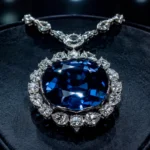
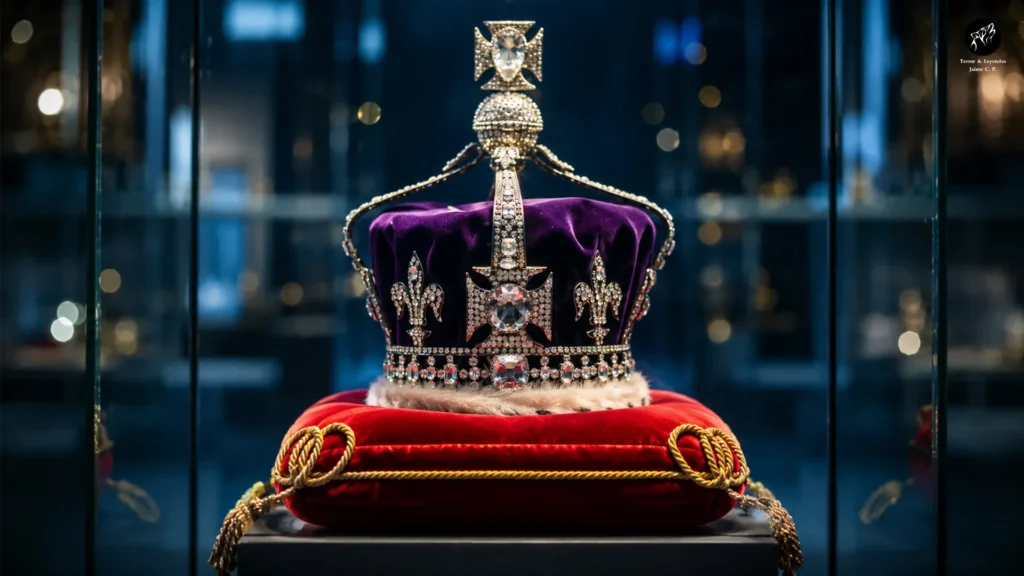

Few jewels have captivated people as much as the Koh-i-Noor. For more than seven centuries, this diamond has been a symbol of wealth, power, and conquest. Kings, emperors, and conquerors fought to possess it, while an ancient legend claimed that any man who wore it would suffer a tragic fate.
Its history blends documented facts with tales passed down from generation to generation. It is not just a gemstone; it is a silent witness to wars, the rise and fall of empires, and disputes that continue to this day.
It is currently part of the British Crown Jewels, but its presence remains a source of controversy. India, Pakistan, Afghanistan, and even Iran have demanded its return, arguing that the diamond was obtained during conflicts or under colonial rule.
How did the story of this jewel begin? Where does it really come from? And why does it continue to spark so much interest centuries later?
What is the Koh-i-Noor?
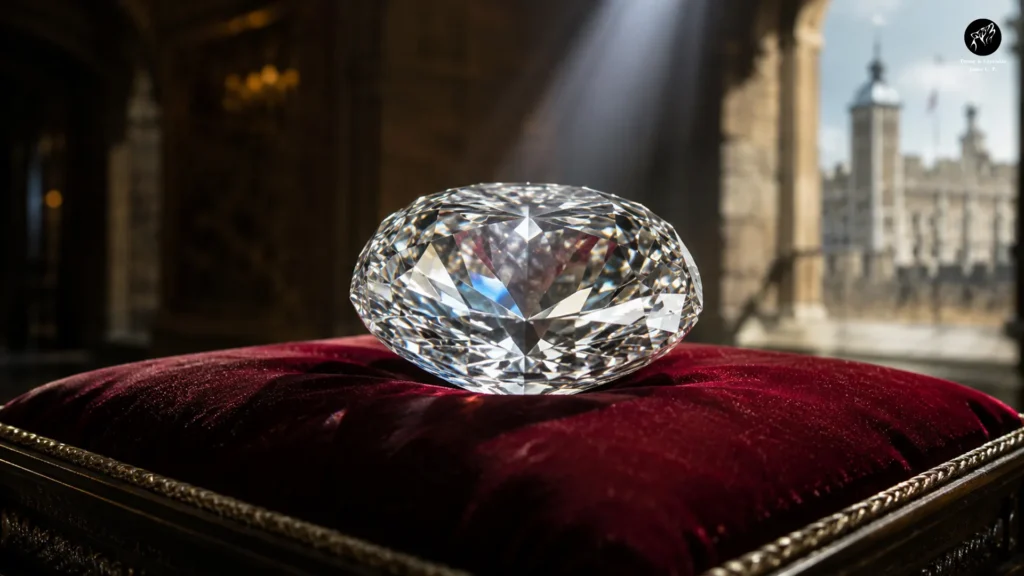
The Koh-i-Noor is one of the most famous diamonds in history and probably the most controversial in the world. Its name means “Mountain of Light, ” a name it received in the 18th century following the sacking of Delhi by the Persian ruler Nader Shah.
Unlike other famous diamonds, the Koh-i-Noor is not notable solely for its size. What truly makes it exceptional is the extraordinary history that surrounds it. For centuries, it passed from one empire to another as war booty, a diplomatic gift, or a symbol of power, becoming one of Asia’s most coveted jewels.
Originally, the diamond weighed about 186 carats in its rough state. After being recut in London in 1852 by order of Prince Albert, Queen Victoria’s husband, its weight was reduced to 105.6 carats, a weight it retains to this day.
Although it is now admired by millions of visitors, its history is marked by episodes of violence, invasions, and political conflicts.
The Meaning of “Koh-i-Noor”
The name Koh-i-Noor comes from Persian:
- Koh means “mountain.”
- Noor means “light.”
That is why it is usually translated as “Mountain of Light.”
According to tradition, it was the Persian conqueror Nader Shah who uttered these words as he gazed upon the diamond’s brilliance after conquering Delhi in 1739. Since then, that name has been forever linked to the stone.
Before receiving this name, the diamond had passed through various Asian courts without a universal identification, which has made it difficult to accurately reconstruct its early centuries of history.
The Origin of the Koh-i-Noor
Determining the exact origin of the Koh-i-Noor is no easy task. Most historians agree that it was mined in the legendary Golconda mines, located in what is now the Telangana region of southern India.
For several centuries, Golconda was the world’s leading center for diamond mining. Before the discovery of deposits in Brazil and South Africa, virtually all known diamonds came from this region.
The Golconda mines produced some of the most famous gems in history, including:
- Koh-i-Noor.
- The Hope Diamond.
- Daria-i-Noor.
- The Regent Diamond.
- Orlov Diamond.
The extraordinary quality of these diamonds made Golconda a symbol of wealth and prosperity, attracting merchants from Persia, Arabia, and Europe.
Although there are various theories regarding the exact date of their discovery, many experts date their origin to between the 12th and 13th centuries.

The earliest historical references
The early history of the Koh-i-Noor remains shrouded in mystery.
Some traditional accounts claim that the diamond belonged to the kings of the Kakatiya dynasty, which ruled part of southern India between the 12th and 14th centuries. However, documentary evidence is scarce, and many accounts blur the lines between historical facts and legends.
What does seem clear is that the diamond was already considered an exceptional gem long before it reached the Persian and Mughal courts.
Its extraordinary size and clarity meant that it was quickly associated with royal power. At that time, possessing a stone with such characteristics was a demonstration of authority and political legitimacy.
YOU MAY BE INTERESTED IN
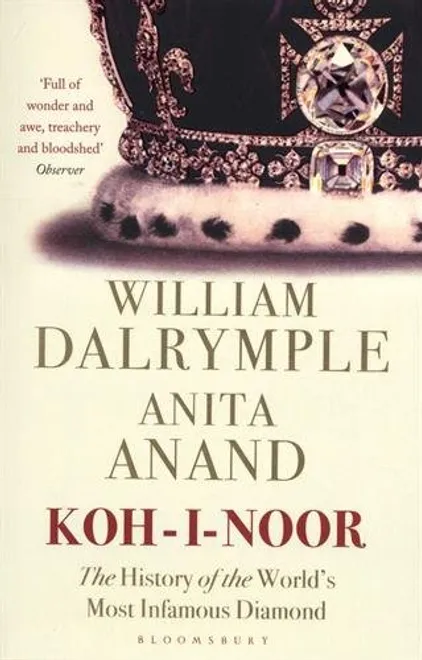
Koh-I-Noor: The History of the World’s Most Infamous Diamond (in English)
Koh-I-Noor: The History of the World’s Most Infamous Diamond offers the first complete and rigorously documented history of one of the world’s most famous and controversial jewels. William Dalrymple and Anita Anand trace the extraordinary journey of the legendary diamond from the mines of Golconda to the British Crown Jewels, debunking myths and separating historical reality from the legends that have surrounded it for centuries.
The book begins with a defining moment: March 29, 1849, when the young Maharaja Duleep Singh, barely ten years old, was forced to hand over the Koh-i-Noor to Queen Victoria following the British annexation of the Punjab. Building on that episode, the authors recount a gripping history marked by wars, conquests, betrayals, assassinations, colonialism, and political disputes that swept through South and Central Asia.
Drawing on exhaustive research based on historical sources, the book challenges traditional accounts of the diamond and reveals how many of the stories we know originated from rumors and folk tales that, over time, became accepted facts. The result is a gripping account that not only explains the origin and history of the Koh-i-Noor but also analyzes its immense symbolic significance and the controversies still surrounding its continued presence in the British Crown.
Considered a definitive work on the subject, this study combines historical rigor with a lively and engaging narrative, making it essential reading for anyone who wants to learn the true story of the world’s most famous diamond.
The Koh-i-Noor and the Delhi Sultanate
During the 14th century, northern India witnessed the rapid expansion of the Delhi Sultanate, one of Asia’s major powers.
Military campaigns enabled the sultans to acquire enormous wealth from various Hindu kingdoms. Among those treasures, according to various chronicles, was the diamond that would later become known as the Koh-i-Noor.
Although some details remain a subject of debate among historians, this period marked the beginning of a long succession of changes in ownership. From then on, the diamond would pass from one owner to another as a result of wars, conquests, and political alliances.
This pattern would repeat itself over the following centuries and would be one of the factors that would fuel the future legend surrounding its supposed curse.
Its Arrival in the Mughal Empire
One of the most important chapters in the history of the Koh-i-Noor began in 1526, when Babur, founder of the Mughal Empire, defeated Sultan Ibrahim Lodi at the First Battle of Panipat.
Following the victory, the diamond became part of the Mughals’ immense treasure. Babur himself mentions in his memoirs the existence of a priceless gemstone, which many researchers identify as the Koh-i-Noor.
For nearly two centuries thereafter, the diamond remained in the possession of the Mughal emperors and was considered one of the empire’s greatest symbols of authority.
Its prestige grew even further during the reign of Shah Jahan, the same emperor who ordered the construction of the Taj Mahal. It was he who incorporated the diamond into the famous Peacock Throne, a masterpiece of goldsmithing encrusted with gold, pearls, rubies, emeralds, and diamonds that symbolized the absolute power of the Mughals.
During this period, the Koh-i-Noor achieved international fame. European merchants, travelers, and ambassadors described the magnificence of the imperial treasure, turning the diamond into a legend long before it reached Europe.
The Sacking of Delhi and the Origin of the Name “Koh-i-Noor”
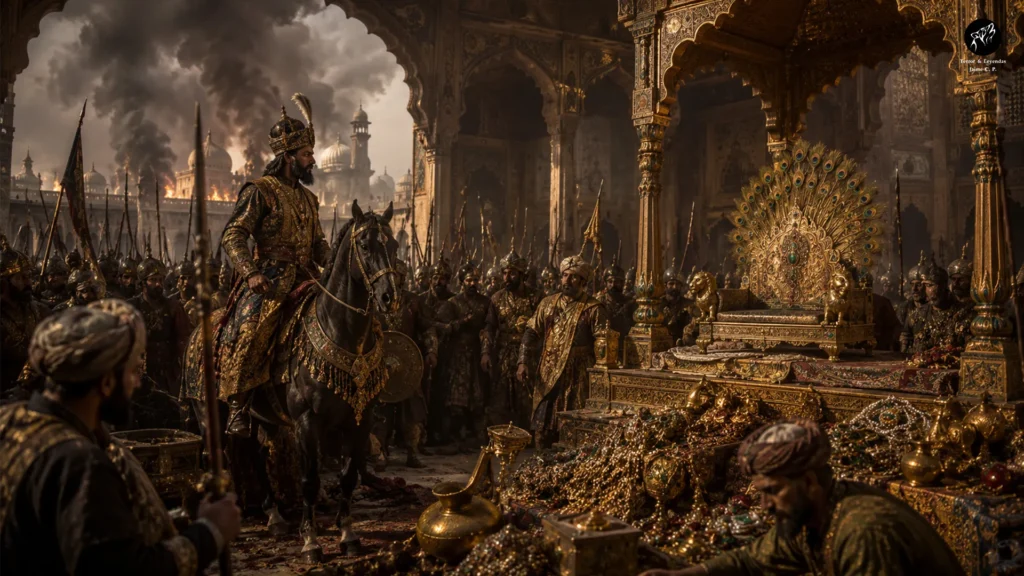
In 1739, one of the most dramatic episodes in the diamond’s history forever changed its fate. The Persian ruler Nader Shah, founder of the Afsharid dynasty and recognized as one of the great military strategists of his time, invaded northern India and defeated the Mughal emperor Muhammad Shah at the Battle of Karnal.
Following the victory, the Persian army entered Delhi and carried out a sacking that lasted several days. Thousands of people died, and the immense imperial treasure was confiscated. Among the riches transported to Persia was the legendary Peacock Throne, considered one of the masterpieces of goldsmithing worldwide.
According to tradition, the Koh-i-Noor was hidden among the Mughal emperor’s personal belongings. Some accounts say that Muhammad Shah hid the diamond inside his turban to prevent it from falling into the hands of the invader. However, Nader Shah discovered the hiding place thanks to an informant at court.
When the Persian ruler beheld the stone’s extraordinary brilliance for the first time, he exclaimed:
“Koh-i-Noor,” which in Persian means “Mountain of Light.”
From that moment on, the diamond became known by the name it retains to this day.
The Koh-i-Noor in Persia
The arrival of the Koh-i-Noor in Persia reinforced Nader Shah’s image as one of Asia’s most powerful monarchs.
In addition to the diamond, the conqueror took enormous quantities of gold, silver, precious stones, and works of art that transformed the Persian economy for several years.
However, Nader Shah’s fortunes changed rapidly.
His military campaigns depleted the empire’s resources and sparked growing discontent among his own generals. In 1747, he was assassinated in a plot organized by members of his own army.
After his death, the vast imperial treasury was plundered and divided among various military leaders and family members.
The Koh-i-Noor changed hands once again.
It was the beginning of a new era marked by internal wars and constant power struggles.
The diamond passes to the Afghan Empire
After the assassination of Nader Shah, the diamond came into the possession of Ahmad Shah Durrani, founder of the Afghan Empire.
For decades, it remained within the Durrani family as one of the main symbols of the new kingdom’s legitimacy.
However, succession struggles among Ahmad Shah’s descendants led to numerous internal conflicts.
One of his heirs, Shah Shuja Durrani, lost the throne and was forced to flee with his family.
In exile, he took the Koh-i-Noor with him, aware that this jewel was one of the few assets capable of ensuring his political survival.
The diamond once again became a valuable bargaining chip.
The Sikh Empire and Maharaja Ranjit Singh
In the early 19th century, Shah Shuja sought refuge in the Sikh Empire, ruled by the famous Maharaja Ranjit Singh.
The ruler agreed to protect the Afghan monarch, but on one condition.
He wanted the Koh-i-Noor.
After lengthy negotiations and intense political pressure, Shah Shuja finally handed over the diamond in 1813.
With that, the jewel officially became part of the Sikh Empire’s treasury.
For Ranjit Singh, the Koh-i-Noor represented much more than just a precious stone.
It was a symbol of international prestige and a sign that his kingdom had inherited some of the power of the ancient empires of Asia.
During the final years of his life, he wore the diamond at official ceremonies and made it one of the most important pieces in his collection.
The Death of Ranjit Singh and the Onset of Chaos
The stability of the Sikh Empire came to an end with the death of Ranjit Singh in 1839.
His death triggered an intense struggle for the throne.
In just a few years, several members of the royal family were assassinated or deposed.
Court intrigues, clashes among nobles, and military conflicts severely weakened the kingdom.
Meanwhile, the British East India Company was closely monitoring the situation.
The weakening of the Sikh Empire presented a unique opportunity to expand British rule over northern India.
The Treaty of Lahore
Following the Second Anglo-Sikh War, the British army decisively defeated the Sikh Empire.
In 1849, the young Maharaja Duleep Singh, who was barely ten years old, was forced to sign the Treaty of Lahore.
Among the numerous conditions imposed by the British, one was particularly significant.
The treaty stipulated that the Koh-i-Noor must be handed over to Queen Victoria.
For the British, the diamond symbolized the definitive victory over one of the last great independent kingdoms of India.
For many Indian historians, however, that handover symbolizes one of the most emblematic episodes of British colonialism.
It is precisely this event that remains the main argument used by those calling for the diamond’s return.
The Journey to England
Once it became part of the British crown jewels, the Koh-i-Noor began a long sea voyage to the United Kingdom.
The journey was not without its difficulties.
During the voyage, the crew suffered an outbreak of cholera, and the ship weathered severe storms before finally arriving in Portsmouth.
In July 1850, the diamond was officially presented to Queen Victoria.
The arrival of the Koh-i-Noor sparked enormous excitement among the British public.
Newspapers described the jewel as one of the greatest treasures ever seen in Europe.
However, the public’s initial reaction was one of some disappointment.
Many had expected a spectacular brilliance, but the diamond retained an old-fashioned cut that did not make the most of its optical potential.
The Koh-i-Noor’s New Cut
With the aim of increasing its brilliance, Prince Albert decided to have the diamond recut.
The task was entrusted to expert Dutch jewelers under the supervision of British specialists.
The process began in 1852 and lasted several weeks.
The result was visually stunning.
The Koh-i-Noor became brighter and reflected light better.
However, the change came at a high cost.
Its weight dropped from approximately 186 carats to 105.6 carats, losing nearly 40% of its original mass.
This decision remains a subject of debate among gemologists and historians.
While some believe that the new cut highlighted the diamond’s beauty, others believe it destroyed part of its historical value and its original appearance.
The Koh-i-Noor in Queen Victoria’s possession
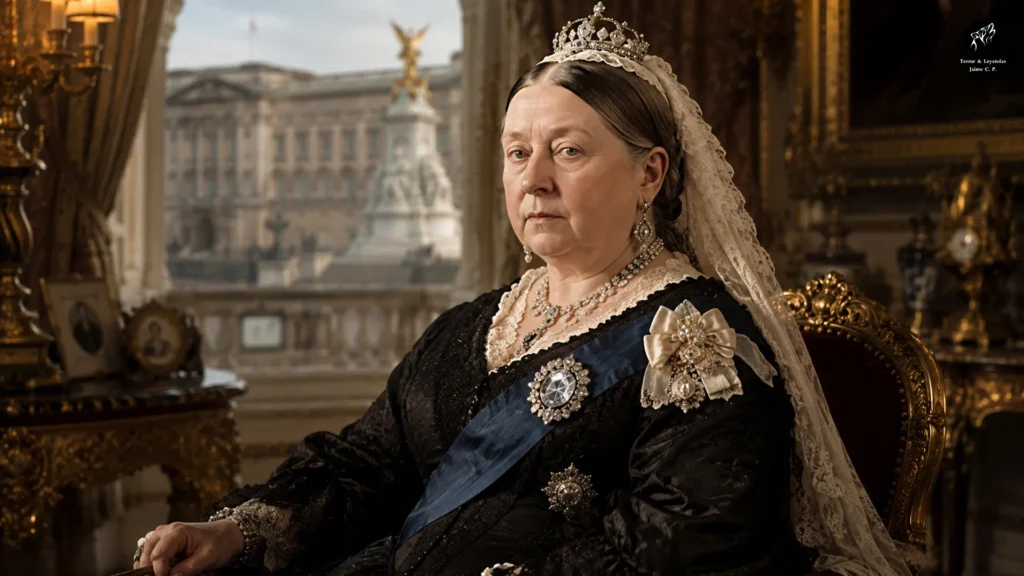
After it was recut, Queen Victoria wore the Koh-i-Noor as a brooch and in various pieces of her personal jewelry.
Over time, the diamond was incorporated into several crowns worn by the queen consorts of the British monarchy.
Interestingly, no British king ever wore it again.
This tradition reinforced an ancient belief that had been circulating for centuries: the Koh-i-Noor brought misfortune to the men who possessed it.
Although there is no historical evidence to confirm the existence of a curse, the succession of wars, assassinations, and losses of power associated with many of its owners fueled one of the world’s most famous legends.
The Curse of the Koh-i-Noor
If there is one thing that has made the Koh-i-Noor a global legend, it is the supposed curse that has accompanied it for centuries. Unlike other famous diamonds, this gem symbolizes not only wealth and power, but also tragedy and misfortune.
The most widespread belief states that:
“Whoever possesses the Koh-i-Noor will rule the world, but will also suffer all its misfortunes. Only God or a woman can wear it without suffering its effects.”
There is no historical document confirming the exact origin of this phrase. Most researchers believe that the legend began to take shape in the 19th century, when the diamond arrived in Great Britain and began to arouse enormous interest among the European public.
However, the long list of wars, murders, betrayals, and the fall of empires associated with its owners made the story seem too extraordinary to be a mere coincidence.
Who were the alleged victims of the curse?
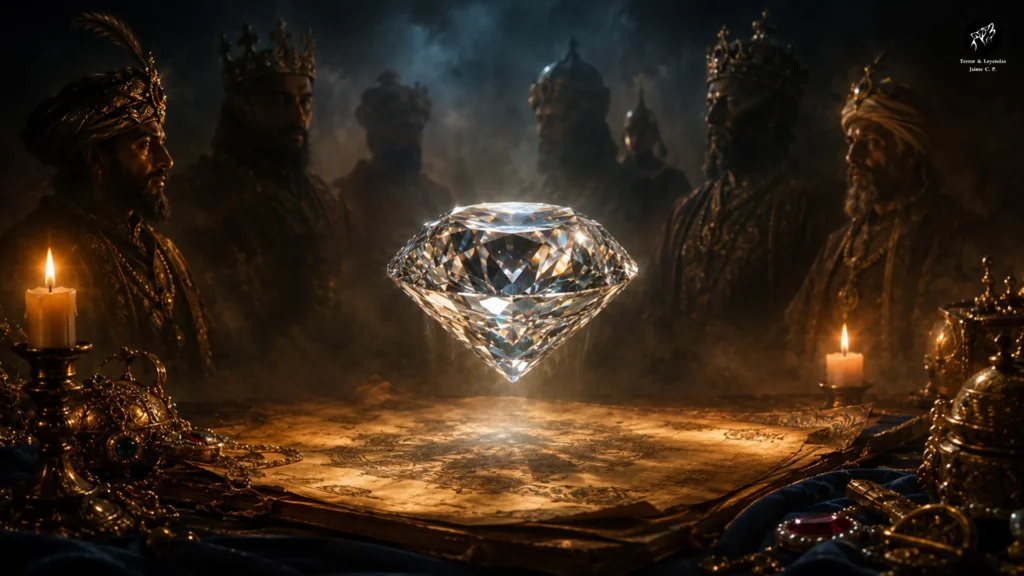
Proponents of the legend often point out that many of the men who owned the Koh-i-Noor eventually lost power or met a tragic end.
Among them are:
- The rulers of the Kakatiya dynasty, defeated by the Delhi Sultanate.
- Ibrahim Lodi, defeated at the First Battle of Panipat.
- The Mughal emperors, whose empire eventually disintegrated.
- Nader Shah, assassinated by his own officers.
- Shah Shuja Durrani, dethroned and imprisoned.
- Ranjit Singh, whose death marked the beginning of the collapse of the Sikh Empire.
- Duleep Singh, forced to hand over the diamond while still a child and exiled from the Punjab.
Although these events are documented, historians point out that most of the rulers of that era lived amid wars and political intrigues. Therefore, it cannot be said that the Koh-i-Noor was the cause of their misfortunes.
Why is it worn only by queens?
The tradition that only women of the British royal family may wear the Koh-i-Noor is one of the best-known curiosities about this jewel.
After Queen Victoria, the diamond was incorporated into the crowns of:
- Queen Alexandra.
- Queen Mary.
- Queen Elizabeth (the Queen Mother).
No modern British king has worn it at official ceremonies.
Although there is no written rule prohibiting it, the custom became established over time and reinforced the popularity of the legend.
At King Charles III’s coronation in 2023, Queen Camilla did not wear the crown containing the Koh-i-Noor. The decision was interpreted as a gesture to avoid reigniting the international debate over the diamond’s ownership and claims for its return.
The International Dispute Over the Koh-i-Noor
Beyond the legend, the Koh-i-Noor is today one of the most controversial historical artifacts in the world.
Its arrival in the United Kingdom was linked to the expansion of the British Empire in India, which is why several countries maintain that the diamond was obtained under unjust circumstances.
India
India considers the Koh-i-Noor to be part of its cultural heritage and has requested its return on several occasions.
Indian authorities argue that the diamond was handed over to the British Crown following the annexation of the Punjab, when Maharaja Duleep Singh was a minor and unable to make decisions independently.
Pakistan
Pakistan has also laid claim to the jewel, pointing out that the Treaty of Lahore was signed in a territory that is now part of its country.
Afghanistan
Afghanistan maintains that the Koh-i-Noor belonged to the Durrani dynasty for decades and that, therefore, it also has historical claims to the gem.
The United Kingdom’s Position
The British government maintains that the diamond was legally acquired in accordance with the agreements of the time and that it is part of the Crown Jewels.
To date, no British administration has shown any intention of returning the stone.
This controversy makes the Koh-i-Noor much more than just a jewel: it is also a symbol of the debate over the legacy of colonialism.
Where is it located today?
Today, the Koh-i-Noor is part of the British Crown Jewels.
It is held in the Crown’s custody and is part of the historical collection on display at the Tower of London, one of the most visited monuments in the United Kingdom.
Every year, millions of people come to see the royal jewels and learn about the history of this legendary diamond.
Despite its immense historical and cultural value, the Koh-i-Noor does not have an official price. Experts believe its symbolic importance is so great that it is virtually impossible to estimate its market value.
Fun Facts About the Koh-i-Noor
In addition to its history, the Koh-i-Noor holds many surprising facts.
- Its name means “Mountain of Light.”
- It was mined in the famous Golconda mines in India.
- It has belonged to kings, emperors, and conquerors for more than seven centuries.
- It is one of the most studied historical diamonds in the world.
- Its original weight was around 186 carats, but after being cut , it was reduced to 105.6 carats.
- It has never been sold through a conventional commercial transaction.
- Its historical journey spans India, Persia, Afghanistan, the Sikh Empire, and the United Kingdom.
- It is one of the best-known pieces in the British Crown Jewels.
The Koh-i-Noor and Other Legendary Jewels
The Koh-i-Noor is not the only gem shrouded in mystery. Throughout history, other precious stones have also been the subject of legends.
Hope Diamond
Known for its intense blue color, the Hope Diamond is also associated with a supposed curse that is said to have befallen several of its owners.
Orlov Black Diamond
Another jewel linked to supernatural tales. According to tradition, it was stolen from a Hindu temple, which is said to have triggered a series of misfortunes.
The Black Prince’s Ruby
Although it is actually a spinel, this gem has accompanied English monarchs since the Middle Ages and has been present at important battles.
These stories show how precious stones have transcended their material value to become cultural symbols steeped in myths and traditions.
Myth or reality?
The story of the Koh-i-Noor demonstrates that reality and legend can coexist for centuries.
The historical facts are well documented: wars, conquests, treaties, and changes in ownership are all part of its history.
The curse, on the other hand, belongs to the realm of popular belief.
It is possible that the series of tragedies suffered by some of its owners contributed to the myth’s emergence. It is also likely that Victorian literature and the press helped to popularize it.
Whatever the explanation, the Koh-i-Noor continues to spark the curiosity of millions of people and remains one of the most fascinating jewels ever known.
Frequently Asked Questions (FAQ)
What does Koh-i-Noor mean?
It means “Mountain of Light, ” a name of Persian origin attributed to Nader Shah.
How many carats is the Koh-i-Noor?
It currently weighs 105.6 carats, following the recut performed in London in 1852.
Where is the Koh-i-Noor?
It is part of the British Crown Jewels and is kept at the Tower of London.
Who owns the Koh-i-Noor?
Legally, it belongs to the British Crown, although several countries have historical claims to its ownership.
Is there really a curse?
There is no historical or scientific evidence to prove the existence of a curse. It is a popular legend fueled by the diamond’s history.
Why does India claim the Koh-i-Noor?
Because India believes it was handed over to the British during the colonial period and that it is part of its historical and cultural heritage.
Conclusion
The Koh-i-Noor is much more than just an exceptional diamond. Its history reflects centuries of wars, alliances, conquests, and political transformations that shaped the history of Asia and Europe. From the mines of Golconda to the British Crown Jewels, this gem has witnessed the fall of empires and the rise of new powers.
Its supposed curse remains a subject of debate. For some, it is a mere historical coincidence; for others, a tale that adds an aura of mystery to a stone that is already extraordinary in its own right. What is indisputable is that the Koh-i-Noor continues to inspire admiration, controversy, and curiosity around the world.
Its history reminds us that jewels possess not only material value but also profound cultural, political, and symbolic significance.