
It’s two o’clock in the morning.
Everything is silent.
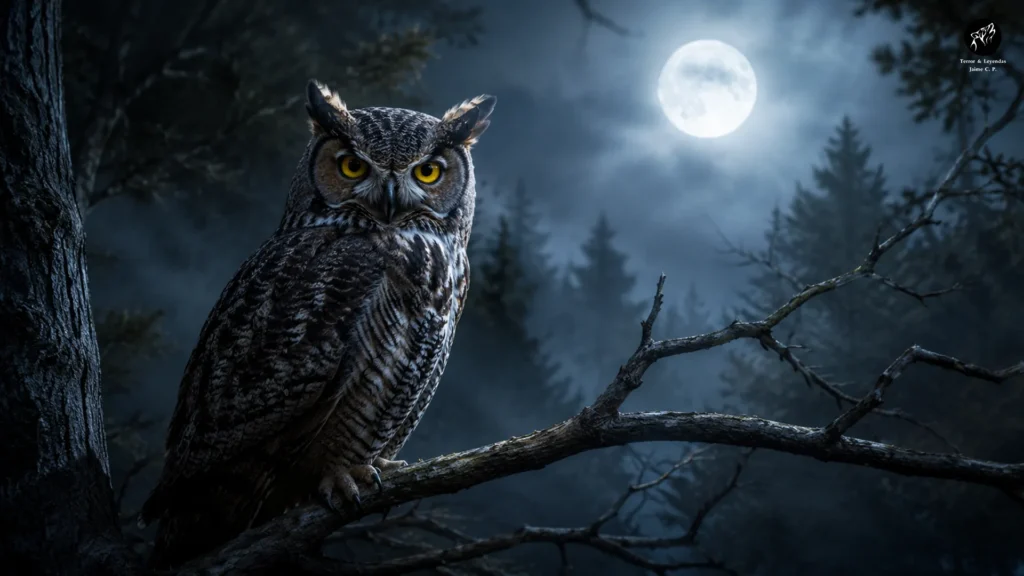
As you walk along a path barely lit by the moon, a sound breaks the calm. You look up and make out the silhouette of an owl perched on a tree branch. For a few seconds, the bird remains motionless. It seems to stare at you before disappearing into the darkness.
It is then that a question arises that has accompanied humanity for centuries:
What does it mean to see an owl?
For some people, it’s simply an encounter with one of the most fascinating nocturnal birds on the planet.
For others, it can be a sign loaded with symbolism, a spiritual message or even an omen related to death.
This belief was not born on the Internet nor is it a recent superstition. Ancient civilizations, indigenous peoples and cultures from different continents attributed very different meanings to the owl. While some considered it a messenger from the underworld, others venerated it as a symbol of wisdom, protection and intelligence.
So who’s right?
The answer is much more interesting than you imagine.
In this article, you’ll find out where the belief that seeing an owl heralds death comes from, what meaning it has in different cultures, what its spiritual symbolism is, and what explanation science offers.
Quick Response
Seeing an owl does not mean that a death will occur.
The idea that this bird announces a death comes from ancient superstitions passed down for generations.
Depending on the culture, the owl may represent:
- Wisdom.
- Protection.
- Intuition.
- Transformation.
- Mystery.
- Bad luck.
- Omens.
There is no scientific evidence to show that seeing an owl causes or announces a tragic event.
However, understanding the origin of this belief helps explain why it is still so present today.
Why is the owl related to death?
This is probably the question that arouses the most curiosity.
If you search the internet for phrases like:
- “to see an owl means death”,
- “owl omen of death”,
- “the owl announces death”,
You’ll find hundreds of stories.
Some people claim that an owl sang near their home a few days before the death of a relative.
Others say that the bird appeared repeatedly before a misfortune.
These stories, repeated for centuries, fueled one of the world’s best-known superstitions.
But how did it all start?
The answer lies in history.
The origin of superstition
Thousands of years ago, human beings tried to explain everything they did not understand.
The night was uncharted territory.
There were no lampposts.
There was no electricity.
When the sun disappeared, fear took its place.
In that scenario the owl appeared.
While most of the animals were sleeping, he would wake up.
He could turn his head almost completely.
Her huge eyes shone in the moonlight.
It flew with hardly any noise.
And his deep song broke the silence of the early morning.
To those unaware of his behavior, he looked like a supernatural creature.
As time went by, stories began to emerge.
If someone got sick after hearing an owl, the bird was guilty.
If a family suffered a loss after seeing him on the roof, that coincidence became a warning to the next generations.
Thus the first legends were born.

YOU MAY BE INTERESTED IN
Theory of 3: Why is it said that deaths come in threes?
Have you ever heard that when one person dies, two more will soon die?
It’s a popular belief that comes up again and again when a celebrity dies, a tragedy occurs, or someone you know dies. Many people claim that the deaths come “three at a time,” while others consider it just a coincidence.
The call Theory of 3 It is one of the most talked about mysteries in the world of superstitions. It has been passed down for generations and continues to generate curiosity, fear and debate.
Fear of the dark favored superstition
Psychology also explains why these beliefs held for so long.
The human brain is designed to find patterns.
When two events occur within a short time of each other, we tend to relate them, even though there is no real connection.
Imagine this situation.
A person hears the song of an owl one night.
Two days later, a neighbor dies.
It is very likely that you remember both events as if they were related.
Instead, you’ll forget the hundreds of times you’ve heard an owl and nothing happened.
This phenomenon is called Confirmation bias.
And it explains why many superstitions survive even when there is no evidence to support them.
Were owls always considered a bad omen?
No.
And here we find one of the biggest surprises.
Although many cultures associated the owl with death, others revered it.
In some places it symbolized knowledge.
In others it represented protection.
It was even considered a sacred animal.
This shows that the meaning of the owl does not depend on the bird, but on the beliefs of each society.
In the next section you will discover how the same species came to represent completely opposite concepts according to the culture that observed it.
What the science says
From a scientific point of view, owls are nocturnal birds of prey extraordinarily adapted to survive in the dark.
Characteristics that for centuries seemed supernatural have a perfectly natural explanation.
These include:
- Exceptional vision in low light.
- An extremely precise ear.
- An almost silent flight thanks to the special structure of its feathers.
- A neck rotation of up to 270 degrees.
- A mainly nocturnal behavior.
It was precisely these qualities that sparked the imagination of our ancestors.
What we understand today through biology, hundreds of years ago was interpreted as a supernatural power.
And so began one of the most fascinating legends that are still alive.
YOU MAY BE INTERESTED IN
Have you ever wondered why some people get nervous when they see a black cat or a broken mirror? Why are there events that we qualify as irrational, spiritual or superstitious? Would you like to know the historical charge behind these events? Then read on…
“The superstition in which we were brought up retains its power over us even when we come to disbelieve in it.” – Gotthold Ephraim Lessing
In a reality in which meaning is yet to be determined, superstitions are one more piece of the puzzle.
Throughout the continents there are stories, legends, characters and rituals that are typical of a cultural mosaic that comes to us after crossing entire generations.
Many of the beliefs that were held in the first Mesoamerican cultures are still present in our daily lives. Over the years we have preserved the notions around death, life, love, war… that could seem to us inventions of a civilization but then why do we end up feeling reflected?

What does it mean to see an owl according to each culture?
If there is an animal capable of representing completely opposite ideas around the world, it is the owl.
While some civilizations revered it as a symbol of intelligence and protection, others considered it a messenger of death.
This difference shows that superstitions are not born from the animal itself, but from the beliefs that each society built over the centuries.
Let’s look at some of the most well-known examples.
Ancient Greece: Symbol of Wisdom and Intelligence
In Ancient Greece, the owl was one of the most respected animals.
It was closely related to Athena, goddess of wisdom, strategy and knowledge.
The presence of an owl was believed to protect warriors before a battle and symbolized victory through intelligence rather than strength.
For this reason, finding one was considered an excellent omen.
Even today, the owl continues to represent education, reflection and learning in many parts of the world.

Ancient Rome: The Birth of the Bad Omen
The Romans inherited some Greek symbolism, but developed a much more pessimistic view.
Various ancient chroniclers reported that the song of an owl preceded the death of important figures.
With the passage of time, the belief began to spread that hearing or seeing an owl near a house was an announcement of misfortune.
This was one of the earliest origins of the superstition that still persists in some countries.
Egypt: Guardian of the Night
For the ancient Egyptians, the owl represented night, silence, and the unknown world.
Although it was not always associated with death, it was related to mysteries that escaped human understanding.
His ability to navigate the dark made him a symbol of protection from nighttime dangers.
Celtic culture: the keeper of secrets
The Celtic peoples believed that the owl could see what others were not able to perceive.
For this reason, he was considered a guardian of occult knowledge.
In some legends it acted as a guide between the physical and spiritual worlds.
Far from representing only death, it symbolized the ability to discover hidden truths and face changes with wisdom.
Mexico: the owl that announces death
Few beliefs are as well-known as the Mexican one.
In many regions you still hear the phrase:
“When the owl sings, the Indian dies.”
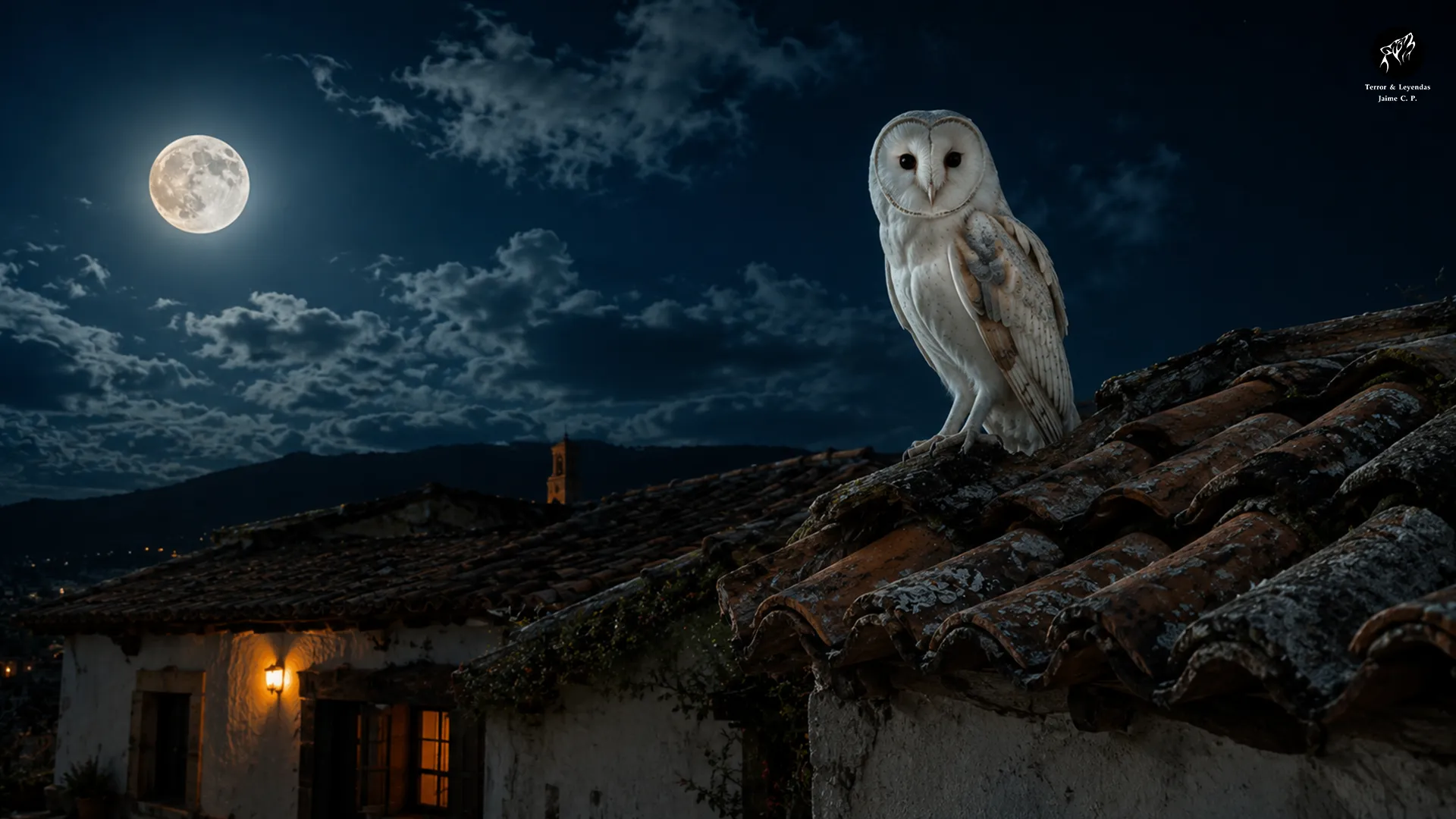
According to popular tradition, hearing the song of an owl near a house could announce the death of one of its inhabitants.
Over the years, this superstition was also mixed with stories about witches capable of transforming into owls to move around during the night.
These stories are part of Mexican folklore and continue to be passed down from generation to generation.
However, they belong to the realm of popular legends and have no scientific backing.
Indigenous peoples of the Americas
Different indigenous communities interpreted the owl in very different ways.
Some considered him a spiritual protector.
Others thought he was a messenger from the ancestors.
In certain tribes it was also believed that he warned of nearby dangers to protect the community.
This shows that even within the same continent there were completely different interpretations.
Japan: Good luck and protection
Something curious happens in Japan.
The Japanese word for owl is “fukurō”, whose pronunciation can be associated with concepts such as good fortune and protection from hardship.
For this reason, it is common to find amulets, decorative figures and souvenirs in the shape of an owl.
There it represents exactly the opposite of many Western superstitions.
China
In the Chinese tradition there are opposing interpretations depending on the time and region.
Some ancient accounts connected it with unfortunate events.
However, other feng shui currents consider the owl a symbol of intuition, knowledge and protection.
What do all these beliefs have in common?
Although meanings change, all cultures agree on something.
The owl never goes unnoticed.
Its nocturnal behavior, its penetrating gaze and its silent flight awakened the imagination of human beings since ancient times.
That is why it continues to be one of the animals with the greatest symbolic charge on the planet.
What does it mean to see an owl at night?
According to popular beliefs
It can be interpreted as:
- An omen.
- An important change.
- A warning.
- The visit of a spirit.
- An announcement of bad news.
According to spiritual symbolism
Many people believe that it represents:
- Intuition.
- Spiritual awakening.
- Wisdom.
- Personal transformation.
- Need to listen to the inner voice.
According to science
Owls are strictly nocturnal birds.
It is completely normal to find them active after sunset, as this is when they go out to hunt small mammals, insects and reptiles.
There is no evidence that his presence has any supernatural significance.
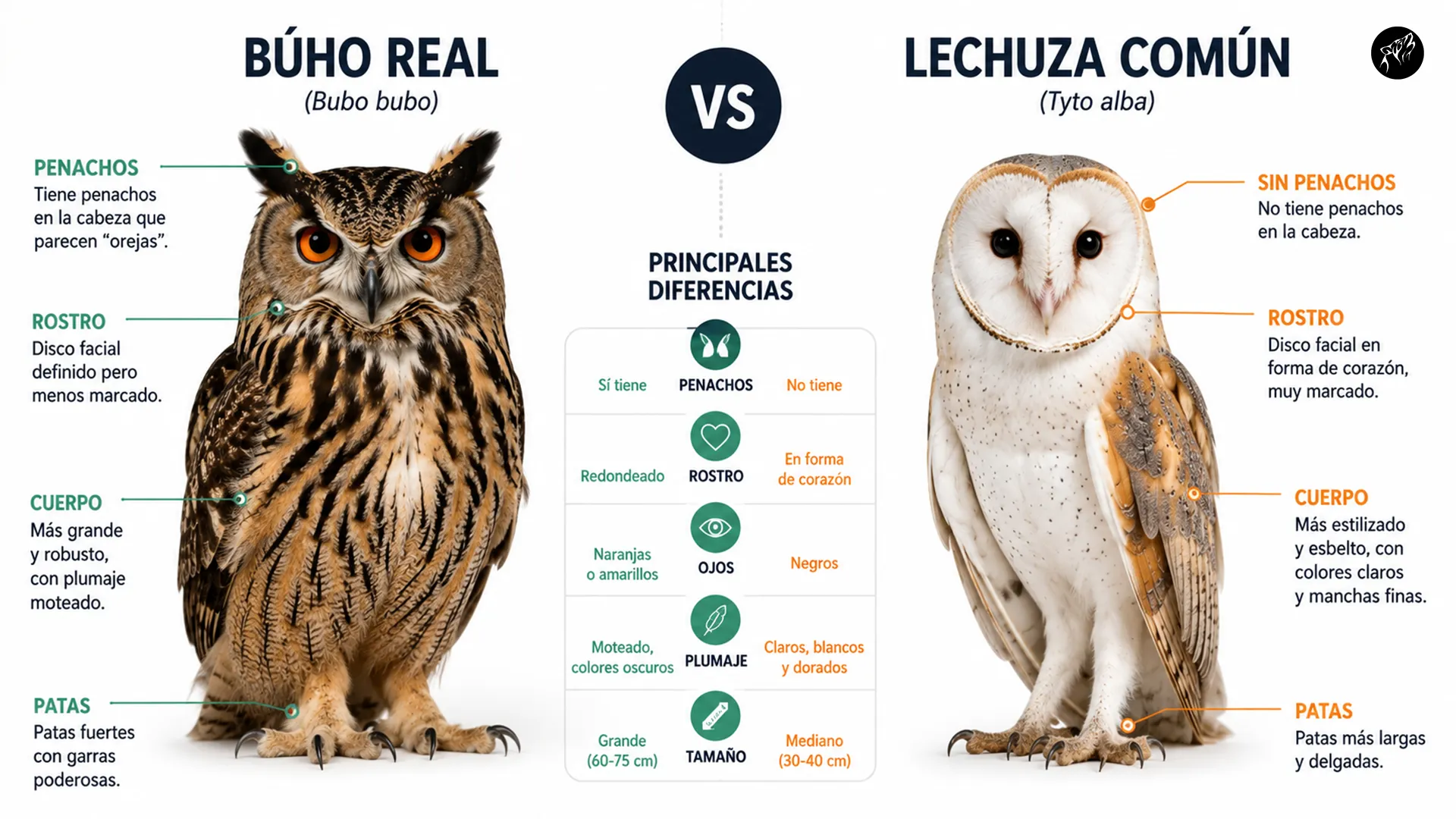
What is the difference between an owl and an owl?
Many people use both names as if they were synonymous.
However, there are physical differences that are easy to recognize.
| Owl | Owl |
| It has tufts that look like ears. | It has no plumes. |
| More robust head. | Heart-shaped face. |
| Larger appearance. | More streamlined body. |
| There are numerous species. | The barn owl is one of the best known. |
Despite these differences, both belong to the group of nocturnal birds of prey.
That is why many of the superstitions apply interchangeably to both.
The Spiritual Meaning of the Owl
Beyond superstitions, the owl occupies a very special place within numerous spiritual currents.
Their ability to function in darkness has given rise to interpretations related to inner growth.
Among the most common meanings are:
Wisdom
The owl invites you to observe before acting.
It represents the experience and knowledge acquired over time.
Intuition
Just as the bird detects movements invisible to other animals, it also symbolizes the ability to perceive what normally goes unnoticed.
Transformation
Meeting an owl can be interpreted as the beginning of a new stage.
It does not necessarily imply a negative change.
It often symbolizes the end of one cycle to begin a better one.
Protection
In some spiritual traditions, it is considered a guide that helps to avoid mistakes and make better decisions.
Seeing the Truth
The owl watches even in the dark.
That is why it represents the ability to discover what remains hidden.
7 surprising facts about owls
In addition to starring in countless legends, owls have truly extraordinary characteristics.
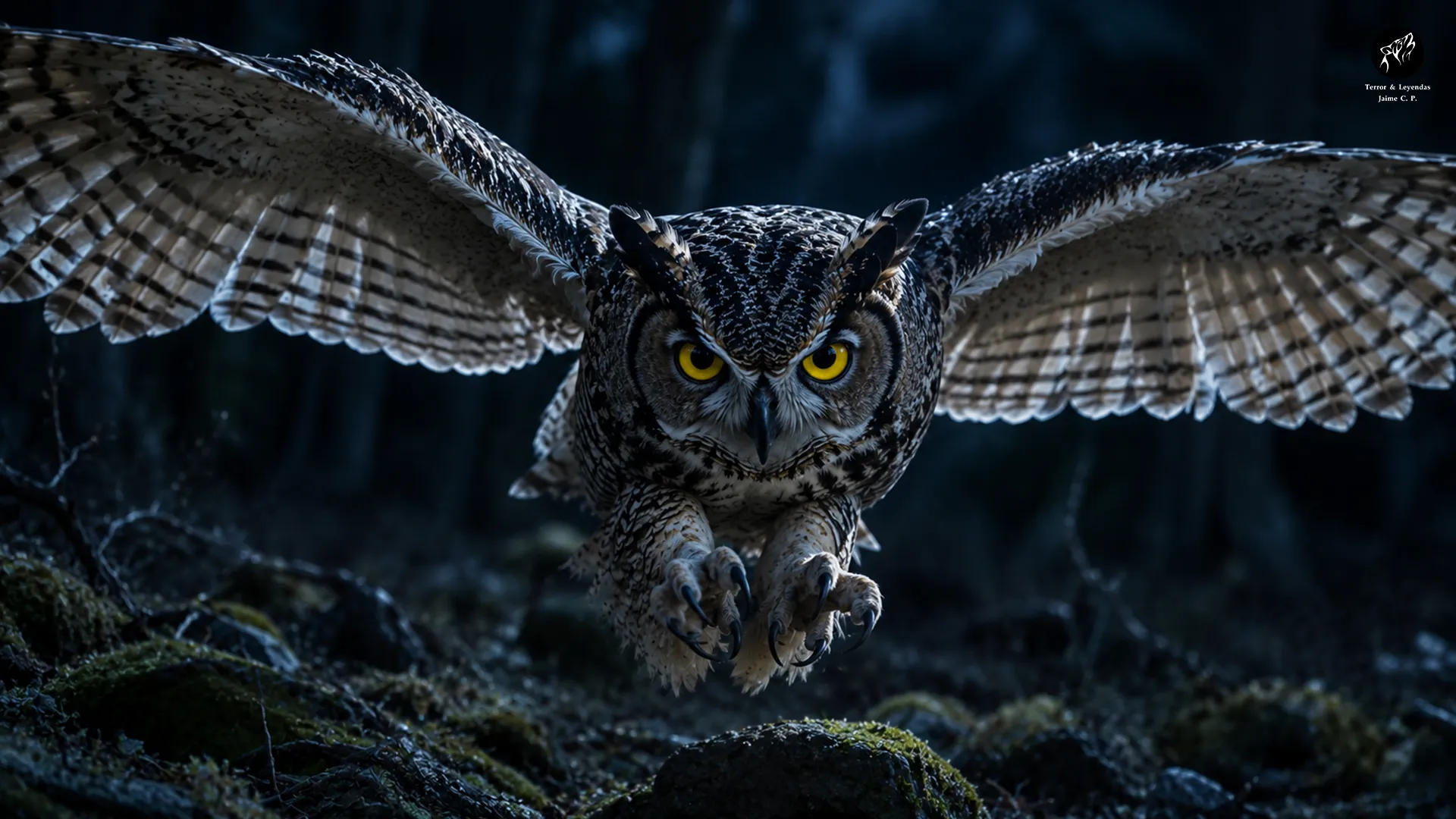
1. They can rotate their heads up to 270 degrees.
They do not turn their heads completely, but they do turn much more than any human being.
2. Its flight is almost completely silent.
The special shape of their feathers reduces noise while flying.
3. They see perfectly in very low light.
Its huge eyes are adapted to take advantage of the minimum lighting.
4. They have exceptional hearing.
They can locate prey only by listening to its movements.
5. There are more than 250 species.
They inhabit virtually every continent except Antarctica.
6. They are very efficient hunters.
They control populations of mice, rats and insects, helping to balance ecosystems.
7. They have inspired hundreds of legends.
Few birds have generated as many stories, superstitions and symbols as the owl.
All this explains why it continues to arouse so much fascination even today.
Is there a scientific explanation for seeing an owl?
After learning about the different superstitions and popular beliefs, a logical question arises:
Is there any scientific explanation that justifies the fear that many people feel when they see an owl?
The answer is yes, although it has nothing to do with supernatural phenomena.
Science explains that the appearance and behavior of these birds caused, for thousands of years, a sense of mystery among human beings.
Its activity is completely nocturnal
Owls belong to the group of nocturnal birds of prey.
While most of the animals rest, they go out hunting.
For centuries, the night was associated with the unknown, danger, and the spirit world. Therefore, any animal that appeared only in the dark aroused fear.
Its flight is practically silent
One of the most amazing characteristics of owls is their ability to fly without making noise.
This is due to the special structure of its feathers, which reduces air turbulence.
To people living hundreds of years ago, seeing a bird appear almost silently seemed supernatural.
His eyes impress
The large front eyes allow the owl to make the most of the scarce night light.
Although they don’t shine on their own, they reflect the light of the moon or a torch, creating an effect that was once unsettling.
Their singing also fueled myths
Each species has different vocalizations.
Some sounds are low and prolonged.
Others are reminiscent of whistles or wailing.
Listening to these songs in the middle of the night, when everything was silent, favored the appearance of innumerable superstitions.
The human brain is looking for explanations
There is another very important factor.
People tend to look for relationships between events that occur close in time.
If someone saw an owl and a misfortune happened days later, it was easy to attribute both events to the same cause.
However, he forgot the hundreds of times when the bird appeared and absolutely nothing happened.
This psychological mechanism explains why many beliefs survive even when there is no evidence to support them.
So what does it really mean to see an owl?
The answer depends on the point of view.
From popular beliefs
It can be interpreted as:
- An omen.
- A spiritual message.
- A warning.
- A symbol of transformation.
- An announcement of changes.
From history
It represents the enormous power that traditions have to explain what our ancestors did not understand.
From science
It simply means that you have been fortunate enough to observe one of nature’s most fascinating and well-adapted birds.
Final Thoughts
Now you know the origin of one of the oldest superstitions in the world.
For thousands of years, human beings tried to explain what they did not understand.
The darkness, silence and behavior of owls fueled stories that still arouse curiosity today.
However, the reality is very different.
There is no evidence that See an owl announces a death or negative event.
What we do know is that these birds play an essential role in nature and are part of some of history’s most fascinating traditions.
Perhaps the real mystery is not what it means to see an owl.
Perhaps the real mystery is how such a silent animal has managed to inspire thousands of legends in practically every culture on the planet.
The next time you’re lucky enough to see one, you may not be witnessing an omen…
But one of the most extraordinary encounters that nature can offer.