
In the snow-capped mountains of Central Europe, where winters are as harsh as the stories that were born there, there is a figure that completely breaks with the warm and cheerful image of Christmas. His name is Krampus, a creature feared for centuries in the Alpine regions. While St. Nicholas rewards children who have behaved well, Krampus it represents punishment, warning, and the dark side of winter.
Far from being a simple Christmas monster, Krampus He is a deeply rooted figure in European folklore and in the cultural history of communities that learned to live with cold, scarcity and darkness.
Who is Krampus
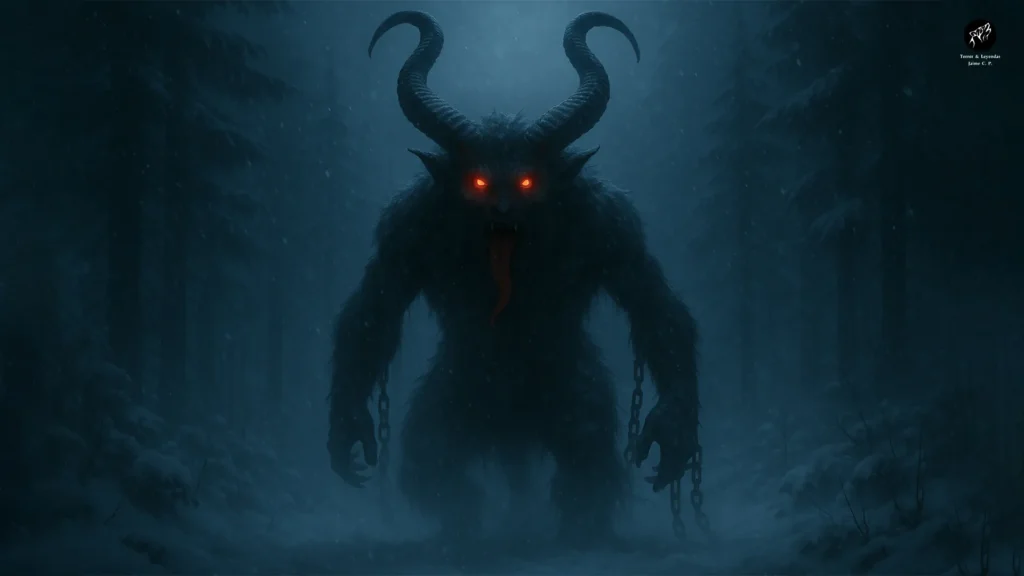
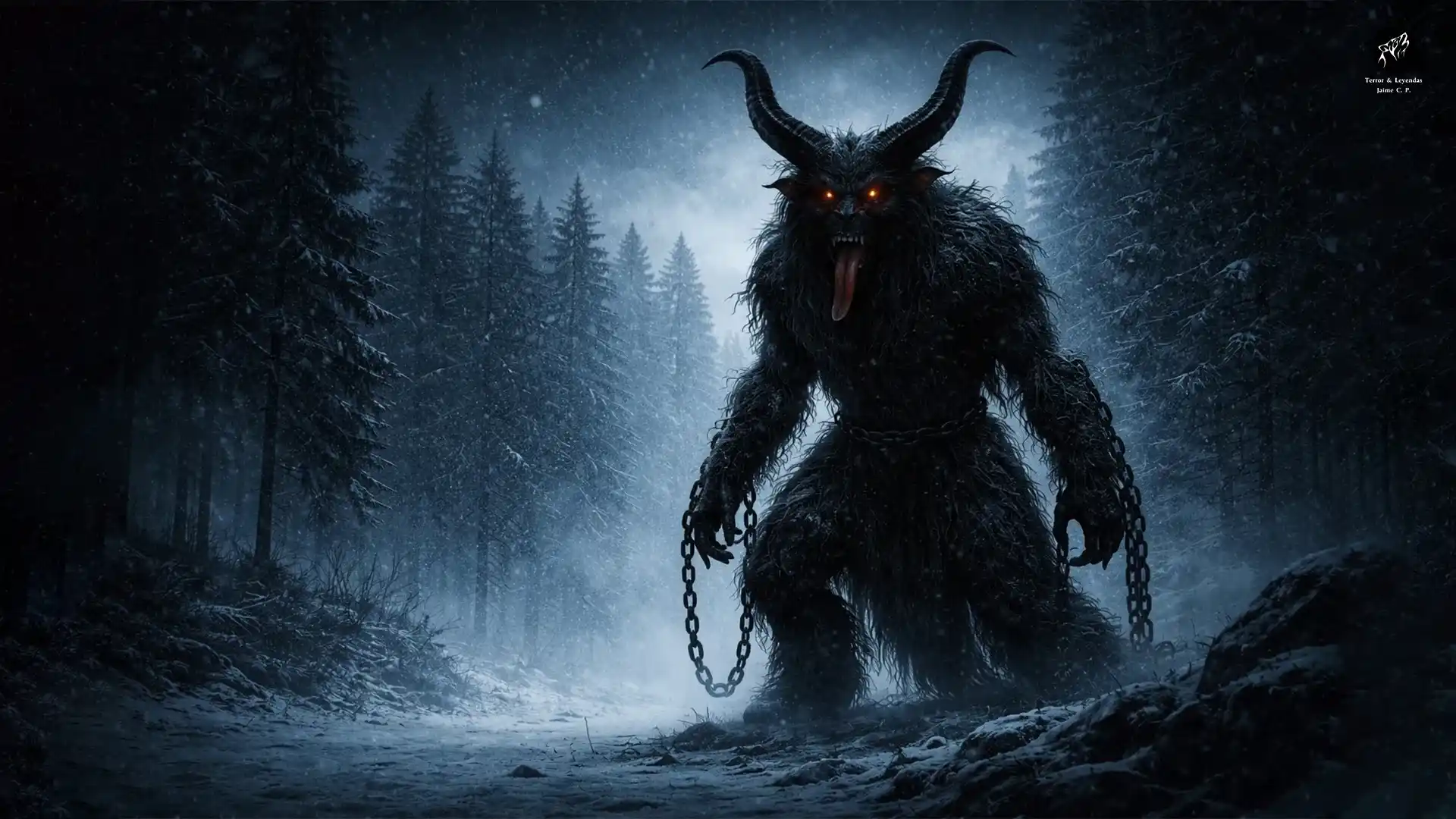
Krampus He is described as a half-goat, half-demon creature, with huge twisted horns, a body covered in thick dark fur, eyes that glow like embers, and a long red tongue protruding from his mouth. He usually carries chains, bells, and a wicker sack or basket on his back, where, according to tradition, disobedient children were carried.
Her appearance is no coincidence. Every element of her appearance was meant to make an impact, instill respect, and reinforce discipline at a time when social order was critical to surviving the winter.
The origin of Krampus: pagan roots
Although today many consider him a figure associated with Christian Christmas, the origin of Krampus It is much older. Its roots lie in pre-Christian pagan rituals, celebrated during the winter solstice in the Alpine regions.
In these ceremonies, masked men with furs, horns, and grotesque faces roamed the villages with the goal of scaring away the evil spirits of winter. The noise of bells, chains, and screams was part of the ritual, as the noise was believed to ward off evil forces and protect the community.
When Christianity spread throughout Central Europe, these traditions were not eliminated. Instead, the Church integrated them into the Christian calendar, giving rise to a clear symbolic duality: St. Nicholas would represent reward and kindness, while Krampus it would embody punishment and correction.
YOU MAY BE INTERESTED IN
Old stories from the Alpine mountains tell that, many centuries ago, during one of the coldest nights of winter, a group of children decided to disobey their parents.
The Night of Krampus and the Krampuslauf
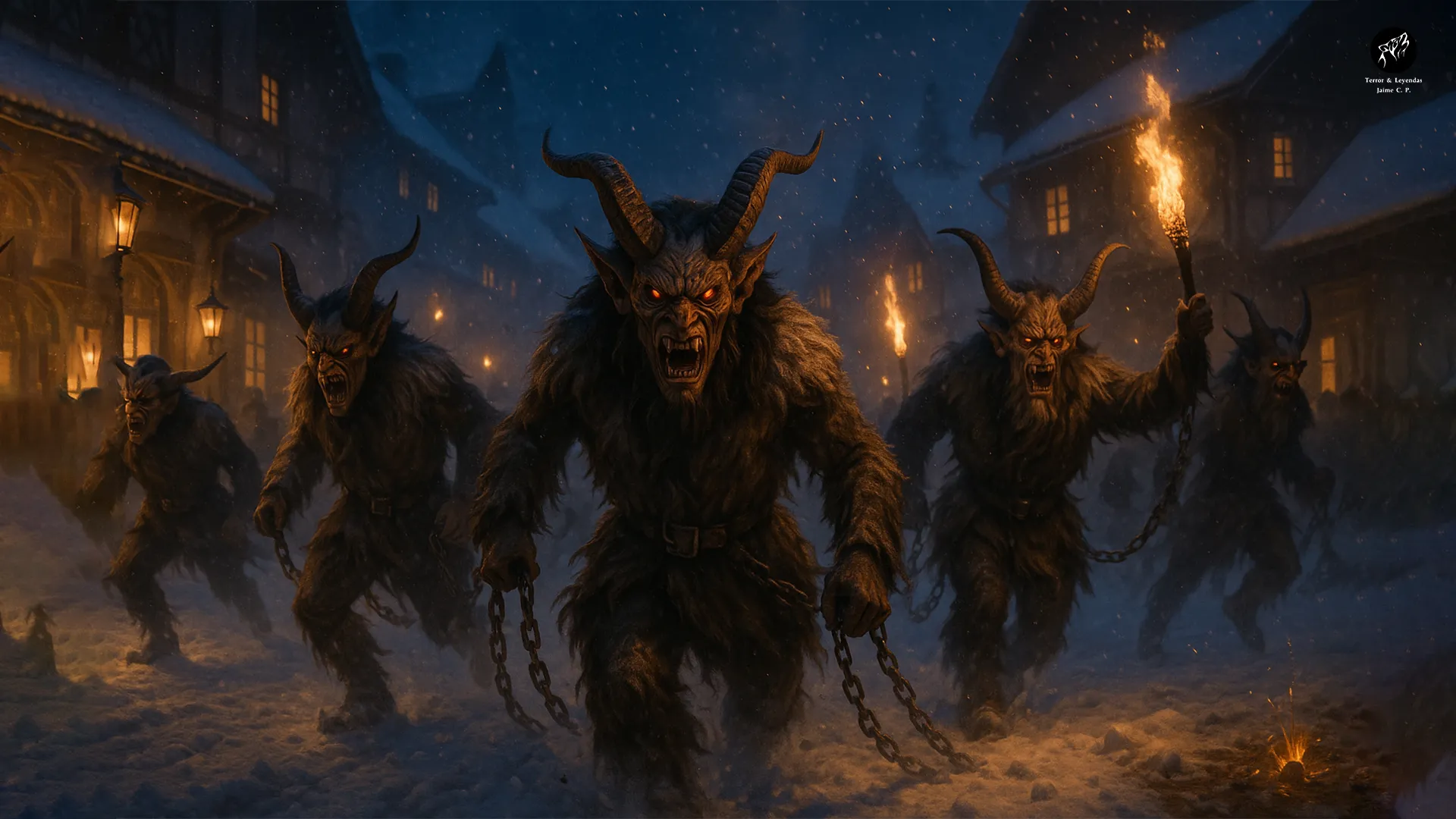
Every December 5, on the eve of St. Nicholas’ Day, the Krampusnacht, known as the Night of Krampus. In countries such as Austria, Germany, Switzerland and other alpine regions, this tradition lives on to this day.
During the night, young people from the village don hand-carved demonic masks, thick skins, huge horns and bells. They walk the streets at nightfall, rattling chains, shouting and symbolically chasing those who cross their path. This parade is called Krampuslauf, the so-called “career of Krampus”.
While for many modern spectators it may seem like a chaotic holiday or a tourist spectacle, for local communities it is an ancestral tradition that connects the present with a past marked by the fear of winter and the need to maintain social order.
Punishment in the legend
In the older versions of the story, Krampus It was not only scary. Its function was clearly disciplinary. While St. Nicholas distributed sweets, fruits or small gifts, Krampus he carried birch sticks to punish naughty children or a sack in which he could take them to the mountains.
Some darker variants of the legend say that he threw children into icy rivers, locked them in caves or even devoured them. These stories reflect a mentality typical of times when winter represented a real threat and discipline was seen as a form of survival.
Similar figures in Europe
There are other characters with similar functions, such as Knecht Ruprecht in Germany, Pelznickel in the Rhine region, Schmutzli in Switzerland or the Perchten in Austria. They all share a common origin: the need to balance light and darkness during the winter.
However, none of these creatures achieved the fame or visual impact of Krampus, whose demonic image made him one of the most recognizable symbols of alpine folklore.
Krampus today
At present, Krampus It has transcended the local sphere and has become a global icon. It appears in films, series, festivals and alternative Christmas celebrations. Even so, in the Alpine regions its original meaning remains intact: it is not a modern monster, but a cultural figure inherited from past generations.
The Krampuslauf It continues to be celebrated every year, demonstrating that the tradition is still alive and that the ancestral fear of winter is still part of the European cultural identity.
The shadow that accompanies Christmas
The legend of Krampus It didn’t survive just because it was terrifying. It persisted because it offered a symbolic explanation to a deep human reality: the need for balance between reward and punishment, light and dark, order and chaos.
He should not be understood as a villain in the modern sense, but as the echo of a primitive winter that Europe never forgot. While Christmas is celebrated with lights and gifts, his figure reminds us that, somewhere, between the snow and the silence, the bells of a much older tradition still ring.