

Gui: the spirit that stayed… and never left
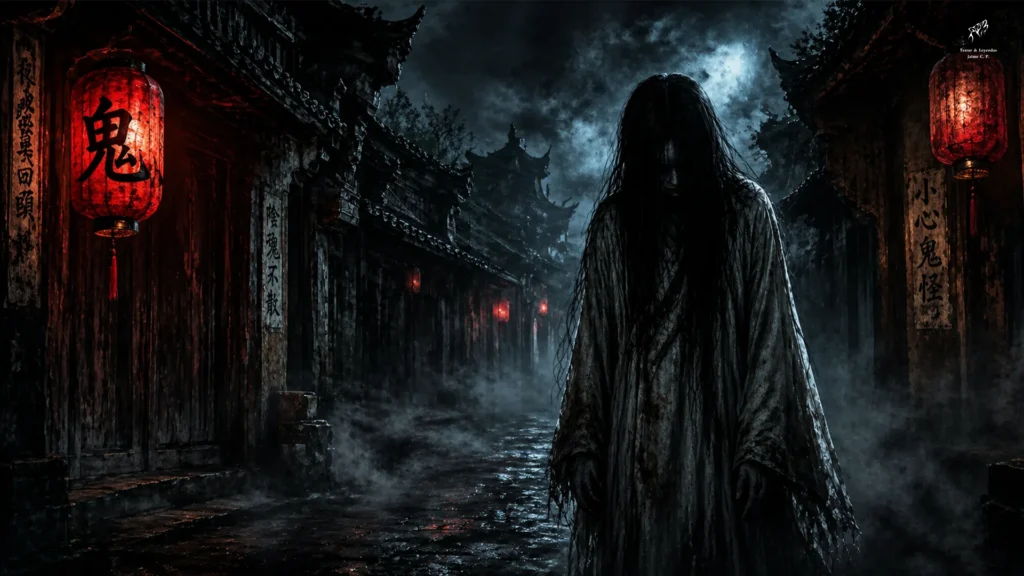
There are those who claim that not all the dead disappear. Some stay, silently repeating what they could not finish. In China, these presences are known as Gui (鬼).
It is not a simple ghost. The Gui is an entity that arises when something in the process of death fails. It is an incomplete consciousness, trapped between the world of the living and the dead, driven by emotions that were not extinguished.
Within Chinese folklore, the term Gui ranges from ancestral spirits who still maintain a bond with their family, to dark presences that remain in the earthly world consumed by resentment, attachment or despair. And that’s where the disturbing thing begins: not all Gui are the same, but they all have something in common… they didn’t manage to leave.
The origin of the Gui: when the soul fails to separate
In the traditional Chinese worldview, the human soul is not one. It is divided into two parts: the Hun (魂), light and spiritual, who ascends after death, and the Po (魄), denser and more earthly, which remains bound to the body.
When a person dies under normal conditions and receives the appropriate funeral rituals, both parties go their separate ways without interference. But when the death is violent, unjust, or lonely, or when the necessary rites are not performed, that balance is broken.
The result is an interruption. A part of the soul fails to move forward.
And it’s not just death that causes it. It’s emotions. Hatred, fear, betrayal, or attachment can be so intense that it prevents consciousness from dissolving. At that point, the Gui isn’t just a spirit… it’s an energy that insists on staying.
How a Gui Manifests… And Why Many Don’t Forget It
Encounters with Gui rarely begin with a clear appearance. First you sense the change. The atmosphere becomes heavy, the temperature drops, and a constant sense of vigilance appears.
Some people claim to have heard their name in empty spaces. Others describe shadows that move without logic or figures that appear only when not looking directly at each other. It is as if the Gui avoids being stared at head-on.
When it finally manifests, its appearance is often disturbing. Pale faces, lifeless eyes, long hair covering the face. At times, its shape seems incomplete, as if something is missing… as if its very existence is fragmented.
And that’s precisely what makes it so unsettling.
Types of Gui: The Four Most Disturbing Ways
Not all Gui behave in the same way. Their nature depends on what binds them to the world.
The Vengeful Gui It is the most dangerous. It retains memory, intense emotions, and a clear purpose. It does not wander aimlessly. It seeks justice or punishment, usually tied to betrayal or wrongful death. Its presence is oppressive, and many accounts coincide in an immediate sense of anguish at being around.
The Wandering Gui, on the other hand, he seems lost. He is not aggressive or aware of his state. He manifests himself by repeating everyday actions, walking through places that were familiar to him, as if he were still alive. He does not attack… but his disconnection from reality is deeply disturbing.
The Hungry Gui It is marked by a constant need. These spirits are believed to seek to feed on the life energy of the living, which can lead to extreme tiredness, nightmares, or a nagging sense of emotional exhaustion. Their presence intensifies during the Festival of the Hungry Ghosts, when, according to tradition, the barriers between worlds are weakened.
Finally, the Attachment Guide it is the one that never manages to detach itself. It remains linked to people, objects or places. It is not always hostile, but its constant proximity generates that unsettling feeling of not being completely alone. In many cases, it manifests itself through small changes in the environment, almost imperceptible… but persistent.
Each of these types reflects a different way of getting trapped.
YOU MAY BE INTERESTED IN
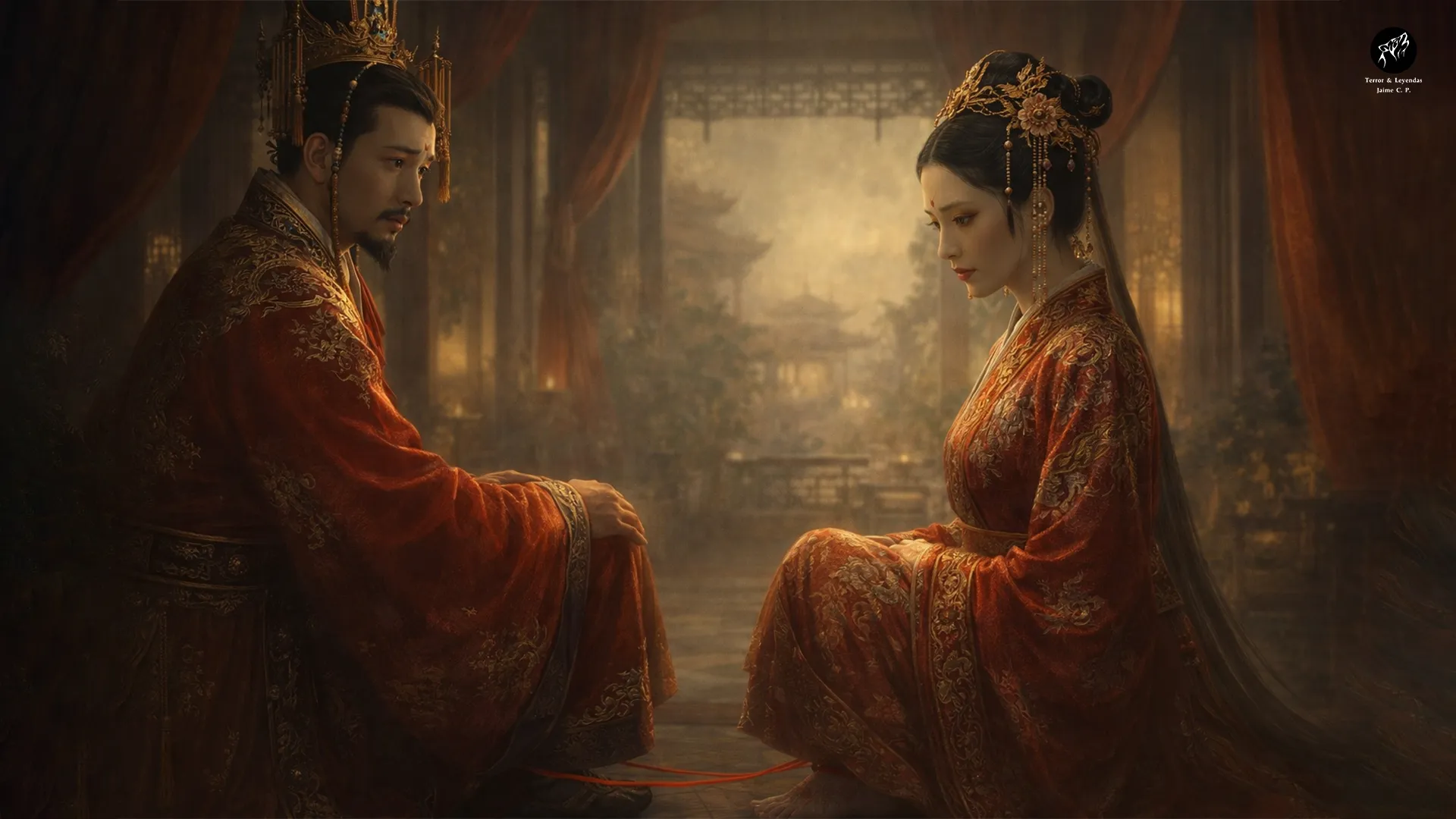
The legend of the emperor and the witch
A long time ago, an emperor heard a rumor that aroused his curiosity and arrogance.
In one of the provinces of his kingdom lived a witch with an extraordinary gift: I could see the Red Thread of Destiny, the invisible bond that binds people destined to meet.
Where do they appear… and why these places are not a coincidence
The Gui do not manifest themselves anywhere. Their presence is linked to places where something significant happened. Spaces where the emotion was intense enough to leave a mark.
Abandoned hospitals, empty schools, houses where a tragedy occurred… all these places function as anchor points. It is not that the place is haunted by itself, but that something was impregnated in it.
From a paranormal perspective, these spaces act as repositories of energetic memory. And as long as that memory does not dissipate, the manifestation can be repeated.
It is no coincidence where they appear.
Religion, rituals, and the attempt to restore balance
Beliefs about the Gui have roots in early Taoism and were reinterpreted by Chinese Buddhism. In the latter tradition, many Gui are considered hungry ghosts, souls trapped in a cycle of suffering due to their actions in life.
Taoism offers a different view. Some Gui can transform into Shen, that is, protective spirits, if they receive veneration and care. This reveals a fundamental idea: the relationship between the living and the dead does not end, it is transformed.
That is why there are specific rituals. The burning of incense, the offerings of food, and the use of spiritual paper money are not simple traditions. They are attempts to balance the relationship between the two worlds and prevent souls from being trapped.
Many believe that ignoring these rituals doesn’t break the bond… it makes it unstable.
The meaning of Gui today
Today, the Gui is still a present figure in Chinese culture. Not only in horror stories, but in everyday practices, festivities, and family beliefs.
Beyond fear, it represents the persistence of remembrance and the responsibility of the living towards their ancestors. The offerings in temples and homes reflect the need to maintain that invisible balance.
The Gui is not just a legend. It is a way of understanding that the unresolved does not disappear.
It remains.
And in some cases… it comes back.
YOU MAY BE INTERESTED IN: Urban Legends of Japan (Spanish Edition).