
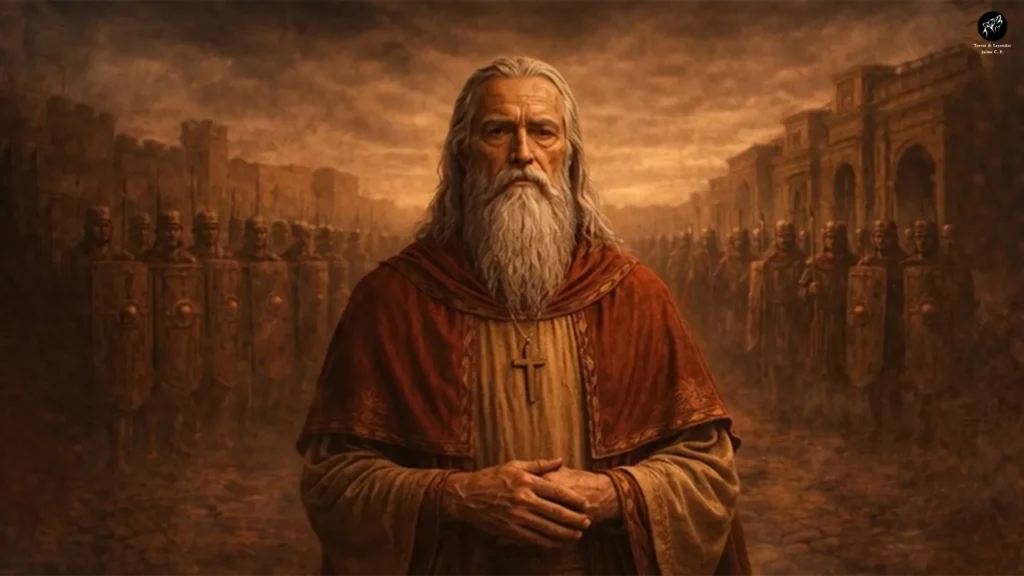

Every February 14, the world is filled with flowers, promises, and sweet words. However, the original story of Valentine’s Day is far from modern romanticism. He was born in a time of persecution, punishment and death; in a Rome where loving, believing and disobeying could cost one’s life.
The legend of Valentine’s Day It is not a light fable. It is the tale of a man who defied the Empire, of a young woman named Julia who illuminated his last days, and of a letter written from the shadows, when the end was inevitable.
Who really was Valentine?
The Christian tradition speaks of Valentine’s Day as a priest – or, in some versions, a bishop – who lived in Rome during the third century. In that period, Emperor Claudius II promoted measures that favored single soldiers, convinced that having no ties made them more effective in war.
Valentine, guided by his faith, continued to celebrate marriages in secret. For him, love and commitment could not be subject to political decrees. That gesture, apparently intimate, was read by those in power as a direct challenge.
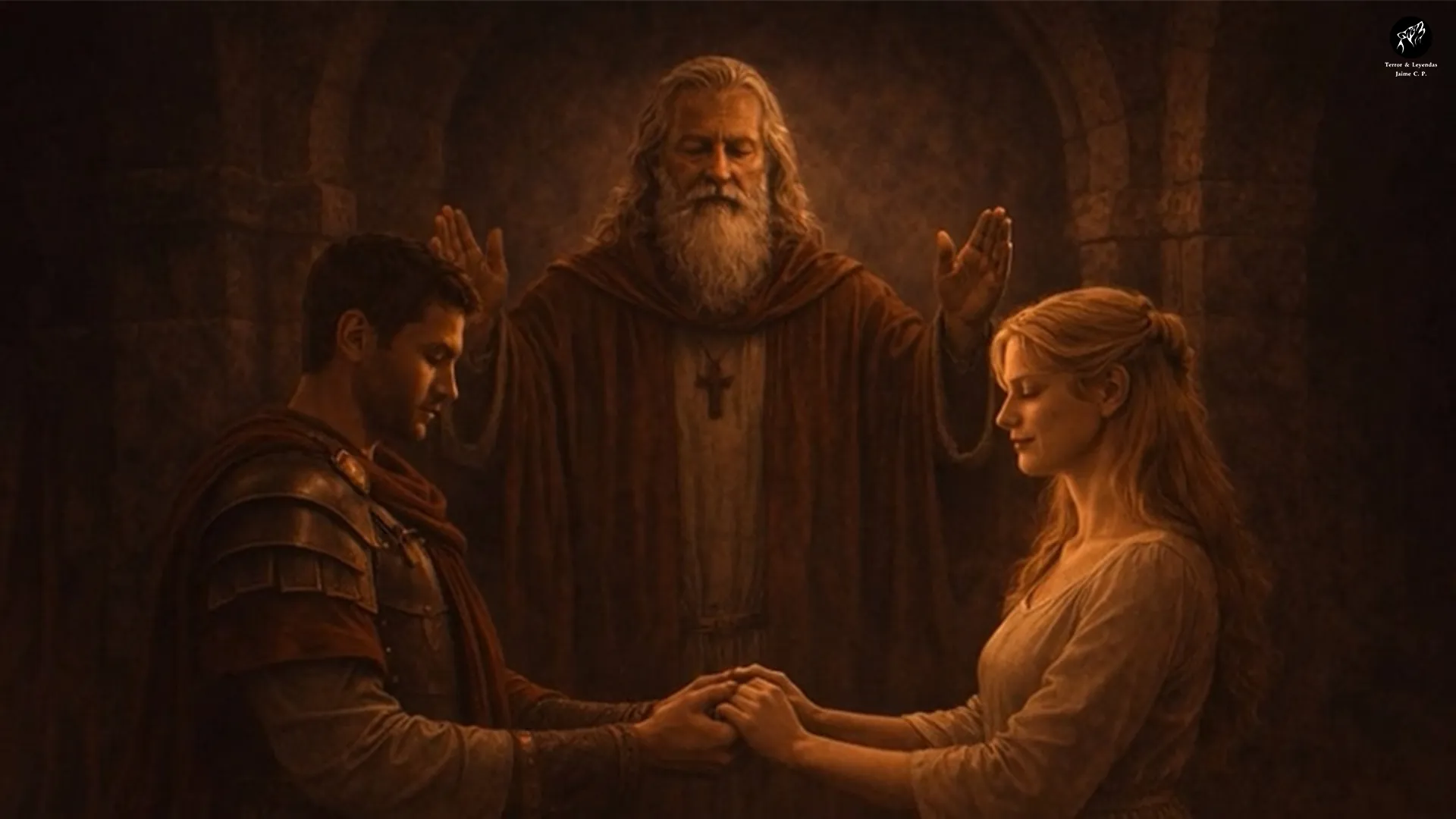
The crime that convicted him
The clandestine ceremonies came to light. Valentín was arrested and charged with disobedience, rebellion and betrayal of Roman laws. He was not punished for loving, but for Refusing to obey.
In prison he was interrogated and pressured to renounce his faith. He refused. He knew the price would be high.
Finally, He was sentenced to death and executed on February 14, circa 269 AD. By beheading, a punishment reserved for those who defied the authority of the state.
Julia: The Light Inside the Cell
Here begins the most human – and most disturbing – part of the legend.
During his imprisonment, Valentine was taken into the custody of a Roman official identified by tradition as Asterius. He had a daughter named Julia, described as blind (or seriously ill, depending on the version). Asterio allowed Valentine to talk to her.
In the silence of the prison, Valentín and Julia talked. Not about romance, but about faith, hope, and the world she couldn’t see. Legend has it that Valentine prayed for Julia and that She regained her sight, a fact that profoundly marked both of them and, according to some accounts, brought his father closer to Christianity.
How long did they talk?
Until the end.
The talks are situated during the days of confinement, shortly before the execution. Julia was, according to tradition, The Ultimate Luminous Presence in Valentine’s life, the last human bond before martyrdom.

YOU MAY BE INTERESTED IN
The legend of the Red Thread of Destiny
Not everyone who comes into your life does so by chance.
According to an ancient Japanese legend, there are encounters that are written long before we are born. An invisible bond, impossible to break, unites certain people regardless of time, distance or mistakes made along the way.
The final letter: “From your Valentine”
Before he died, Valentine wrote a note addressed to Julia. It was not a festive gesture or a commercial symbol. It was A farewell, written by someone who knew he would never see the light of day again.
The signature attributed to that letter became the origin of it all:
“From your Valentine”.
Read from a distance, the phrase does not sound like a light romance, but rather like a Final Words. A message that survived the body that wrote it.
When was Saint Valentine declared a saint?
After his death, Valentine was revered as Christian Martyr by the first communities. His cult spread over time, until in the year 496 AD. C., the pope Gelasius I officially declared him a saint and fixed the February 14 as a day of liturgical commemoration.
At that time, the date It was not associated with romantic love, but to the remembrance of sacrifice and faith.
Why did February 14 become a celebration?
The Church also sought replace ancient pagan festivities celebrated in mid-February, associated with fertility and excesses. By consecrating that day to Valentine’s Day, the calendar was Christianized and the meaning of the ritual was transformed.
Centuries later, during the Middle Ages, poets and writers began to relate February 14 to idealized love. This is how the metamorphosis occurred:
- The martyr became a symbol
- The cell became a metaphor
- The farewell became a tradition
The result is the modern celebration we know.
The version that almost no one remembers
Some folk traditions hold that Valentine:
- Protect forbidden loves
- Bless unions that defy norms
- He demands sacrifice from those who swear eternal love in his name
Maybe that’s why his story continues to resonate. Because It doesn’t talk about a comfortable love, but of one who defends himself even when the price is death.
Conclusion
The true legend of Valentine’s Day was not born among flowers and gifts, but in a Roman prison. It began with a condemned man, a young woman named Julia, and a letter written before she died.
The next time you hear “Happy Valentine’s Day,” remember this:
The love that is celebrated that day was born as a farewell.