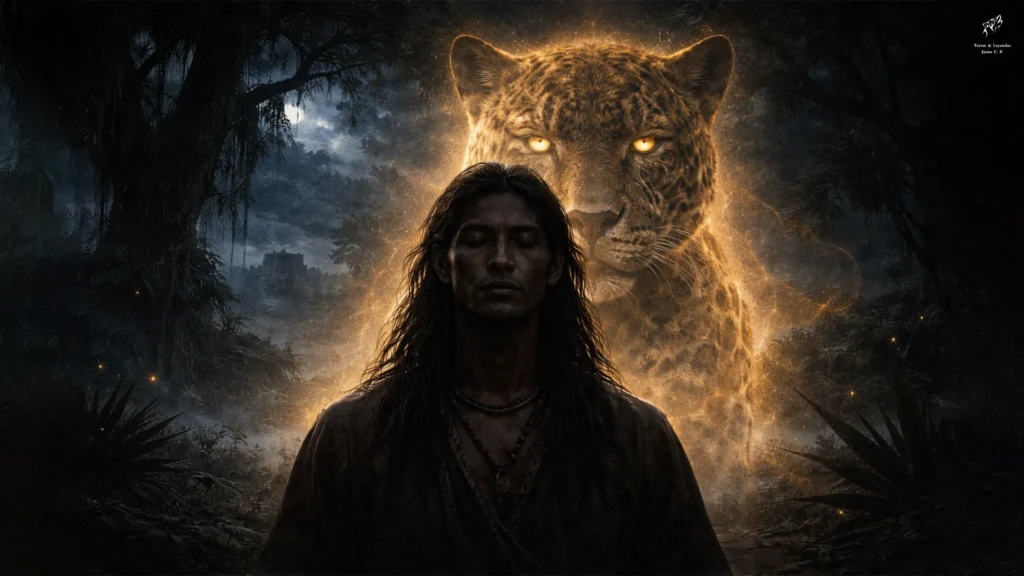

In the spiritual tradition of Mesoamerica, each person is born accompanied.
Not by an angel.
Not by a demon.
Not by an animal.
That sacred connection is known as tonal.
More than a superstition, it is a profound concept that was part of the spiritual structure of pre-Hispanic cultures.
What does tonal mean?
The word comes from the Nahuatl word tonalli, which can be translated as “vital energy”, “heat of the soul” or “destiny linked to the day”.
In the Mexica cosmovision, tonalli was a spiritual force that resided in the head and was related to:
- Character
- Fortune
- Health
- Destiny
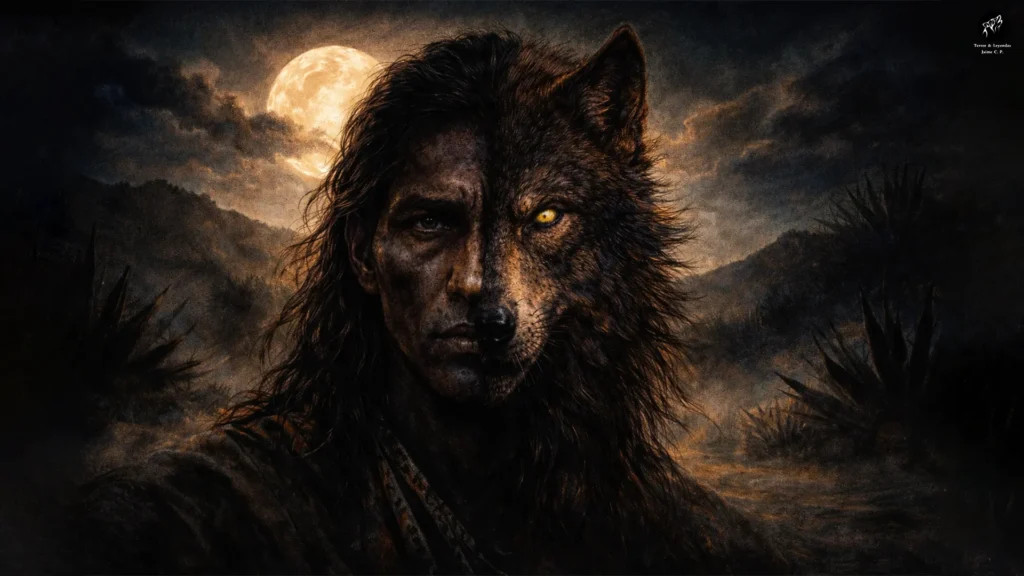
The tonal was not simply a symbolic animal. It was a spiritual extension of the individual.
Difference between tonal and nahual
Although they are often confused, they are not the same.
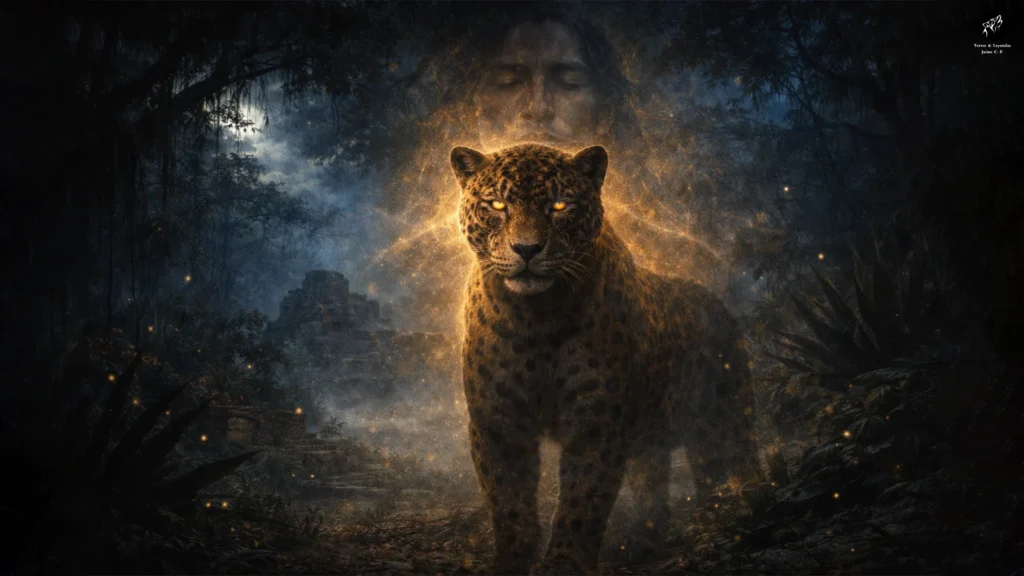
- The tonal is the animal spirit with which a person is born.
- The nahual is the one who can manipulate or transform through that connection.
Every person had tonal.
Not every person was a transformer.
This difference is key to understanding Mesoamerican mythology without colonial distortions.
How was the spirit animal determined?
In the Mexica and Maya tradition, the protector animal was determined by:
- The exact day of birth
- The ritual calendar (Tonalpohualli in the Mexica world)
- The energy of the cosmic moment
The sacred calendar had 260 days, each associated with symbols, forces and creatures.
In this way, destiny and character were linked to a being of the natural world.
YOU MAY BE INTERESTED IN
What is a nahual? Origin, Mexican legend and real meaning in pre-Hispanic culture
In the villages of Mexico, when a dog howls at dawn or a shadow crosses the mountain under the moon, there are still those who whisper an ancient word.
But what really is a nahual? A sorcerer who turns into an animal? A protective spirit? A rural superstition?
Animals most associated with the tonal
Depending on the region and the calendar, some frequent animals were:
- Jaguar (strength and leadership)
- Eagle (vision and power)
- Coyote (cunning and adaptation)
- Snake (transformation and wisdom)
- Dog (spiritual guidance)
These were not simply decorative totems. They represented living energy.
The tonal as a reflection of destiny
If the animal fell ill, the person fell ill.
If the protective spirit died, the individual was in danger.
This belief reinforced the idea that the human being was not separate from nature, but intertwined with it.
The spiritual and physical worlds were not distinct dimensions, but parts of the same reality.
Does tonal exist today?
In indigenous communities in Oaxaca, Chiapas and Guatemala, the belief still persists.
Some traditional healers still consult the ritual calendar to interpret a person’s vital energy.
However, many modern versions simplify the concept as “spirit animal” without understanding its cosmological depth.
Is it the same as the power animal?
Not exactly.
The contemporary concept of “power animal” comes from modern spiritual currents and neo-shamanism.
The tonal belongs to a specific religious structure, with its own calendar, ritual and cosmovision.
To reduce it to a spiritual fashion erases its historical roots.
The link between human and nature
Mesoamerican cultures did not see humans as superior to nature, but as part of it.
The animal was not a symbol.
It was destiny.
It was a mirror.
It was double.
And losing that link meant losing balance.
Conclusion
It is neither a creature nor a legend of terror.
It is a fundamental piece of pre-Hispanic spirituality.
Understanding it allows us to understand why transformation, the animal bond and vital energy occupied such a central place in the Mesoamerican imaginary.
Not every protective spirit manifests itself with wings.
Some walk on all fours.
YOU MAY BE INTERESTED IN: Legends of Mexico