
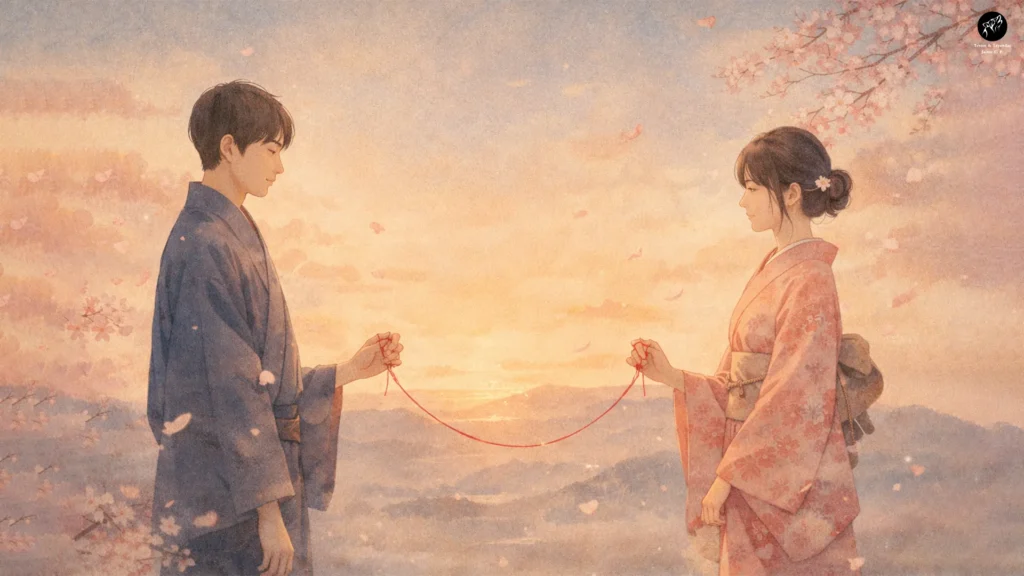

Akai Ito (赤い糸), which translates as red thread, is one of the most well-known legends of Japanese folklore. This belief holds that people destined to meet are linked by an invisible red thread, regardless of the time, distance or circumstances that separate them.
Although today it is deeply associated with Japanese culture, Akai Ito is the result of an Eastern reinterpretation of the ancient myth of destiny, transformed in Japan into a poetic metaphor about love, inevitable encounters and the bonds that mark a life.
In this article you will discover what Akai Ito is, what its origin is, its cultural significance and why it is still so relevant today.
What is Akai Ito?
Akai Ito is a Japanese legend that states that two people destined to meet are linked from birth by an invisible red thread. This thread:
- Cannot be seen
- Cannot be broken
- Can be stretched or tangled
- It always leads to a meeting
The legend does not assure happy endings, but inevitable encounters. Destiny is fulfilled, even if the road is long or painful.
Origin of Akai Ito
The belief in the red thread has its origins in Chinese folklore, where destiny was guided by supernatural forces. Over time, this idea reached Japan, where it was adopted and reinterpreted in a more symbolic and spiritual way.
In the Japanese tradition, the myth loses its moralizing or tragic character and becomes an intimate representation of destiny, focused on human and emotional relationships.
Thus Akai Ito was born as a Japanese version of its own, detached from punishments or imperial figures, and focused on the connection between ordinary people.
Where is the red thread tied in the Japanese tradition?
One of the clearest differences between the Japanese version and other Eastern traditions is where the thread is tied.
In Japan, the red thread is tied to the little finger of the left hand. This belief is based on the idea that this finger is symbolically connected to the heart, reinforcing the emotional and affective meaning of the myth.
YOU MAY BE INTERESTED IN
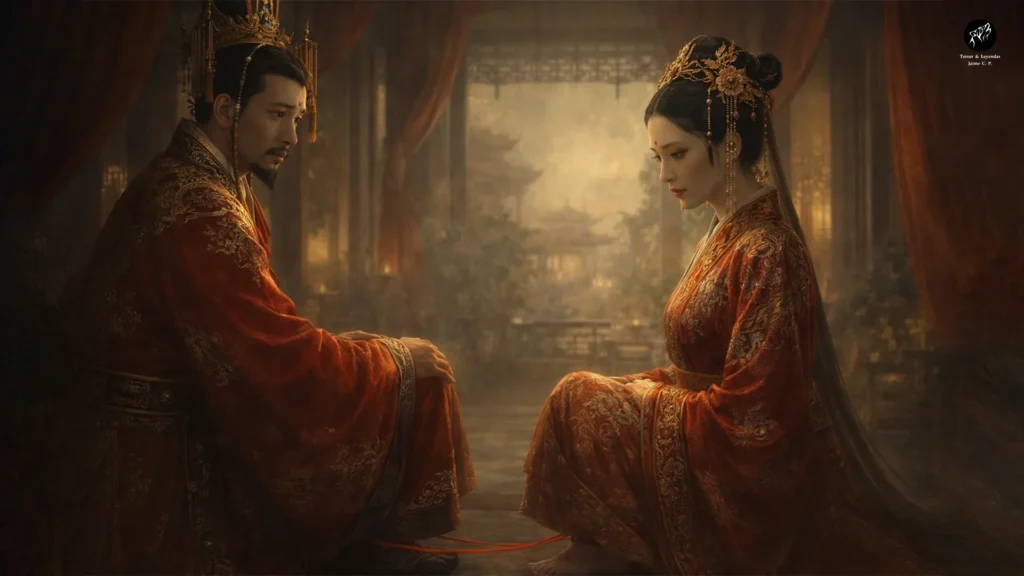
The legend of the emperor and the witch
A long time ago, an emperor heard a rumor that aroused his curiosity and his pride.
In one of the provinces of his kingdom lived a witch with an extraordinary gift: she could see the Red Thread of Destiny, the invisible bond that unites people destined to meet.
Meaning of the Akai Ito in Japanese culture
The Akai Ito represents:
- Inevitable destiny
- The spiritual connection between people
- Predestined love
- Bonds that transcend time
Although it is often associated with romantic love, in Japan it can also be interpreted as a deep bond between people who are destined to influence each other, even if they don’t stay together forever.
The color red symbolizes life, protection and energy, values deeply rooted in Japanese culture.
Akai Ito in Japanese popular culture
The legend of Akai Ito has inspired numerous artistic and cultural expressions, including:
- Japanese films and dramas
- Novels and romantic poetry
- Manga and anime
- Popular songs
- Tattoos, jewelry, and amulets.
The red thread symbol appears frequently in modern stories to represent destined encounters, inevitable separations, and impossible-to-ignore connections.
Difference between Akai Ito and other versions of Red String
Although they share a common origin, Akai Ito is clearly distinct in its approach:
- It does not feature punishments or authoritarian figures
- It does not impose a harsh moral
- It does not explain fate as a punishment, but as an encounter
In Japan, the red thread is a poetic metaphor, not a warning.
Current relevance of Akai Ito
Today, Akai Ito is still a very present symbol in Japan and other Asian cultures. It is used in:
- Symbolic ceremonies
- Weddings
- Accessories and jewelry
- Contemporary art
Beyond its mythical origin, Akai Ito continues to resonate because it connects with a universal idea: some people come into our lives because they were always meant to.
Conclusion
The Japanese legend of Akai Ito is a delicate and profound representation of human destiny. It does not promise eternal happiness, but it does promise encounters that leave a mark. In a world dominated by uncertainty, this story offers a comforting idea: some bonds exist before we can understand them.