

Can you imagine a place where, according to an ancient legend, the world's last reserve of water might be located?
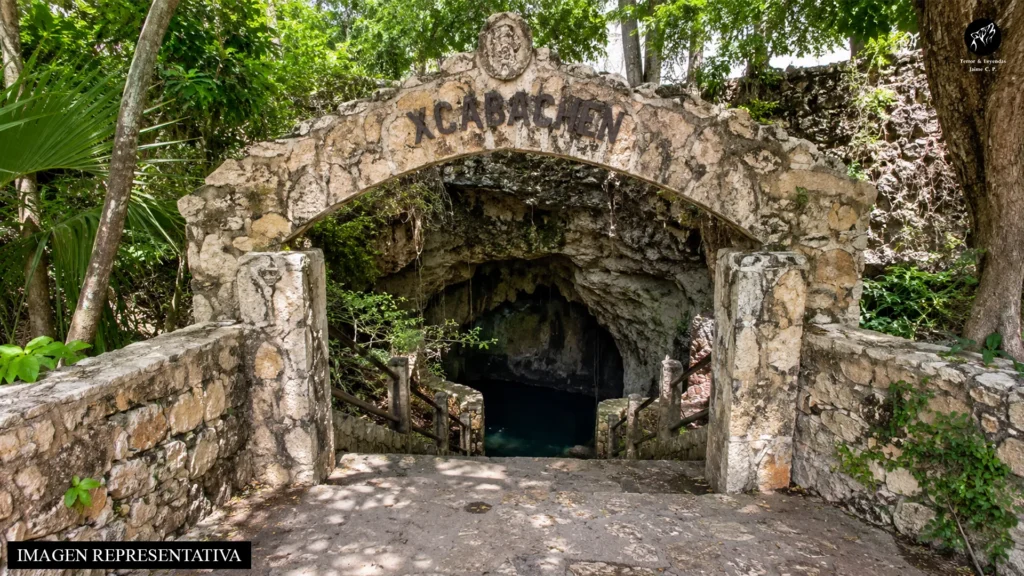
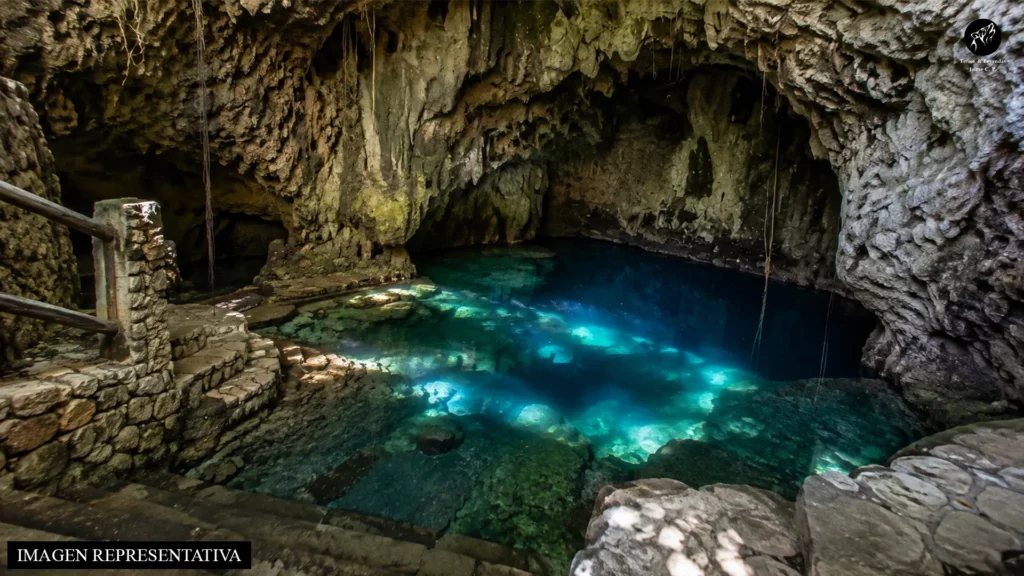
In the center of Maní, Yucatán, there is a small cenote inside a cave that is steeped in stories, mystery, and oral tradition. This is the Xcabachén cenote, a site that, despite its size, holds a special place in the cultural imagination of this community.
Legend has it that a time will come when water will disappear from the Earth and there will be only one place left where it can be found: Xcabachén. But obtaining that water will come at a price.
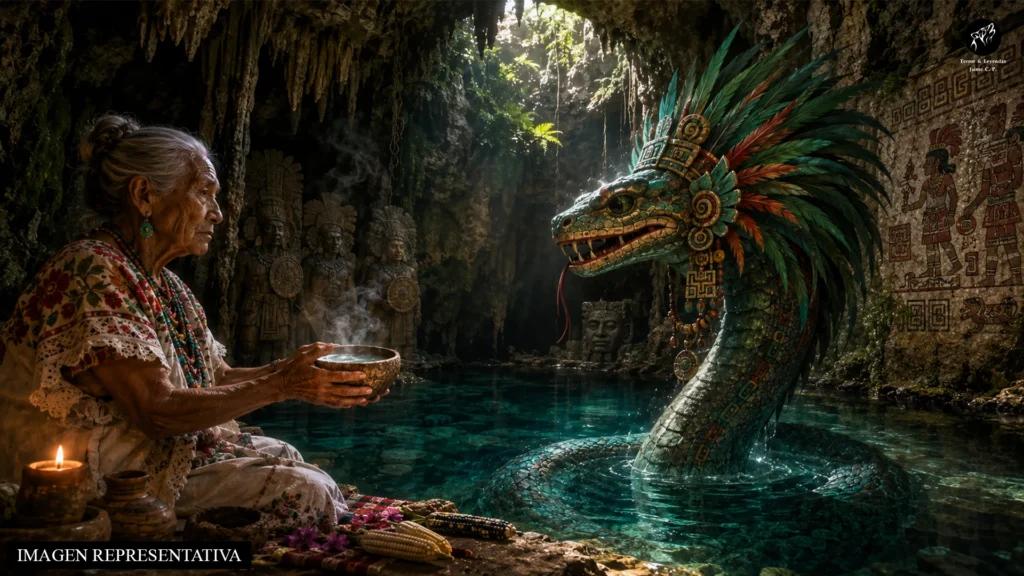
The story also tells of stone warriors, magical corn, a feathered serpent, and an old woman who guards the cenote.
Where does history end and tradition begin? In this article, you’ll learn about the legend of the Xcabachén cenote, its connection to Mayan culture, the history of Maní, and some useful tips for visiting this fascinating place.
Where is the Xcabachén cenote?
The Xcabachén cenote is located in the center of Maní, in the southern part of the state of Yucatán. It is inside a small cave and very close to some of the town's main historical sites.
The location is particularly interesting because the cenote is not isolated in the middle of the jungle. It is part of the urban landscape of Maní itself.
Yucatán.Travel notes that Xcabachén means “well” and describes the entrance as consisting of a stone arch and a flight of steps leading down to the cenote.
The Federal Secretariat of Tourism also lists the Xcabachén cenote among Maní’s attractions and notes that the archaeological evidence found in the cenote contributes to our understanding of the region’s ancient settlement.
What is the legend of the Xcabachén cenote?
This is where the most mysterious part begins.
The story told in Maní is part of the oral tradition. As a result, its details may vary depending on who tells it. It should not be confused with a verified historical event.
One of the best-known versions of the story says that when the Spanish arrived on the Yucatán Peninsula, the Xiu chiefdom sought a way to protect its lands.
According to legend, the Xiu placed two bags of magical corn inside the Xcabachén cenote.
Those who ate that corn would turn into stone warriors. They would remain motionless until the right moment came for them to return to life.
The intention was for those warriors to rise up when they were needed most and fight the invaders.
The story then takes on a supernatural quality.
The stone warriors would return to take part in a great battle alongside a feathered serpent, a figure associated in the story with protection and wisdom.
But the battle would have terrible consequences.
YOU MIGHT BE INTERESTED IN: Legends of Mexico: Yucatán
The cenote that will hold the world's last remaining water
According to legend, after that battle, all the water on Earth would disappear.
Only the waters of the Xcabachén cenote would remain.
That is why people from different places would travel to Maní, desperately searching for water to survive.
And there they would find an elderly woman who watches over the cenote.
The woman would offer them water in a cocoyol seed. However, the legend sets a disturbing condition: anyone who wanted to receive the water would have to hand over a newborn baby.
The story continues with the appearance of the feathered serpent and depicts a cycle of life, death, and renewal.
The appearance of the old woman and the snake is said to be connected to the moment when human voices and animal sounds began to be heard from the depths of the cave.
It's a dark story, and that's exactly why it's so compelling.
This isn't just a story about a cenote. It's a story about water, survival, fear, and the future.
The Old Woman, the Snake, and the Mystery of Xcabachén
One of the most interesting elements of the legend is the presence of the old woman.
Some accounts suggest that this woman may be a figure connected to the witch from the legend of the dwarf of Uxmal. This connection reinforces the link between various stories in the Yucatec Maya oral tradition.
The feathered serpent also plays an important role in the story.
However, it is important to clarify one point: the presence of these figures belongs to the realm of legend, not to an archaeological description of the cenote.
This difference is important when we talk about cultural heritage.
A legend does not need to be proven as a historical fact to have value. Its importance also lies in the way it is passed down, told, and preserved in the memory of a community.
What does Xcabachén mean?
The site's name also piques curiosity.
Yucatán.Travel states that Xcabachén means “well.”
Furthermore, an article in Yucatán Today links the name to the Mayan expression Kaabaj Ch'een, which is interpreted as “shallow well.”
These examples show that even etymological explanations can appear in different written forms and translations.
What does remain clear is the connection between the name and the groundwater and the cave itself.
The Xcabachén Cenote and Mayan Culture
Cenotes are significant in ways that go far beyond their natural beauty.
For centuries, they were essential to the Maya communities of Yucatán as sources of water. They also held cultural and ritual significance.
Yucatán Today explains that cenotes were part of daily life in Mayan communities and that the water from some of them could be used in ceremonies to pray for rain.
It is therefore understandable that stories about guardians, snakes, supernatural beings, and extraordinary events would arise around these places.
In the case of Xcabachén, the legend transforms water into something even more valuable: the last resource that would remain for humanity.
Maní: A Place Steeped in History
To better understand the cultural atmosphere of Xcabachén, you also need to know a little about Maní.
The town was one of the region's major political centers before the arrival of the Spanish. The Ministry of Tourism notes that Maní was one of the great pre-Hispanic capitals of the northern lowlands of the peninsula.
The municipality also preserves traditions related to Mayan culture, including artisanal crafts, embroidery, and meliponary beekeeping.
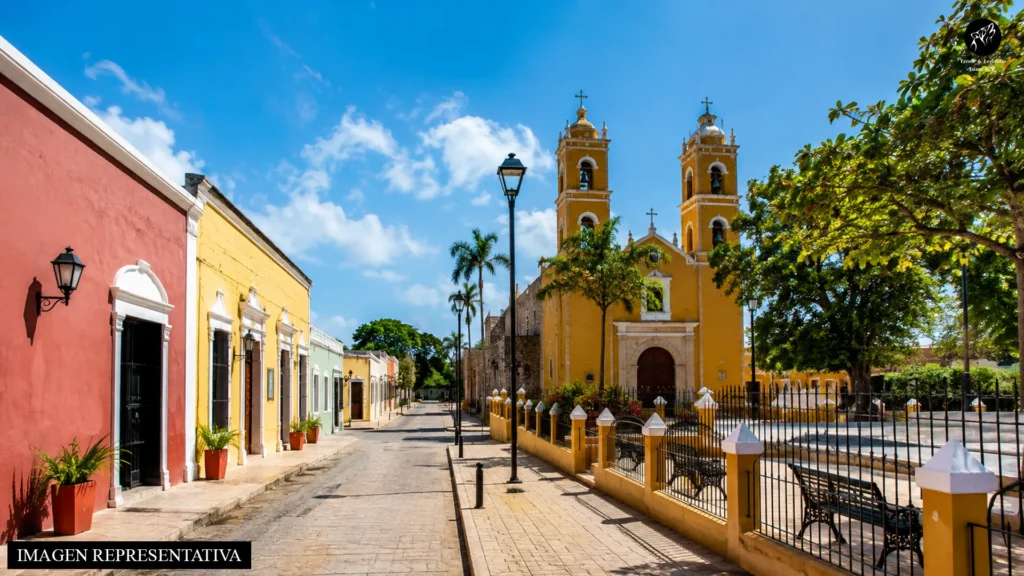
That is why a stroll through Maní offers a unique blend of Mayan heritage, colonial architecture, cuisine, and living traditions.
And Xcabachén appears right in the middle of that scene.
The 1562 Auto de Fe in Maní
Peanuts also hold a painful place in the history of the conquest and evangelization of Yucatán.
On July 12, 1562, the famous Auto de Fe of Maní took place there, presided over by the Franciscan Diego de Landa.
The event was linked to the persecution of Mayan religious practices that church authorities considered idolatry. The INAH notes that during that period, numerous Mayan ritual objects and codices were destroyed and burned.
This event is important for understanding the cultural history of Maní.
It also helps us understand why caves, cenotes, and other sites associated with Mayan religious practices are steeped in such a complex historical legacy.
The legend of the Xcabachén cenote should not be confused with the Auto de Fe. They are different stories and events. However, both are part of Maní’s rich historical and cultural landscape.
Can you swim in the Xcabachén cenote?
Xcabachén should not be considered a traditional recreational cenote.
An article in Yucatán Today describes it as a small body of water inside a cave and specifically notes that it is not suitable for swimming.
His main interest lies in getting to know the place, observing its surroundings, and listening to the stories associated with it.
So, if you're looking for a cenote where you can swim, snorkel, or spend several hours in the water, Xcabachén isn't the right choice.
How do I visit the Xcabachén cenote?
A visit there can be part of a tour of downtown Maní.
According to the available tourist information, the cave is located at Calle 27 x 30, Centro, Maní.
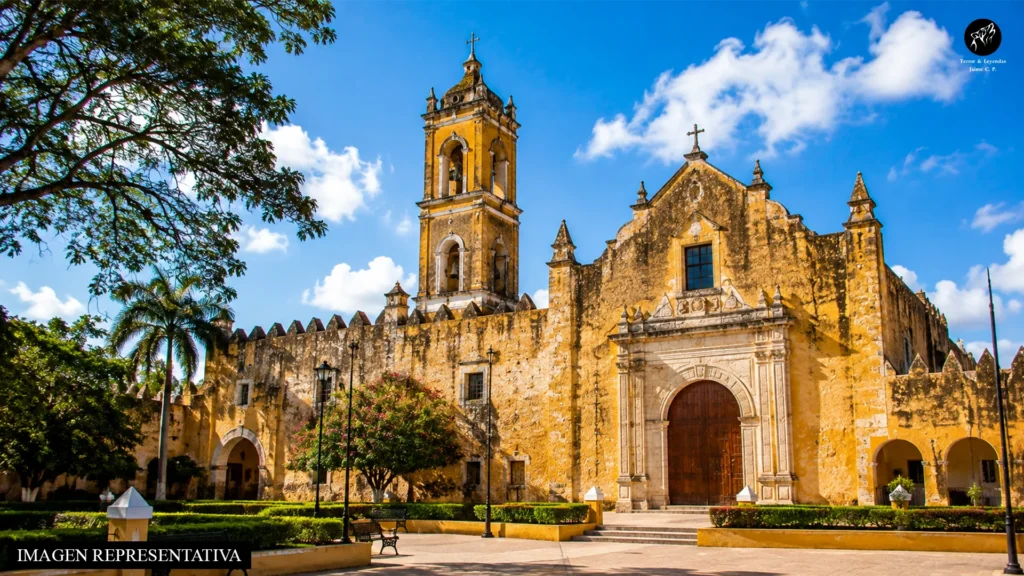
In addition, it is located just a few meters from City Hall and the former Convent of St. Michael the Archangel.
Here are some recommendations:
- Visit the cenote as part of a tour of the historic district.
- Ask the locals or local guides about the different versions of the legend.
- Do not throw trash or objects into the water.
- Please follow the instructions you find on the site.
- Avoid touching the cave's natural formations.
- If you're looking to swim, choose another cenote that's equipped for water activities.
The experience can be much more interesting if you hear the legend directly from people who are familiar with the local tradition.
What else is there to see in Maní?
After visiting Xcabachén, you can take the opportunity to explore other attractions in Maní.
Notable among them are:
- Former Convent of St. Michael the Archangel.
- Historic Center of Maní.
- Traditional melipona beekeeping.
- Embroidery and crafts workshops.
- Yucatan cuisine, especially the traditional poc chuc.
- Places related to Mayan culture.
The Yucatán Secretariat of Tourism Promotion specifically highlights the convent, the meliponary apiaries, the embroidery, and the Xcabachén cenote as representative features of Maní.
Thus, a visit to the cenote can become an opportunity to learn about a much broader aspect of the community's identity.
Frequently Asked Questions About the Xcabachén Cenote
Where is the Xcabachén cenote?
It is located in downtown Maní, Yucatán, inside a small grotto. It is situated at the intersection of Calle 27 and Calle 30, near City Hall and the former Convent of San Miguel Arcángel.
What is the legend of the Xcabachén cenote?
Legend has it that a time will come when all the water on Earth will disappear, and that Xcabachén will be the last place where water remains. The story features stone warriors, magical corn, a feathered serpent, and an old woman who guards the cenote.
What does Xcabachén mean?
According to Yucatán.Travel, Xcabachén means “well.” Other sources link the name to Kaabaj Ch'een, interpreted as “shallow well.”
Can you swim in the Xcabachén cenote?
No. The tourist guides consulted describe the cenote as a small body of water and note that it is not suitable for swimming.
What is the connection between Xcabachén and Mayan culture?
Cenotes were important sources of water for Mayan communities and also served cultural and ritual purposes. Xcabachén is part of that historical connection between groundwater and the Mayan culture of Yucatán.
What is the connection between Xcabachén and the Auto de Fe de Maní?
They are not the same event. The Auto de Fe took place in 1562 and is historically documented. The legend of Xcabachén belongs to the oral tradition. Both are part of Maní’s rich historical and cultural heritage.
Conclusion
The Xcabachén cenote is much more than just a small body of water hidden inside a cave.
Its true appeal lies in the combination of nature, history, and oral tradition. The legend that portrays it as the world's last remaining body of water turns this corner of Maní into a place steeped in mystery.
At the same time, visiting Xcabachén offers a glimpse into a part of Mayan culture and helps us understand the importance that cenotes have had in Yucatán.
And Maní has so much more to offer: historic architecture, cuisine, handicrafts, meliponary sites, and a legacy that connects the Mayan past with modern life.
If you visit Yucatán, be sure to set aside some time to explore Maní and visit the Xcabachén cave. And, above all, ask the locals about the legend. You might discover a version you haven’t heard before.
Did you know the legend of the Xcabachén cenote? Share it with someone interested in the stories and traditions of Yucatán.